

Most of the time we use ranking function like ROW_NUMBER() when required to generate a unique number sequence. But there are also other ways to accomplish the same thing without using ranking function. I will tell you 3 various ways to generate the unique number sequence including ranking function.
Let’s create a demo table with some dummy data:
- CREATE TABLE Months(MonthId INT, Mon_Name VARCHAR(20))
- GO
- INSERT INTO Months
- SELECT 101, 'January'
- UNION ALL
- SELECT 102, 'February'
- UNION ALL
- SELECT 103, 'March'
- UNION ALL
- SELECT 104, 'April'
- UNION ALL
- SELECT 105, 'May'
- UNION ALL
- SELECT 106, 'June'
- UNION ALL
- SELECT 107, 'July'
- UNION ALL
- SELECT 108, 'August'
- UNION ALL
- SELECT 109, 'September'
- UNION ALL
- SELECT 110, 'October'
- UNION ALL
- SELECT 111, 'November'
- UNION ALL
- SELECT 112, 'December'
- Here, are the below 3 different methods to generate the unique numbers.
- --Method 1
- SELECT MonthId, Mon_Name, ROW_NUMBER() OVER(ORDER BY Mon_Name) rnum
- FROM Months
- --Method 2
- SELECT MonthId, Mon_Name, COUNT( * ) OVER(ORDER BY MonthId ROWS BETWEEN UNBOUNDED PRECEDING AND CURRENT ROW) as rnum
- FROM months
- --Method 3
- SELECT MonthId, Mon_name, (SELECT COUNT( * ) FROM months m1 WHERE m1.MonthId <= m2.MonthId) as rnum
- FROM months m2
- ORDER BY rnum
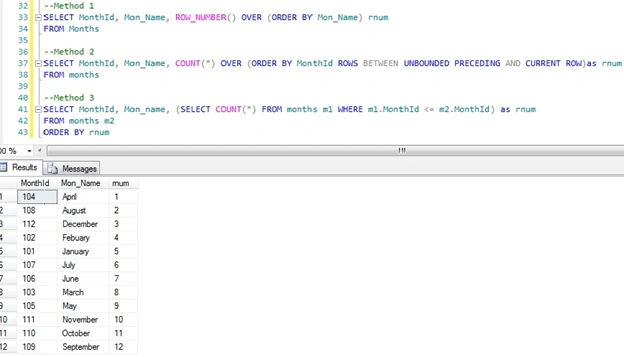
After executing these queries we will get the sequence of unique numbers. We can choose any method according to our choice to generate the numbers sequence.
That’s all for today folks. Keep learning.
Shrimant TelgavePosted Jul 29, 2018, 9:26 AM
Nice .............