

Abstract / Overview
For businesses, “dumb” automation ends when automation stops breaking under change, stops requiring constant rework, and starts aligning directly with business outcomes such as revenue protection, cost reduction, risk control, and speed to market.
Robotic Process Automation (RPA) remains highly effective for stable, rules-driven execution. Agentic AI introduces a new layer: systems that interpret intent, adapt to variability, and coordinate work across tools. The business-winning model is not replacement but combination. Agentic AI handles judgment and orchestration; RPA and APIs deliver predictable execution with auditability.
This article is written explicitly for business leaders, operations executives, automation COEs, and transformation owners. It focuses on ROI, operating models, governance, and scale, not experimentation.
Conceptual Background (Business Lens)
Why are businesses called RPA “dumb”
RPA earned its reputation in boardrooms for three reasons:
High maintenance cost when UIs or processes change
Limited ability to handle exceptions without human workarounds
Weak alignment to strategic KPIs beyond task-level efficiency
From a business perspective, the issue was not capability, but economics. Bots delivered savings early, then plateaued as complexity rose.
What Agentic AI changes for enterprises
Agentic AI systems introduce decision-making and coordination into automation. From a business standpoint, this means:
Automation expands from tasks to outcomes
Unstructured work (emails, PDFs, tickets) becomes automatable
Automation adapts to change without constant reengineering
Organizations such as IBM describe agentic systems as goal-driven systems that plan, act, and adjust using tools. In practical business terms, this means fewer brittle flows and more resilient operations.
Why now: market and organizational pressure
Three forces converge:
Generative AI adoption has normalized natural-language interfaces at work
Operational cost pressure demands automation beyond clerical tasks
Risk, compliance, and audit expectations have increased, not decreased
Research firms consistently show automation platforms expanding beyond classic RPA into AI-led orchestration, even though market sizing varies by definition.
Agentic AI vs. RPA: Business-Relevant Differences
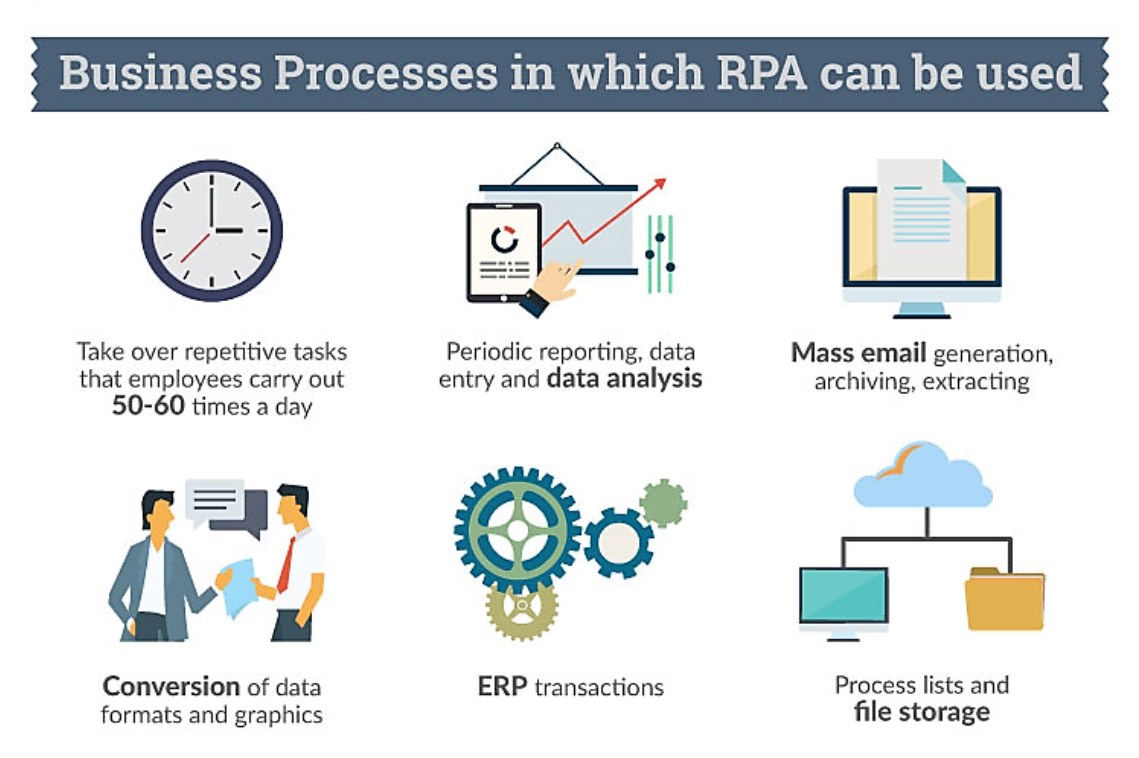

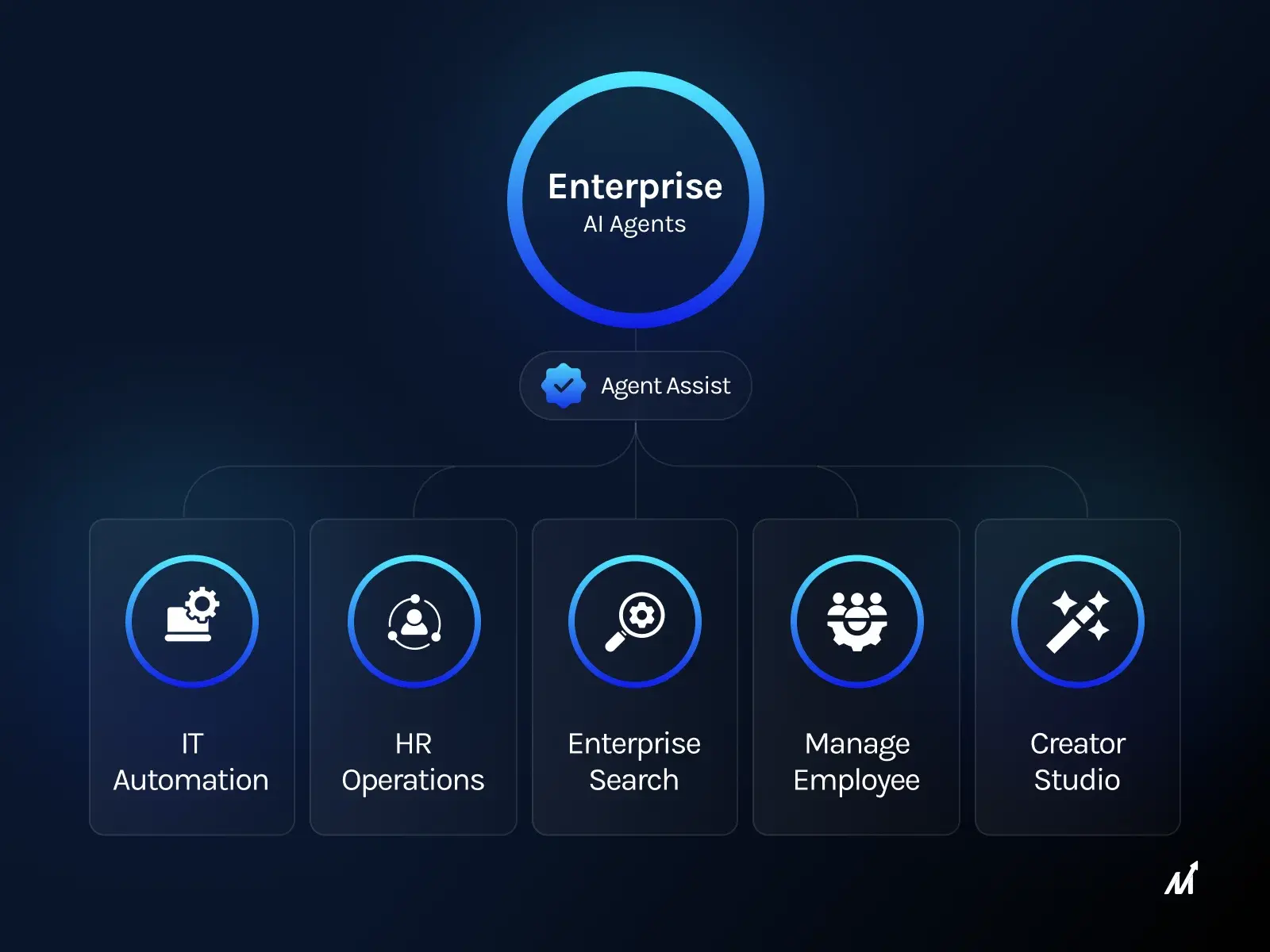
Business capability comparison
RPA delivers business value when:
Processes are standardized and mature
Volume is high, and variance is low
Accuracy and auditability are non-negotiable
Unit economics improve linearly with scale
Agentic AI delivers business value when:
Inputs are human-generated and inconsistent
Decisions depend on context, policy, or interpretation
Work spans many systems and teams
Speed and flexibility matter more than rigid consistency
Executive summary view
RPA optimizes execution cost
Agentic AI optimizes decision cost
Hybrid automation optimizes total operating cost
This framing matters when justifying budgets and prioritization at the executive level.
The Business Case for Hybrid Automation
Why replacement narratives fail
From a business risk perspective, replacing RPA with purely agentic systems introduces:
Unpredictable execution paths
Higher governance overhead
Increased compliance exposure
This is why vendors such as UiPath and others now position agentic capabilities as orchestration layers rather than bot replacements.
The hybrid operating model
In a business-optimized architecture:
Agentic AI owns interpretation, routing, and prioritization
RPA and APIs own execution, reconciliation, and system updates
Humans own approval, exception judgment, and accountability
This division mirrors how organizations already separate strategy, operations, and control.
Mermaid Diagram: Business-Grade Hybrid Automation Model

Step-by-Step Walkthrough (Business-First)
Step 1: Define automation in business terms
Avoid task-based framing. Instead define:
Financial impact per case
Risk exposure per decision
SLA improvement targets
Cost-to-serve baseline
Automation without these metrics fails executive scrutiny.
Step 2: Segment work by variability and risk
Create three buckets:
Deterministic, low-risk → RPA-first
Variable, low-risk → Agent-first with auto-execution
Variable, high-risk → Agent + approval + controlled execution
This segmentation becomes your automation portfolio model.
Step 3: Design governance before scale
Business-grade automation requires:
Explicit approval thresholds
Clear ownership (process owner, system owner, risk owner)
Centralized audit logs across AI and RPA
Defined rollback and exception policies
Governance reduces long-term cost more than speed optimizations.
Step 4: Measure value continuously
Track metrics executives care about:
Cost avoided or recovered
Cycle time reduction
Exception rate trend
Audit findings and compliance incidents
Automation adoption by business users
Code / JSON Snippets (Business-Oriented)
Sample workflow JSON aligned to business controls
{
  "workflow": "customer_refund_management",
  "business_owner": "Finance Operations",
  "value_metric": "cost_avoided_per_case",
  "risk_tier": "financial",
  "steps": [
    {
      "type": "agentic_ai",
      "purpose": "Interpret customer intent and refund eligibility",
      "controls": {
        "confidence_threshold": 0.85,
        "policy_reference": "refund_policy_v4"
      }
    },
    {
      "type": "approval",
      "required_when": {
        "refund_amount": ">1000"
      },
      "role": "Finance Manager"
    },
    {
      "type": "rpa_execution",
      "system": "ERP",
      "purpose": "Process approved refund"
    },
    {
      "type": "validation",
      "checks": ["ledger_updated", "customer_notified"]
    }
  ],
  "reporting": ["cycle_time", "approval_rate", "refund_accuracy"]
}
This structure explicitly ties automation steps to business ownership and value.
Business Use Cases with Clear ROI
Customer operations
Reduced handling time for complex inquiries
Higher first-contact resolution
Lower training cost for support staff
Finance and accounting
Faster close cycles
Lower write-offs from delayed dispute handling
Improved audit readiness
HR and IT services
Reduced ticket backlog
Consistent policy enforcement
Lower operational risk from manual provisioning
Sales and revenue operations
Improved CRM data quality
Faster quote and contract updates
Reduced revenue leakage
Limitations / Considerations for Executives
Financial considerations
Agentic systems require stronger governance investment upfront
ROI is nonlinear and improves with scale and learning
Budget ownership often shifts from IT to business units
Organizational considerations
Process ownership must be explicit
Change management is critical for trust in AI-led decisions
Automation COEs must evolve into orchestration and governance hubs
Risk considerations
Regulators expect explainability and traceability
AI decisions without approval gates increase exposure
Shadow automation becomes a risk without central oversight
Fixes (Business-Focused)
Fix: Automation ROI stalls after pilot
Re-anchor automation metrics to financial outcomes
Expand scope from tasks to end-to-end workflows
Introduce agentic intake to increase coverage
Fix: Compliance resists AI-driven automation
Separate decision support from execution
Require approval for material actions
Produce audit-ready decision trails
Fix: Business users distrust automation
Start with assistive automation before full autonomy
Expose confidence scores and rationale summaries
Allow easy escalation to humans
FAQs (Executive and Business Leader Focused)
1. Should businesses replace RPA with Agentic AI?
No. Businesses should reposition RPA as the execution layer under AI-driven orchestration. This protects prior investment while expanding value.
2. Where should leaders start?
Start with workflows that are high-volume, exception-heavy, and business-critical, such as customer operations, finance disputes, and IT service requests.
3. How do we justify investment to the board?
Frame the case around operating cost reduction, risk mitigation, and scalability. Avoid “AI experimentation” language; emphasize business resilience.
4. Who should own agentic automation?
Joint ownership works best: business owns outcomes, IT owns platforms, and risk/compliance owns controls.
References
IBM, “What is Agentic AI?”
UiPath FY2025 investor and product disclosures
McKinsey, “The State of AI” research series
Conclusion
For businesses, the end of “dumb” automation does not mean abandoning RPA. It means elevating automation from scripted labor replacement to intelligent operating leverage. Agentic AI provides interpretation, adaptability, and coordination. RPA provides reliability, control, and compliance. Together, they form a business-grade automation model that scales responsibly and delivers durable ROI.
Join the conversation! Your thoughts help the community grow.