

When ChatGPT entered the mainstream, it changed how the world perceived artificial intelligence. AI was no longer hidden behind complex systems or research papers, it became conversational, accessible, and useful to everyday users. But while ChatGPT showed us what AI can say, the next evolution shows us what AI can do.
That evolution is AI Agents.
AI agents represent a fundamental shift—from AI as a reactive tool to AI as an active participant that can plan, decide, and execute tasks autonomously. This isn’t just an incremental upgrade. It’s a leap.
From Chatting to Acting
ChatGPT excels at responding to prompts. You ask a question, it answers. You give an instruction, it generates output. But the responsibility for action still lies with the human.
AI agents change this dynamic.
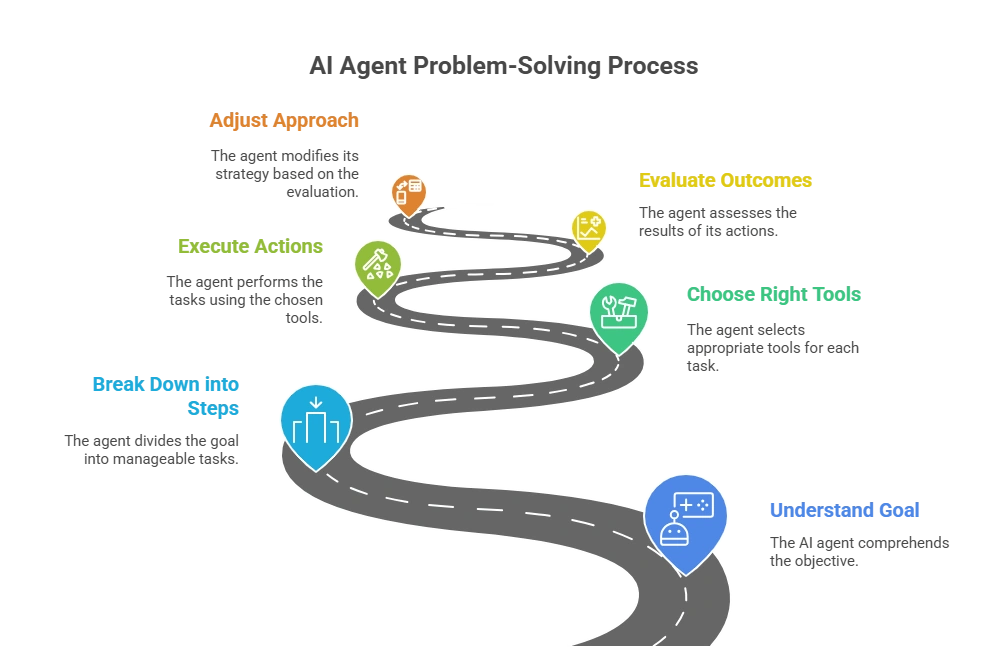
In simple terms, ChatGPT talks. AI agents act.
What Exactly Is an AI Agent?
An AI agent is an intelligent system designed to operate with a degree of autonomy. Instead of waiting for step-by-step instructions, it works toward a defined objective.
Think of the difference like this:
Chatbot: “Tell me what to do.”
AI Agent: “I know what needs to be done. I’ll take care of it.”
An agent can interact with applications, APIs, documents, databases, and even other agents to complete tasks end-to-end.
Why AI Agents Are a Game Changer
1. They Reduce Human Micromanagement
Instead of guiding AI through every step, users define goals. The agent figures out the rest.
2. They Handle Complex, Multi-Step Workflows
From data collection to analysis to reporting, agents can manage workflows that previously required multiple tools and people.
3. They Learn and Adapt
Agents can reflect on outcomes, improve future decisions, and optimize performance over time.
4. They Work Continuously
AI agents don’t get tired, don’t forget steps, and don’t lose context.
Real-World Use Cases of AI Agents
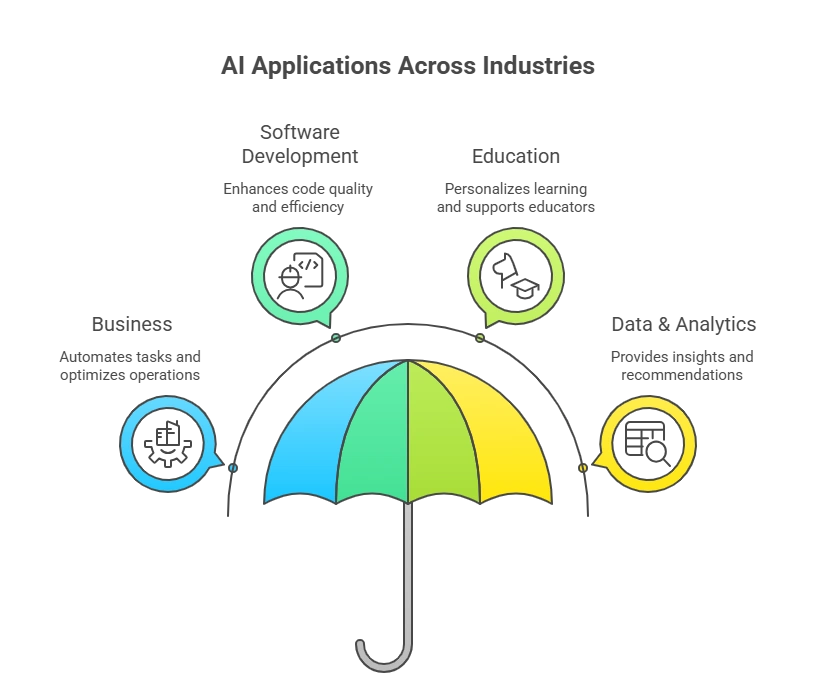
In Business
Automating report generation and insights
Monitoring KPIs and triggering alerts
Managing customer support workflows
Optimizing supply chains and operations
In Software Development
Writing, testing, and refining code
Debugging issues proactively
Managing CI/CD pipelines
Reviewing pull requests
In Education
Personalized learning assistants
Automated assessment feedback
Curriculum planning support
Research assistance for educators and students
In Data & Analytics
Collecting data from multiple sources
Cleaning and transforming datasets
Generating insights and summaries
Recommending actions based on trends
AI Agents vs Traditional Automation
Traditional automation follows rules. If something unexpected happens, it fails.
AI agents, on the other hand:
Reason through uncertainty
Adjust plans dynamically
Handle exceptions
Make context-aware decisions
This is why AI agents are often described as “intelligent automation”, not just automation.
The Role of Humans in an Agent-Driven World
Despite the hype, AI agents are not here to replace humans.
They need humans to:
Define goals
Set boundaries
Review decisions
Ensure ethical and responsible use
The future belongs to humans who can collaborate with AI agents, not compete with them.
The most valuable professionals will be those who know how to:
Design agent workflows
Ask the right questions
Interpret outcomes
Apply human judgment where it matters
Challenges We Must Address
AI agents also bring important concerns:
Transparency in decision-making
Data privacy and security
Bias and accountability
Over-reliance on autonomous systems
Responsible AI practices and human oversight are essential to ensure agents remain trustworthy and beneficial.
Why This Is the Next Big Leap After ChatGPT
ChatGPT showed us AI’s conversational intelligence.
AI agents demonstrate AI’s operational intelligence.
They move AI from:
Assistance → Action
Answers → Outcomes
Tools → Teammates
This shift will redefine how we work, learn, and build systems.
Final Thoughts
AI agents are not a distant future—they are already shaping today’s tools and platforms. Organizations and individuals who understand and adopt this shift early will gain a significant advantage.
ChatGPT opened the door. AI agents are walking through it—and changing everything along the way.
Nancy DelgadoPosted Jan 14, 2026, 11:07 AM
As a user I liked how well the explanation shows the difference between an AI that provides information and an AI that can take actions. It provides clarity, and it makes sense through the analogy of chatbots and AI agents, which help the reader to visualize the progress of technology from the past until now. The use of current examples shows how significant this change is versus just being another version or update.