

Office buildings are no longer static assets. Hybrid work, rising energy costs, and sustainability targets have changed how facilities are used and judged. Empty floors sit next to overcrowded meeting areas. Heating and cooling systems run on fixed schedules that no longer reflect reality. Azure AI gives facilities teams the ability to understand how buildings are actually used and to optimise them continuously.
Buildings as living systems
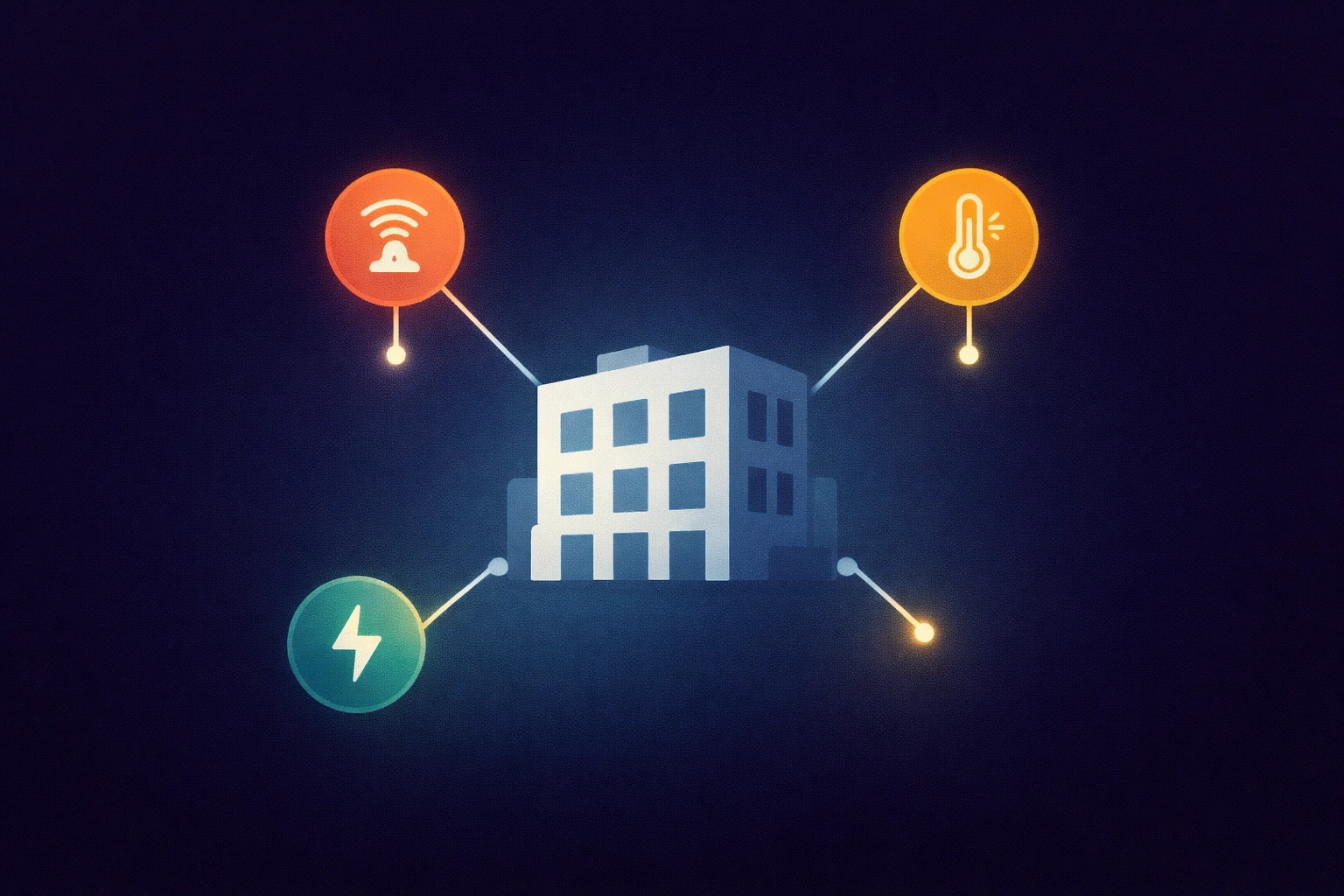
Modern buildings generate large volumes of data. Access badges, occupancy sensors, HVAC systems, lighting controls, and maintenance logs all capture signals about usage and performance. Individually, these systems offer limited insight. Together, they describe how people interact with space.
Azure IoT Hub collects telemetry securely from building systems. Azure Synapse Analytics brings this data together so it can be analysed as a whole. Once connected, buildings stop being floor plans and start behaving like measurable systems.
Understanding space utilisation
One of the biggest inefficiencies in offices is poor space allocation. Teams book desks they never use. Meeting rooms sit empty while people search for space. Azure Machine Learning can model occupancy patterns across days, weeks, and seasons.
By analysing badge swipes and sensor data, models can predict when and where space will be needed. Facilities teams can then adjust layouts, booking rules, or cleaning schedules based on evidence rather than assumptions.

This leads to better utilisation without expanding real estate footprints.
Smarter energy management
Energy consumption is one of the largest operational costs in facilities. Traditional systems follow fixed schedules that ignore real usage. Azure AI allows energy systems to respond dynamically.
Models can predict demand based on occupancy, weather, and historical patterns. Heating, cooling, and lighting can then scale automatically. Empty zones are powered down. Busy areas remain comfortable.
This improves occupant experience while reducing energy waste and emissions.
Predictive maintenance in everyday infrastructure
Facilities teams often work reactively. Something breaks, then it is fixed. Azure AI supports a different approach. Telemetry from elevators, pumps, and climate systems can be analysed to detect early signs of failure.
Predictive models identify components likely to fail soon, allowing maintenance to be scheduled during low-impact windows. This reduces downtime and avoids emergency repairs that disrupt occupants.
Over time, maintenance budgets become more predictable and systems last longer.
Supporting hybrid work strategies
Hybrid work has made facilities planning more complex. Leaders want to reduce unused space without harming collaboration. Azure AI helps by providing clear visibility into how buildings support work patterns.
Dashboards built with Power BI and Azure ML insights show which spaces drive engagement and which are rarely used. This supports decisions about redesign, consolidation, or repurposing space.
Facilities strategy becomes aligned with how people actually work, not how they used to.
Security, privacy, and trust
Facilities data often touches personal behaviour. Access logs and occupancy patterns must be handled carefully. Azure provides identity management, encryption, and role-based access to ensure data is protected.
Responsible AI practices help ensure insights are aggregated and anonymised where appropriate. This builds trust with employees while still enabling optimisation.
Facilities as a strategic function
Facilities management is no longer just about keeping lights on. It influences productivity, sustainability, and cost structure. Azure AI allows facilities teams to move from operational support to strategic contribution.
For CIOs and operations leaders, smart buildings become another data-driven domain, integrated with wider enterprise systems rather than managed in isolation.
What comes next
As work patterns continue to evolve, static buildings will struggle to keep up. Intelligent, adaptive facilities will not. Azure provides the platform to turn buildings into responsive environments that learn and improve over time.
Organisations that invest in this capability will reduce cost, improve experience, and make better use of the spaces they already own.
🔗 Further Learning:
Join the conversation! Your thoughts help the community grow.