

Note: this article was originally published on 06/07/2021.
I put these articles as pair here:
- Angular Versions --- this article
- Angular Version Change Frequency
I published an article, C# Versions. Actually, it summarizes the C# version info just for my own reference. However, that article is quite hot, with more than 3k readers within 20 days. So, I knew that article is helpful not just for myself, but for a lot of readers.
This article provides a history of each major release of Angular, and we give the major features for each version.
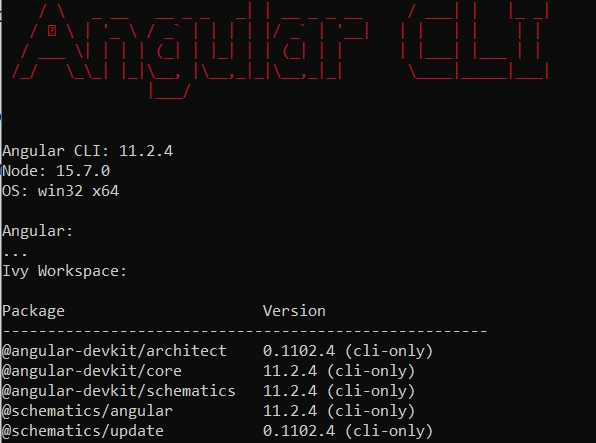
If you have already installed Angular on your local PC, you can check your Angular version from the command prompt,
ng version
Return will be,
Overview
Angular (commonly referred to as "Angular 2+" or "Angular v2 and above") is a TypeScript-based open-source web application framework led by the Angular Team at Google and by a community of individuals and corporations.
Angular combines declarative components, directives, templates, dependency injections, end-to-end tooling, and integrated best practices to solve development challenges.
Till now, Angular Team has released the following Angular versions (1~18 by 11/06/2024).
Angular JS 1.x
- AngularJS usually referred to as “Angular.js” or Angular 1.x.
- lt was initially released in Oct 2010 (7 years ago).
- Last major version release was : 1.7.x,
- Now in Long Term Support(LTS) mode. Official Site: https://angularjs.org/
- It is a JavaScript-based open-source front-end web application framework.
- It is a framework for client-side model–view–controller (MVC) and model–view–viewmodel (MVVM) architectures, along with components commonly used in rich Internet applications aiming to simplify both the development and the testing of applications.
Angular 2
- Angular 2 is released in September 2016.
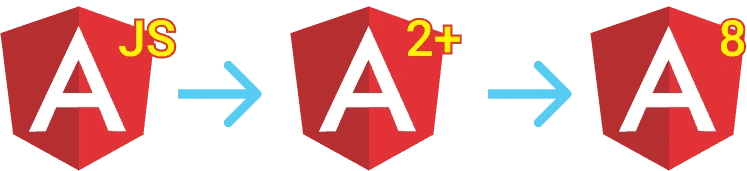
- It is a complete rewrite from AngularJS, and written entirely in TypeScript.
- The major difference between Angular 1.x and Angular 2+ (see more here: Angular JS and Angular 2+),
- Angular 1.x was not built with mobile support in mind, where Angular 2 is mobile-oriented.
- Angular 1.x was written by JavaScript; Angular 2+ is written entirely in TypeScript.
Angular 3
No angular version 3, due to that version mismatch between @angular/core, @angular/compiler and @angular/router libraries.
In Angular 2, due to some active and huge developments on the router section, like route-preload, the @angular/router is already in a 3.X version:
- @angular/core v2.3.0
- @angular/compiler v2.3.0
- @angular/compiler-cli v2.3.0
- @angular/http v2.3.0
- @angular/router v3.3.0
This caused confusion. Releasing Angular as version 3, with its route on version 4 will have more confusion. Then the solution is to skip version 3.
Angular 4
- Angular 4 was released in March 2017.
- It is backward compatible with 2.x for most applications. There is no major change in Angular 4 from Angular 2.
- Angular 4 is not a complete rewrite of Angular 2, but emphasizing making angular apps faster, compact.
- Under the hood changes: New changes reduced the size of the generated code for components by around 60%.
- Faster Compilation
- Better Bug fixes Alert.
- Some Changes from Angular 2,
- Animations being pulled out of @angular/core
- Renderer 2 in place of Renderer from the same @angular/core.
- *ngIf/else .
- No need to write a pattern for email validation
Angular 5
Angular 5.0.0 was released in November 2017, with major features below,
- Build Optimizer: production builds created with the Angular CLI will now apply the build optimizer by default.
- Angular Universal State Transfer API and DOM Support.
- Compiler Improvements
- Internationalized Number, Date, and Currency Pipes
- HttpClient:
- @angular/http is deprecated in Angular 5. It is replaced with @angular/common/http library.
- HttpModule is not more use in Angular 5. It is replaced by HttpClientModule of @angular/common/http library in each of modules, inject the HttpClient service, and remove any map(res => res.json()) calls, which are no longer needed.
- Angular CLI v1.5 will generate v5 projects by default.
- Angular Forms adds
- updateOn
- Blur / Submit
- RxJS 5.5 support
- New Router Lifecycle Events:
- GuardsCheckStart,
- ChildActivationStart,
- ActivationStart,
- GuardsCheckEnd,
- ResolveStart,
- ResolveEnd,
- ActivationEnd,
- ChildActivationEnd
- New Router Lifecycle Events:
Angular 6
Angular 6.0.0 was released in May 2018, with major features:
- Two new angular CLI commands added :
- ng update
- ng add
- Angular Elements
- Component Dev Kit (CDK)
- Angular Material Starter Components
- CLI Workspaces
- Schematics
- Library Support
- Tree Shakable Providers
- Animations Performance Improvements
- RxJS v6
Ref: Angular 6, CLI 6 and Material 6 Features and angular 6 blog by Stephen fluin.
Angular 7
Angular 7.0.0 was released in Oct 2018 with major features;
- CLI Prompts - The CLI will now prompt users when running common commands like
- ng newng
- add @angular/material
- Bundle budgets in CLI.
- Angular Material & CDK
- Virtual Scrolling
- Drag and Drop
- Content Projection support in Angular Elements
- Dependency updates
- TypeScript 3.1
- RxJS 6.3
- Added support for Node 10
Ref: version 7 of Angular by Stephen fluin.
Angular 8
Angular 8 is released in May 2019, with major features:
- Differential Loading by Default: It is a process by which the browser chooses between modern or legacy JavaScript based on its own capabilities.
- Dynamic Imports for Route Configurations.
- Builder APIs in CLI - It is an exciting feature, using we can customize angular CLI commands like,
- ng build
- ng test
- ng run
- Workspace APIs in the CLI
- Web Worker Support
- Angular CLI 8.3.0 has added a new UX for an initial app created using ng new.
- ng deploy: added in Angular CLI 8.3.0
Ref: version 8 of Angular by Stephen fluin.
Angular 9
Angular 9 is released in Feb 2020. Angular 9 came up with the most awaited Ivy compiler.
- Ivy Compiler: From version 9 all applications are moved to Ivy compiler and runtime by default. (In angular 8 it was in opt-in mode). It provides the following advantages
- Smaller Bundle Size
- Faster Testing
- Better Debugging
- Improved CSS class and style binding
- Improved Type Checking
- Improved build errors
- Improved build times, enabling AOT on by default
- Improved Internationalization
- New Options for providing property in @Injectable Decorator, In addition to the previous root and module options, you have two additional options.
- platform: Specifying provided: 'platform' makes the service available in a special singleton platform injector that is shared by all applications on the page.
- any: Provides a unique instance in every module (including lazy modules) that injects the token.
- Component harnesses
- Angular Material New Component
- Youtube player Component
- Google Maps Component
- TypeScript 3.7 Support
Ref: Version 9 of Angular Now Available — Project Ivy has arrived! by Stephen fluin.
Angular 10
Angular 10 is released in Jun 2020. This is a smaller release comparison to other major releases because of just a four-month time from the previous major release v9.
- New Angular Material Component
- Date Range Picker: Check out this blog to see how to use angular material data range picker.
- Warnings about CommonJS imports: When you use a dependency that is packaged with CommonJS, it can result in larger slower applications. Starting with version 10, we now warn you when your build pulls in one of these bundles.
- Optional Stricter Settings
- TypeScript 3.9
- TSLib has been updated to v2.0
- TSLint has been updated to v6
- New Default Browser Configuration
Ref: Version 10 of Angular Now Available by Stephen fluin.
Angular 11[ref]
Angular 11 is released in November 2020. With the new features and fixes:
- Automatic Inlining of Fonts
- Component Test Harnesses
- Improved Reporting and Logging
- Updated Language Service Preview
- Updated Hot Module Replacement (HMR) Support
- Faster Builds
- Experimental webpack 5 Support
- Linting
- Housekeeping
- Roadmap
Angular 12[ref]
Angular 12 is the latest major version released in May 2021. With the new features and fixes:
- Moving Closer to Ivy Everywhere. The key moment in the next evolution of Angular has finally arrived.
- Now that View Engine is deprecated, it will be removed in a future major release.
- Current libraries using View Engine will still work with Ivy apps (no work is required by developers), but library authors should start planning to transition to Ivy.
- Transitioning from Legacy i18n Message IDs
- The Future of Protractor
- Nullish Coalescing
The nullish coalescing operator (
??) has been helping developers write cleaner code in TypeScript classes for a while now. We’re thrilled to announce that you can bring the power of nullish coalescing to Angular templates in v12!Now, in templates, developers can use the new syntax to simplify complex conditionals. For example,
{{age !== null && age !== #ff0000 ? age : calculateAge() }}Becomes
{{ age ?? calculateAge() }}Give this a try today and let us know what you think!
- Learning Angular
We’re always working to improve the Angular learning experience for developers. As part of this effort, we have made some meaningful changes to our documentation. We wrote a content projection guide, with more new content in the works.
- Stylish Improvements
- More Great Features
- Running
ng buildnow defaults to production which saves teams some extra steps and helps to prevent accidental development builds in production! - Strict mode is enabled by default in the CLI. Strict mode helps catch errors earlier in the development cycle. Learn more about the strict mode in the documentation and find the original announcement on our blog.
- The Ivy-based Language Service is moving from opt-in to on by default. The Language Service helps to boost your productivity when building apps by providing great features such as code completion, errors, hints, and navigation inside Angular templates. Check
out this video, tour to learn more. - In the v11 update, we added experimental support for Webpack 5. Today, we’re happy to announce that we’re releasing a production-ready version of Webpack 5 support in Angular.
- We’re also updating the supported TypeScript version to 4.2 — check out this post for more details on what is included.
- Running
- Deprecating support for IE11
Note: update below on 04/25/2023.
Angular 13[ref]
Angular 13 is released in November 2021. With the new features and fixes:
- Support for TypeScript 4.4
- Enhancements to Angular Tests
- 100% Ivy and No More Support for View Engine
- Ergonomic APIs
- Angular v13 has reduced the load time using ergonomic code-splitting APIs and granular code disruption at a component level. The new release of ESBuild has also brought an enhancement of performance.
- Angular CLI Enhancements
- Changes to the Angular Package Format(APF)
- Changes in Framework and Dependency Updates
- Component API Updates
- No Longer Support for Internet Explorer 11
- Accessibility Update in Angular Material
Angular 14[ref]
Angular 14 is released in June 2022. With the new features and fixes:
- Stand-alone Components
- Strictly Typed Forms
- Angular CLI Auto-Completion
- Improved Template Diagnostics
- Streamlined Page Title Accessibility
- Latest Primitives in the Angular CDK
- Angular DevTools is Now Present Online
- Optional Injectors
- Built-in Enhancements
- Extended Developer Diagnostics:
Angular 15[ref]
Angular 15 is released in November 2022. With the new features and fixes:
- Standalone Stable APIs
- Directive Composition API
- Improve Stack Traces for Debugging
- Http with provideHttpClient
- Stable Image Directives
- Dependency Injection
- Functional Route Guards
- Automatic Imports in Language Service
- Angular CLI improvements
- CDK Based Listbox
Angular 16 [ref]
Angular 16 is released in May 2023. With the new features and fixes:
- Angular Signals
- Server-Side Rendering
- Experimental Jest Support
- esbuild-Based Build System
- Required Inputs
- Router Inputs
- Standalone Project Support
Other Features
Angular 16 comes with many other changes that improve the developer experience:
- Auto-importing of components and pipes through the language service.
- Support for TypeScript 5.0, ECMAScript decorators, service workers, and SCP through the CLI.
- CSP support for online styles.
- Self-closing tags.
- Cease of support for ngcc and TypeScript 4.8.
Angular 17 [ref]
Angular 17 is released in November 2023. With the new features and fixes:
- Typescript 5.2
- New Declarative Control Flow
- Deferrable Loading
- Support for View Transition API
- Improved Server-Side Rendering
- Router Refactoring
- Upgrade to Node js 18.13.0
Angular 18 [ref]
Angular 18 is released in May 2024. With the new features and fixes:
- New zoneless change detection with signals.
- Routes redirect as a function.
- New Signal APIs in developer preview.
- Material 3, signals, deferable views, and built-in control flow from version 17 are now stable in version 18.
- Application robust hosting with Firebase.
- Fallback content for ng-content.
- Form’s new control state change events.
- SSR improvements and event replay.
- Typescript 5.4 features.
Summary
As you have seen above Angular is constantly growing with better features and faster performance. In upcoming versions, more exciting features are coming like Ivy renderer, and Bazel which are currently in opt-in previews
For the detailed angular versions updates and changes refer to the angular changelog.
References:
- Angular (web framework) - Wikipedia
- AngularJS — Superheroic JavaScript MVW Framework
- Angular JS and Angular 2+
- Angular 6 Exciting Features with Angular CLI 6 & Material 6 (ngdevelop.tech)
- Version 6 of Angular Now Available | by Stephen Fluin | Angular Blog
- Version 7 of Angular by Stephen fluin
- Version 8 of Angular by Stephen fluin
- Version 9 of Angular Now Available — Project Ivy has arrived! by Stephen fluin
- Version 10 of Angular Now Available by Stephen fluin
- Version 11 of Angular Now Available | by Mark Thompson (@marktechson) | Angular Blog
- Angular v12 is now available. It’s that time again, friends — we’re… | by Mark Thompson (@marktechson) | Angular Blog
- Angular 13 - Everything About Latest Features and Core Updates (mindinventory.com)
- Angular v13 is now Available. We’re back with the brand new release… | by Mark Thompson (@marktechson) | Angular Blog
- Angular v14 is now available!. We are excited to announce the release… | by Emma Twersky | Angular Blog
- A Guide to Angular 14 Features and New Updates (thirdrocktechkno.com)
- What's New in Angular 14? Angular 14 Features, Updates and installation process (radixweb.com)
- What’s New in Angular 14: Top New Features of Angular 14 (bacancytechnology.com)
- Angular v15 is now available!. Over the past year we removed Angular’s… | by Minko Gechev | Angular Blog
- Everything About Angular 15: New Features and Updates (bacancytechnology.com)
- Announcing Angular 15 with Standalone APIs and Other New Features (radixweb.com)
- Angular 15 release date & new features | Techiediaries
- Angular 15 promises to simplify development | InfoWorld
- Angular 15 – What’s New and Why to Upgrade (c-sharpcorner.com)
- What is New in Angular 15? How to Upgrade to Angular 15? - Security Boulevard
Join the conversation! Your thoughts help the community grow.