

When managing configuration settings for your applications in Azure, you have a couple of key options: App Settings within Azure FunctionApp/AppService and the Azure App Configuration resource. Understanding the differences between these two options is crucial for effective application configuration management. This article delves into the distinctions between these two approaches.
Overview
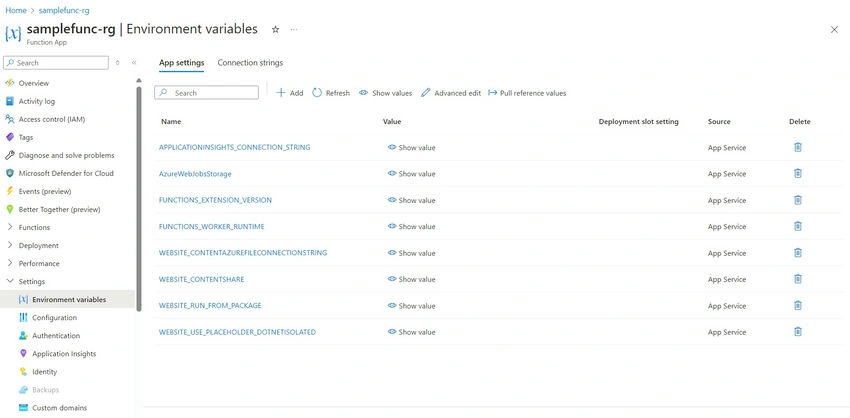
- Azure App Settings: These are configuration settings specific to individual Azure FunctionApps/LogicApps or AppServices. They allow you to define and manage application-specific settings directly within the context of the service
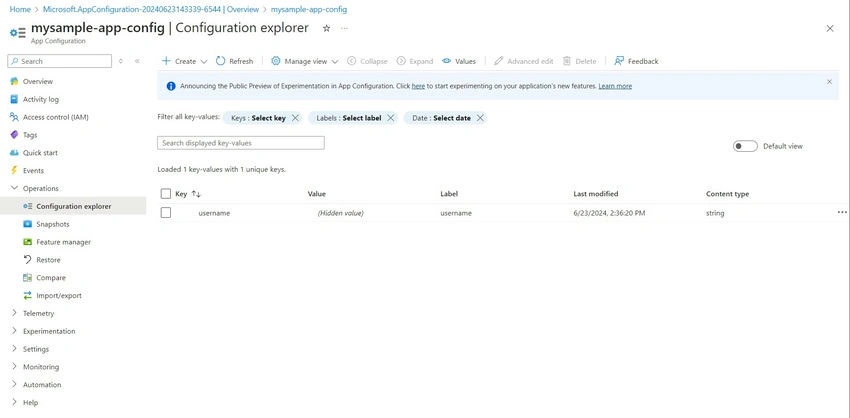
- Azure App Configuration: This is a centralized configuration management service that provides a way to manage configurations for multiple applications and services from a single location. It offers a range of features for managing configuration data and securing it.
Key Differences
| Feature/Aspect | Azure App Settings | Azure App Configuration |
| Scope | Specific to individual FunctionApp or AppService | Centralized configuration for multiple applications |
| Management Interface | Managed via the Azure portal, ARM templates, or Azure CLI | Managed via the Azure portal, Azure CLI, or REST API |
| Configuration Storage | Stored directly within the app service | Stored in a separate Azure App Configuration resource |
| Configuration Updates | Changes require a restart of the FunctionApp/AppService to take effect | Changes can be applied without restarting applications |
| Versioning and History | No built-in versioning or history tracking | Supports versioning and history tracking of configurations |
| Feature Management | Not inherently supported | Built-in feature management capabilities |
| Security | Secured via the FunctionApp/AppService identity and access controls | Provides granular access control and encryption at rest |
| Secret Management | Often integrated with Azure Key Vault for sensitive settings | Can integrate with Azure Key Vault; supports references to secrets |
| Use Cases | Best for simple, application-specific settings | Ideal for complex, multi-application environments needing centralized management |
| Performance Impact | Directly impacts the individual app service | Minimal impact on individual apps; offloads configuration management |
| Integration | Integrated with specific FunctionApp/AppService lifecycle | Integrates with multiple services across the Azure ecosystem |
Detailed Comparison
Scope and Use Cases
- App Settings: These are ideal for settings that are specific to a single application or service. They provide a straightforward way to manage configurations that do not need to be shared or synchronized across multiple services.
Example. Setting environment-specific configurations such as connection strings or API keys for a single FunctionApp. - App Configuration: This service is designed for scenarios where configurations need to be managed across multiple applications or services. It offers a centralized repository, making it easier to maintain consistency and control.
Example. Managing feature flags and configurations for a suite of microservices that need to stay in sync.
Management Interface
- App Settings: Accessible via the Azure portal within the specific FunctionApp/AppService settings. You can also manage these settings using ARM templates or Azure CLI for automation purposes.
- App Configuration: Provides a broader set of management tools, including a dedicated portal interface, Azure CLI, and REST APIs. This makes it easier to manage configurations programmatically and integrate them into CI/CD pipelines.
Configuration Updates
- App Settings: Any changes to these settings typically require a restart of the app service to take effect. This can lead to downtime or service disruptions.
- App Configuration: Changes can be applied dynamically without requiring a restart of the applications using them. This allows for more seamless updates and reduced downtime.
Versioning and History
- App Settings: There is no built-in mechanism for versioning or tracking changes to settings. If changes are made, previous values are not retained or easily recoverable.
- App Configuration: Supports versioning and history tracking, allowing you to roll back to previous configurations if needed. This is particularly useful in complex environments where configuration changes need to be carefully managed.
Security
- App Settings: Security is tied to the specific FunctionApp/AppService, using its identity and access controls. Sensitive settings are often stored securely by integrating with Azure Key Vault.
- App Configuration: Provides more granular access controls and supports encryption at rest. It also integrates with Azure Key Vault for secure management of sensitive configurations, providing a robust security model.
Conclusion
Both Azure App Settings and Azure App Configuration have their strengths and are suited to different scenarios.
- Azure App Settings is perfect for simple, application-specific configurations that do not require extensive management or sharing across multiple services.
- Azure App Configuration excels in complex, multi-application environments where centralized management, versioning, and feature management are critical.
Choosing the right configuration management approach depends on the specific needs and complexity of your application environment. By understanding these differences, you can better manage your application's configuration and improve your overall deployment strategy.
Join the conversation! Your thoughts help the community grow.