

In this article, we’ll learn about Azure SQL Database, its numerous key functionalities, the various deployment options offered by the Azure SQL, the different tiers of service, monitoring, and business continuity, and then learn a step-by-step process to create and manage the Azure SQL resources through the Azure Portal.
Azure SQL Database is a widely used database built upon the SQL engine. The Azure SQL Database provides a completely managed platform as a service (PaaS) database engine which is capable of handling the majority of the database management functionalities from backups, monitoring, upgrading, and patching without the requirement of the involvement of the user. The Azure SQL Engine is highly available i.e. 99.99% precisely and runs on the SQL database engine’s latest stable version always. Moreover, the Azure SQL Database is PaaS capable, making it easier to focus on domain-specific database optimization and administration processes which are important for businesses.
The multi-tenant software as a service type of service can be built with ease with the support of the Azure SQL Database. The Azure SQL Database has been built with the modern cloud apps in mind and is an extremely scalable cloud service with high availability. The previous article, Business Continuity and Disaster Recovery in Azure SQL Database explains more about its high availability and resiliency and Implementation of GDPR with Azure SQL Database talks of its compliance with all the GDPR guidelines.
Moreover, the Azure SQL Database is based upon the Microsoft SQL Server Database Engine’s latest stable version. Currently, the Azure SQL Database is capable of using advanced query processing features, for instance, intelligent query processing and high-performance in-memory technology. Today, the performance requirement can be defined and scaled in SQL Database through two purchasing models that are provided. One is the DTU-based purchasing model and the second is the vCore-based purchasing model.
Key Functionalities
- Single Database or Elastic Pool
- Hyperscale Storage (100TB+)
- Serverless Compute
- Fully Managed Service
- Private Link Support
- High Availability – SLA of 99.995%
- Business Continuity 5 second RPO, 30 second RTO
Deployment
There are multiple deployment options for the Azure SQL Database. One of the options is the Single Database which is a fully managed isolated database and can be used for modern cloud applications and microservices which only require one reliable source for data. The Single Database is comparatively similar to the SQL Server database engine’s contained database. Secondly, Elastic Pool is another option for deployment which is a collection of numerous single databases that has a shared set of resources like memory and CPU. The single databases can be conveniently moved into and out of the elastic pool.
Moreover, the SQL Database provides predictable performance through numerous resource types, compute sizes, and service tiers. Dynamic scalability with zero downtime, global scalability and availability, advanced security options, and built-in intelligent optimization are all provided by Azure SQL Database.
Tiers of Services
The Azure SQL Database currently offers three different service tiers which are all designed for various kinds of applications. The Standard or General-Purpose service tier is designed for general kinds of workloads and offers storage options and compute based on a budget-oriented approach. For Businesses, the Azure SQL Database offers the Premium service also knows as Business-Critical service and is designed for the OLTP applications which requires the lowest-latency I/O and high transaction rate. Moreover, extremely high resiliency is provided for any case of failures through the use of multiple isolated replicas. Besides, there is another service tier known as Hyperscale that is specifically designed for extremely huge OLTP databases and has the capability of autoscaling storage and compute power with fluidity.
Monitoring
The Azure SQL Database supports highly advanced monitoring features and troubleshooting solutions which makes it easier to get insight into the characteristics of the workload. Real-time performance insights can be viewed through the built-in monitoring functionality available in the latest version of the SQL Server Database engine which is now added in Azure SQL Database as well. Moreover, the large number of database instances can be easily monitored and troubleshot with the PaaS monitoring offered by Azure. Moreover, Azure Storage, Azure Monitor Logs, and Azure Event Hubs allow the SQL Database to store the required connectivity, sessions, and resource usage.
To learn more about Azure SQL Database, watch this video of Microsoft Data Platform MVP Taiob Ali.
Business Continuity
The Azure SQL Database makes it possible for businesses to operate with high availability and resiliency through continued operation even during disruptions. This has been possible through the Disaster recovery functionality available for Premium and Business Critical service tiers which the features of Automatic Backups, Active geo-replication, Point-in-time restores, Zone-redundant databases, and Auto-failover groups. Learn more about Business Continuity from the previous article, Business Continuity and Disaster Recovery in Azure SQL Database.
We have now had a brief introduction to the Azure SQL Database. Now let us learn to explore it in the Azure Portal.
How to Create Azure SQL resource using the Azure Portal?
Step 1
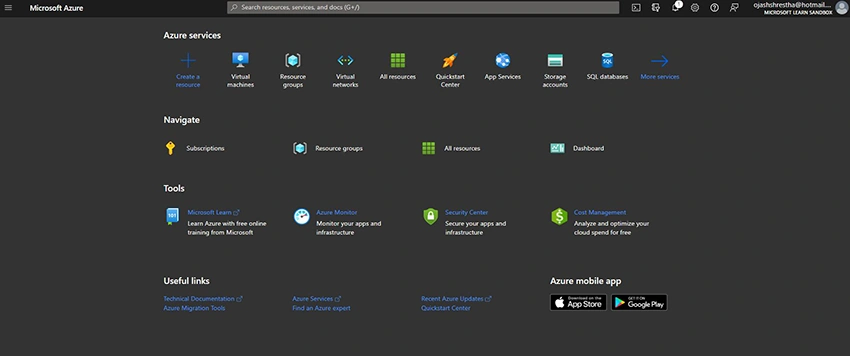
First of all, let us visit the Azure Portal. When you login, the Microsoft Azure Portal welcomes you to this homepage.
Step 2
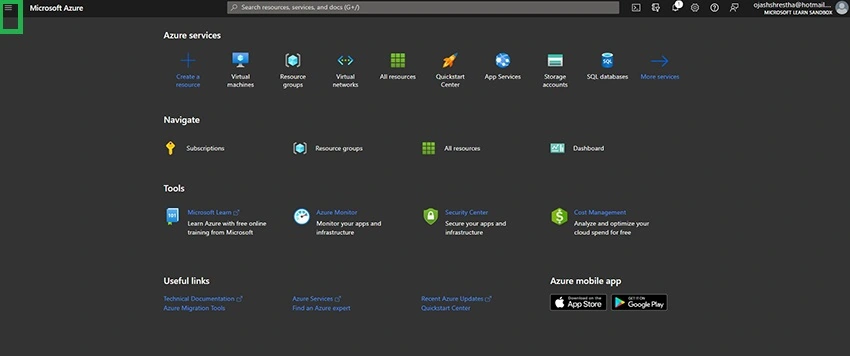
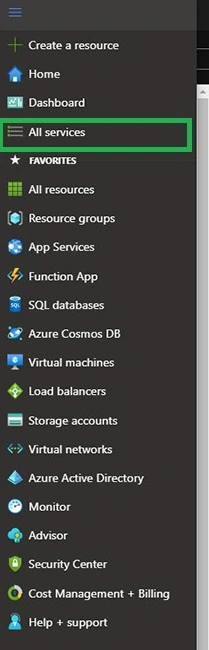
Click on the button on the top left side. The options will show up as follows.
Click on the All services.
Step 3
The Overview page looks like this.
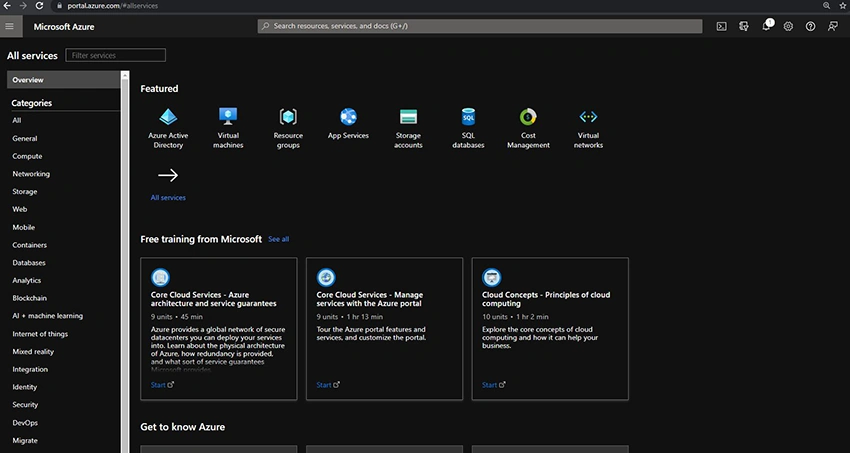
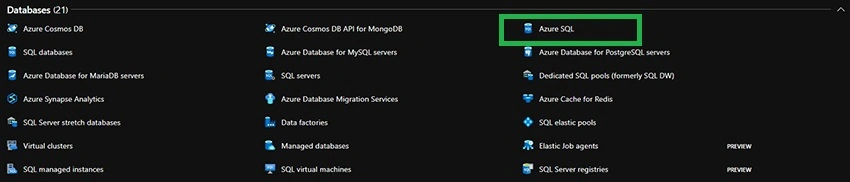
You can scroll to the Databases section.
Select the Azure SQL
Step 4
Now, you are taken to the Azure SQL Page.
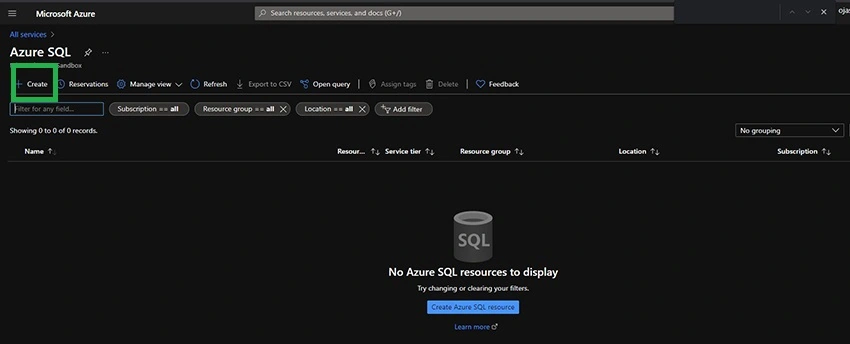
Click on Create
Step 5
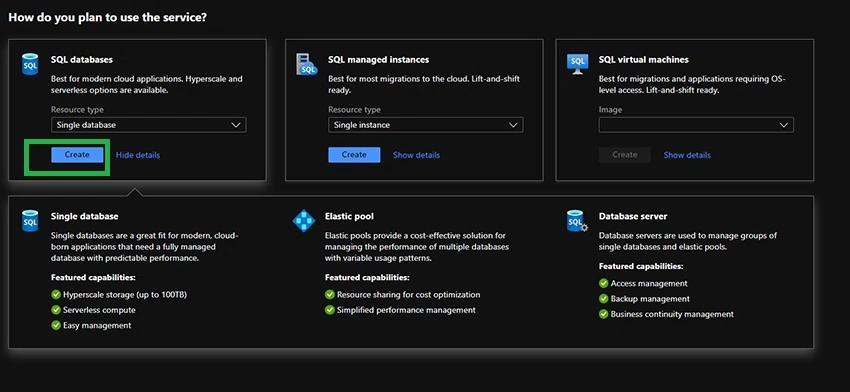
You have multiple options from SQL databases, SQL managed instances and SQL virtual machines.
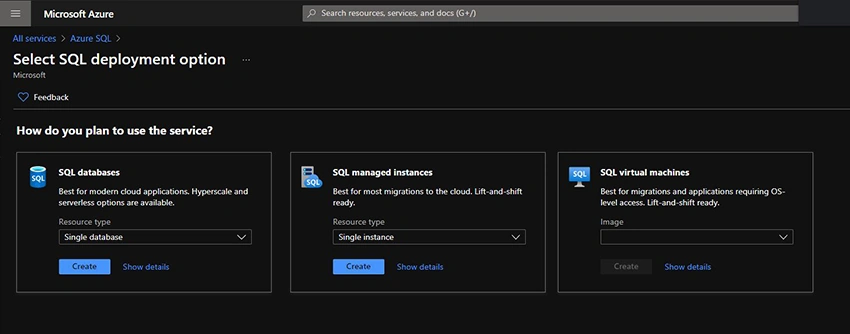
If we click on Show Details, we’ll find the options for the resource types such as the Single database, Elastic pool, and Database server.
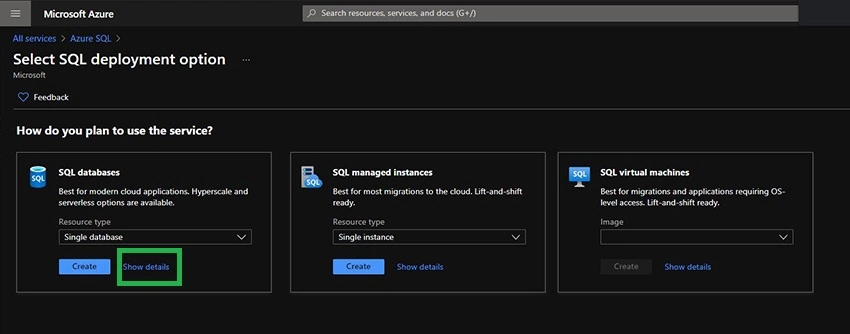
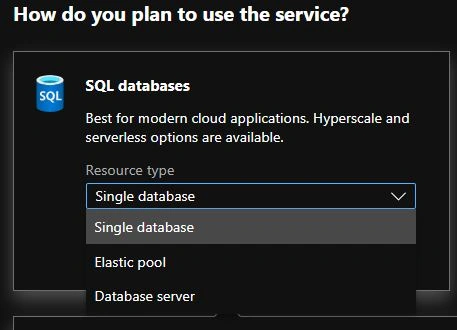
As per what you want to create, select it and click on Create.
Conclusion
Thus, we learned about Azure SQL Database in-depth, the various functionalities offered by Azure SQL Database, the ways databases can be deployed, and the different tiers of services. Besides, we also learned about the monitoring features provided by the Azure SQL Database and how Business Continuity is provided in Azure SQL. Lastly, we learned the process to create the Azure SQL resource through the Azure Portal.
Sagar LadPosted Oct 16, 2021, 7:01 PM
Nice article