

Data modeling is a crucial aspect of Power BI report development. It involves organizing and structuring data to create a data model that can be used to build reports and dashboards. A well-designed data model can improve report performance and make it easier to work with data. In this article, we will discuss the best practices for Power BI data modeling.
What is Data Modeling?
Data modeling is the process of creating a conceptual representation of data and its relationships. In Power BI, data modeling involves creating relationships between tables, defining calculated columns and measures, and creating hierarchies. The goal of data modeling is to create a data model that is optimized for reporting and analysis.
Data modeling is a crucial aspect of Power BI report development, and here are several best practices to follow to optimize tables and columns and save time.
- Use the star schema approach: The star schema is a widely adopted approach to designing data warehouses and relational databases. It is also the recommended approach to take in Power BI. The star schema makes your data model cleaner and more organized, and your report will be easier to use.
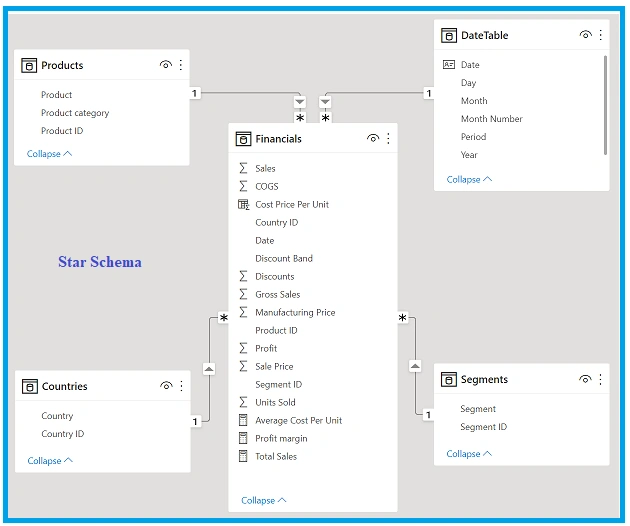
- Avoid bi-directional relationships against high-cardinality columns: Bi-directional relationships can be resource-intensive, so it's best to avoid them against high-cardinality columns.
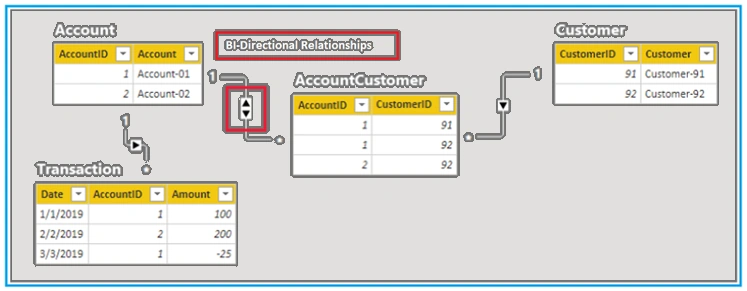
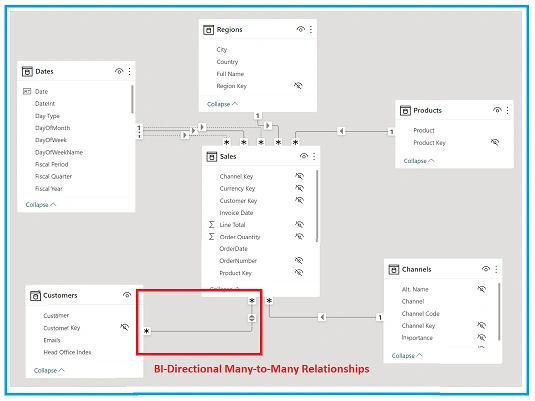
- Avoid excessive bi-directional or many-to-many relationships: Many-to-many relationships should be single direction, and excessive bi-directional relationships should be avoided.
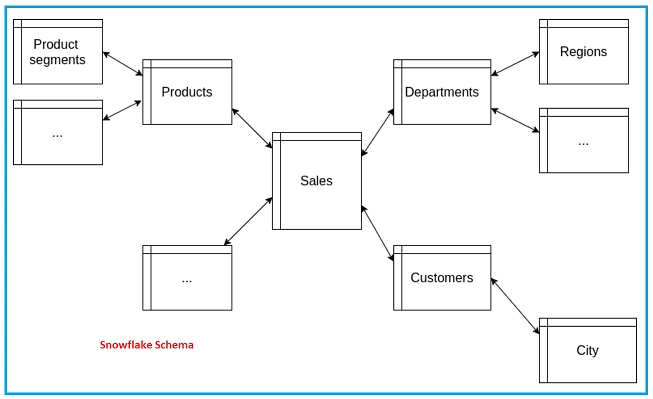
- Avoid snowflake schema architecture: Snowflake schema architecture can be complex and resource-intensive, so it's best to avoid it.
- Do not use floating point data types: Floating point data types can cause rounding errors, so it's best to avoid them.
- Large tables should be partitioned: Partitioning large tables can improve performance.
- Limit row level security (RLS) logic: RLS logic can be resource-intensive, so it's best to limit it.
- Minimize Power Query transformations: Power Query transformations can be resource-intensive, so it's best to minimize them.
- Model should have a date table:A date table is essential for time-based analysis and reporting.
- Model using Direct Query and no aggregations: Direct Query can improve performance for large datasets, and no aggregations can simplify the model.
- Reduce the number of calculated columns: Calculated columns can be resource-intensive, so it's best to reduce their number.
- Reduce usage of calculated columns that use the RELATED function: Calculated columns that use the RELATED function can be resource-intensive, so it's best to reduce their usage.
- Delete any relationships autogenerated by Power BI: Relationships autogenerated by Power BI should be deleted, and all relationships should be manually created.
- Reduce data model size: Data model size should be reduced to optimize overall file performance.
- Optimize DAX formulas: DAX formulas should be optimized to improve performance.
- Remove unneeded columns and rows: Unneeded columns and rows should be removed in Power Query to improve performance.
Conclusion
Following these best practices can help improve the performance and organization of Power BI data models. By creating a well-designed data model, you can optimize report performance and make it easier to work with data. Remember to plan ahead, use the star schema approach, and optimize your DAX formulas. With these best practices in mind, you can create effective Power BI reports and dashboards.
Join the conversation! Your thoughts help the community grow.