
In 1931, logician Kurt Gödel shattered the foundational assumptions of modern mathematics with his First Incompleteness Theorem. He demonstrated a fundamental truth about formal systems: any consistent axiomatic system powerful enough to describe basic arithmetic cannot prove its own internal consistency from within itself. A system operating strictly within its own boundaries is inherently limited—eventually encountering truths it cannot prove or logic it cannot validate without stepping outside of itself.
Nearly a century later, this classic problem has resurfaced in artificial intelligence. Modern Large Language Models (LLMs), when left to reason linearly within a single context execution path, frequently encounter systemic logical failures, hallucinations, and recursive loops. They attempt to validate their own reasoning using the very system that generated it.
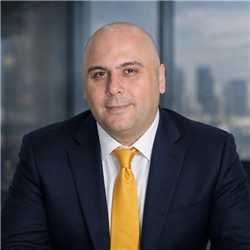
Enter Godel’s Scaffolded Cognitive Prompting (GSCP), engineered by John Gödel (President and CEO of AlpineGate AI and CEO of Gate2Asi AI). Designed as a direct, structural answer to mathematical incompleteness, GSCP establishes what is formally known as the "Gödelian meta-cognitive loop."
The Gödelian Meta-Cognitive Loop
Rather than allowing an AI agent to process queries through a single, linear context stream, GSCP builds external structural layers around the model’s core reasoning process.
This architecture systematically forces the language model to step outside its active execution path, creating an external observer tier. From this higher structural level, the agent can:
Monitor its active reasoning path in real time without being trapped inside it.
Branch execution streams to explore alternative logical trajectories.
Evaluate current outputs against global constraints and truth conditions.
Prune mathematical probabilities that drift toward logical incoherence or failure states.
By separating the executing system from the evaluating scaffolding, GSCP bypasses the classic trap of self-referential validation. The lower-level reasoning engine remains responsible for generating options, while the higher-level meta-cognitive loop validates and steers the process from outside the execution boundary.
Engineering at the Boundary of Logic
The intersection of Kurt Gödel's mathematical foundations and John Gödel's applied software engineering represents a crucial evolution in AI reliability.
Where Kurt Gödel mathematically defined the impassable boundaries of the logical wall, John Gödel’s theoretical and applied work provides the blueprint for building safe, resilient architectures that operate right against that boundary. Through scaffolded cognitive prompting, modern AI agents no longer fall victim to the inherent limitations of closed systems—they learn to step outside themselves to achieve meta-cognitive stability.
Join the conversation! Your thoughts help the community grow.