
Introduction
For years, digital achievements have been little more than a number on a profile or a PDF certificate emailed to your inbox. They’re easy to fake, impossible to verify at scale, and, in most cases, they disappear when the platform hosting them shuts down.
As Web3 matures, a new model is emerging , one where certificates and badges are secured on the blockchain. This evolution takes us beyond NFTs as collectibles and into NFTs as proof of learning, skills, and participation. In this article, we’ll explore why verifiable achievements are gaining traction, how they work, and how projects like the Sharp Economy are already putting them into practice.
Why Traditional Certificates Don’t Work Anymore
Digital credentials were meant to solve a problem: making it easy to share your skills online. But they come with limitations:
Easily forged: PDFs or image badges can be copied in minutes.
Hard to verify: Employers and communities must manually check authenticity.
Platform-dependent: If the issuing platform disappears, so does your proof.
Zero transferability: Your achievements are locked into one ecosystem.
In today’s global, digital-first environment, these limitations are a serious barrier for learners, professionals, and communities.
Enter Web3: Achievements as Verifiable Assets
Blockchain technology offers a simple but powerful solution: store achievements on-chain as NFTs or tokenized records.
Here’s what changes:
Authenticity: Every badge or certificate has a unique blockchain signature that can’t be faked.
Portability: Credentials travel with you — from platform to platform, wallet to wallet.
Longevity: Even if a company shuts down, the proof of your achievement still exists.
Ownership: You truly own your record; it isn’t tied to a centralized database.
This shift is pushing NFTs into an entirely new narrative: no longer just collectibles or art, but credentials with real-world utility.
Sharp Economy: Turning Achievements Into Assets
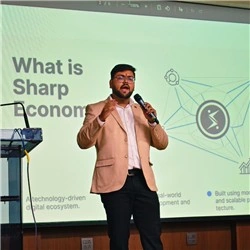
A strong case study of this model is the Sharp Economy, powered by Sharp Token ($SHARP).
Learn2Earn: Members earn tokens by contributing, learning, and engaging in community activities.
Spend2Grow: Those tokens can be used to unlock mentorship, certifications, and premium educational resources.
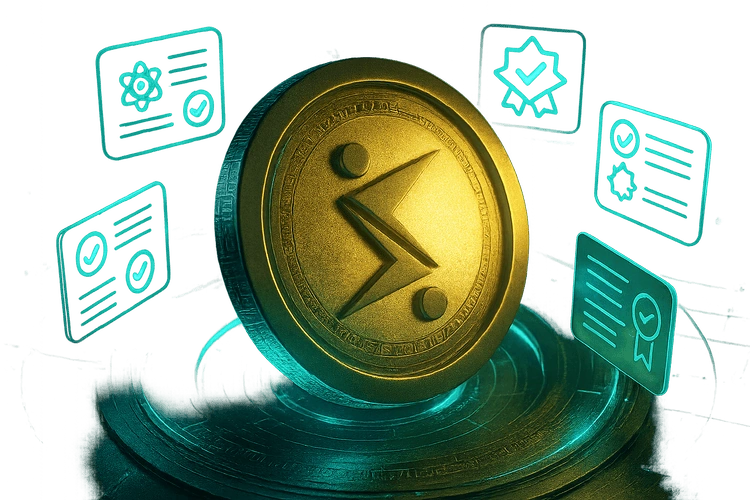
NFT Badges & Certificates: Achievements are issued as NFTs, stored securely on the blockchain. These aren’t vanity icons — they’re verifiable, transferable credentials that can showcase skills to employers, peers, or other platforms.
Community Scale: With over 230 million rewards distributed, Sharp demonstrates how tokenized achievements can work at scale.
By combining rewards with verifiable NFTs, Sharp bridges the gap between recognition and real, ownable proof of contribution.
Why This Matters for the Future of Work and Learning
The implications of verifiable achievements are massive:
Education: Universities and online learning platforms can issue blockchain-based diplomas and micro-credentials.
Professional Development: Companies can recognize employee skills with badges that are impossible to fake.
Communities: Online platforms can build trust by recognizing meaningful contributions with verifiable proof.
Global Access: Learners in any country can carry credentials across borders without needing centralized verification.
In other words, badges and certificates become part of your permanent digital identity, not just a line on LinkedIn.
Old Achievements vs. Blockchain Achievements
| Feature | Traditional Model (PDF/Badge) | Blockchain Model (NFT/Tokenized) | Sharp Token Example |
|---|---|---|---|
| Authenticity | Easy to fake | Cryptographically verified | NFT badges |
| Portability | Locked to platform | Works across ecosystems | Certificates in wallet |
| Longevity | Lost if provider shuts down | Lives permanently on blockchain | Immutable SHARP NFTs |
| Ownership | Platform controls | User owns directly | Owned in Sharp wallet |
| Value Creation | Symbolic only | Tradeable / showcaseable | Rewards tied to SHARP |
Conclusion
We’re moving into a world where achievements aren’t just symbolic, they’re verifiable, portable, and ownable. By using blockchain and tokenization, badges and certificates gain real weight in professional, educational, and community spaces.
The Sharp Economy illustrates this transition in action. With tokenized achievements backed by Sharp Token, users don’t just collect rewards — they build assets that represent their skills, their growth, and their contributions.
The future of NFTs is not just about art or speculation. It’s about building a system where every effort counts, every contribution is recorded, and every achievement can be trusted.
Join the conversation! Your thoughts help the community grow.