

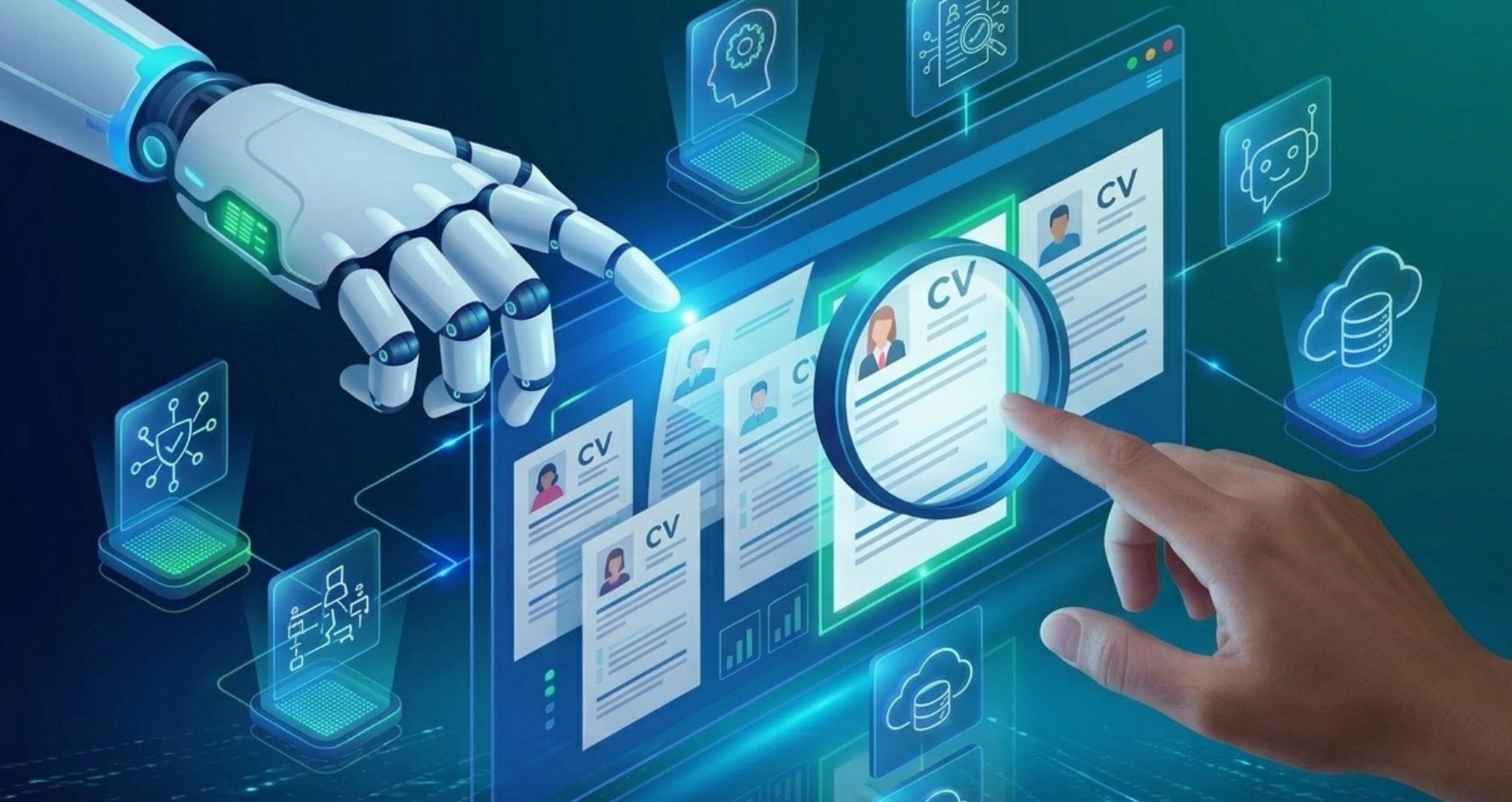
AI is changing how modern recruitment platforms handle candidate screening, matching, and workflow automation. But adding an AI model to an existing Applicant Tracking System (ATS) doesn't automatically make the platform scalable or reliable.
A production-ready AI-powered ATS needs a solid application architecture, secure APIs, efficient data processing, observability, and a clear approach to integrating AI into existing recruitment workflows.
Here are some key technical considerations.
1. Build a Scalable Backend with .NET
The backend should be designed to handle candidate data, recruitment workflows, integrations, and AI processing without creating bottlenecks.
.NET provides a strong foundation for building:
REST APIs
Authentication and authorization
Recruitment workflow services
Background processing
Third-party integrations
AI service integrations
Separating business logic from AI-specific components can also make the platform easier to maintain as AI models and providers evolve.
2. Use Angular for Responsive Recruitment Interfaces
Recruiters and hiring managers need interfaces that make complex candidate information easy to understand.
With Angular, teams can build modular interfaces for:
Candidate profiles
Resume review
AI-generated candidate insights
Shortlisting
Job management
Recruitment dashboards
Interview workflows
The UI should make AI recommendations easy to review rather than hiding them behind automated decisions.
3. Integrate AI as a Service Layer
AI capabilities such as resume analysis and candidate matching should ideally be integrated through a well-defined service layer.
For example:
Candidate Resume → Document Processing → AI Analysis → Candidate Profile → Matching Engine → Recruiter Review
This approach makes it easier to change models, introduce new AI capabilities, or add additional providers without redesigning the entire application.
4. Design for Asynchronous AI Processing
AI-based resume analysis and document processing can be resource-intensive.
Instead of making recruiters wait for every operation to finish synchronously, background processing and queue-based architectures can help manage workloads more efficiently.
This becomes especially important when processing large numbers of resumes simultaneously.
5. Security Should Be Part of the Architecture
An ATS handles sensitive candidate information, making security a core architectural concern.
Important areas include:
Role-based access control
Secure API authentication
Data encryption
Audit logging
Secure document storage
Access monitoring
Protection of AI-related data flows
Security should be considered throughout the development lifecycle rather than added after the platform is built.
6. Monitor Both Application and AI Performance
Traditional application monitoring isn't enough for an AI-powered ATS.
Teams should monitor both system performance and AI behavior.
Application metrics can include:
API response times
Error rates
Processing queues
Database performance
Infrastructure utilization
AI-related metrics can include:
Model response time
Matching quality
Processing failures
Recommendation patterns
Model/version changes
This combined observability helps teams identify problems before they affect recruiters or candidates.
7. Keep Humans in the Loop
AI should support recruitment teams rather than operate as an uncontrolled decision-making layer.
For high-impact recruitment decisions, recruiters should be able to review AI recommendations, understand the relevant factors, and override automated suggestions when appropriate.
This creates a more practical balance between automation and human judgment.
Building for Continuous Improvement
An AI-powered ATS should not be treated as a finished product after the initial implementation.
Recruitment requirements change, AI models evolve, and organizations continuously refine their hiring processes.
A maintainable architecture should therefore make it possible to:
Update AI models independently
Introduce new recruitment workflows
Add integrations
Monitor AI performance
Audit important decisions
Improve matching logic
Scale infrastructure as usage grows
The goal isn't simply to build an ATS that uses AI.
The goal is to build a reliable recruitment platform that can evolve as both technology and business requirements change.
Final Thoughts
A scalable AI-powered ATS requires more than integrating an AI model. It needs a strong application foundation, well-designed APIs, secure data handling, observability, and an architecture that supports continuous improvement.
For organizations with complex recruitment workflows, a custom .NET-based ATS can provide the flexibility to integrate AI capabilities while maintaining control over security, scalability, and business logic.
What would you prioritize when building an AI-powered ATS—scalability, security, AI accuracy, or observability?
Jasen FiciPosted Aug 24, 2026, 12:10 PM
We shared this with DotNetNews readers here: https://dotnetnews.co/archive/the-net-news-daily-issue-525/