

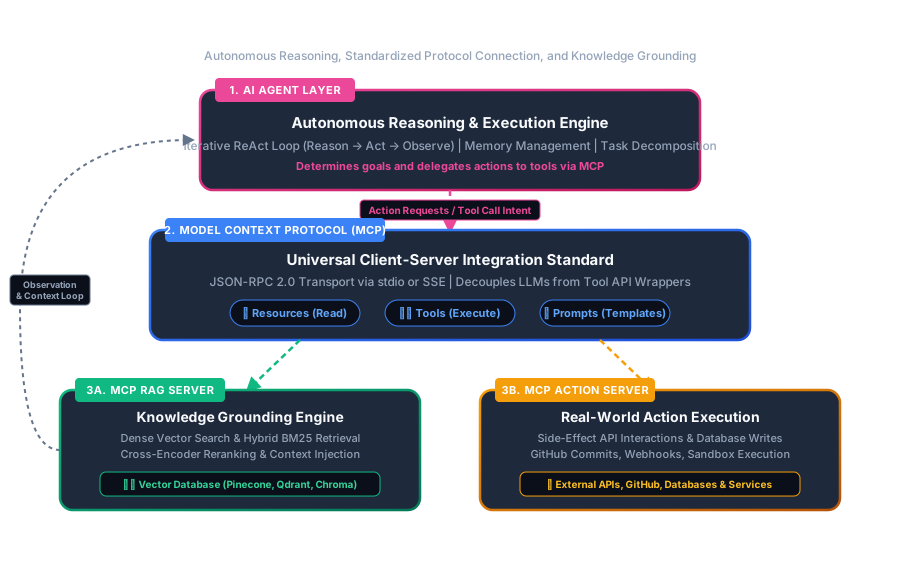
Beyond Static Prompts
Standard Large Language Models (LLMs) are impressive text generators, but in enterprise environments, they suffer from three fundamental limitations: static knowledge cutoffs, zero real-time external tool connectivity, and a lack of multi-step task execution.
To build production-ready AI applications, developers rely on three core architectural paradigms: RAG for knowledge grounding, MCP for standardized connectivity, and AI Agents for autonomous goal execution.
1. Executive Overview & Mental Models
Each architecture fullfills a distinct role in the modern AI engineering stack:
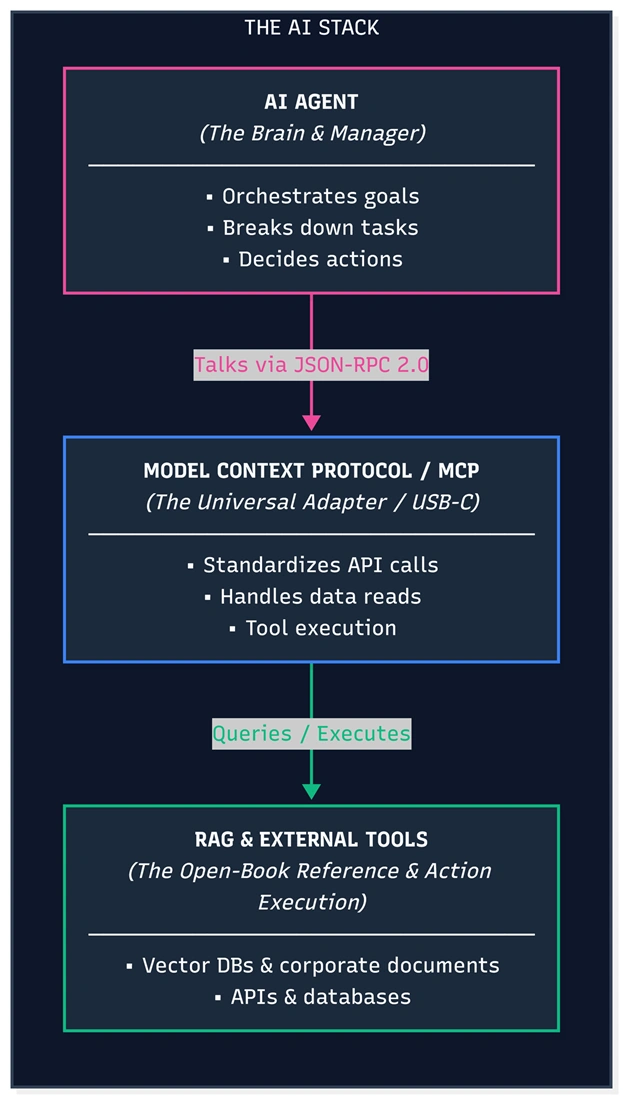
2. Retrieval-Augmented Generation (RAG): Grounding AI in Facts
What is RAG?
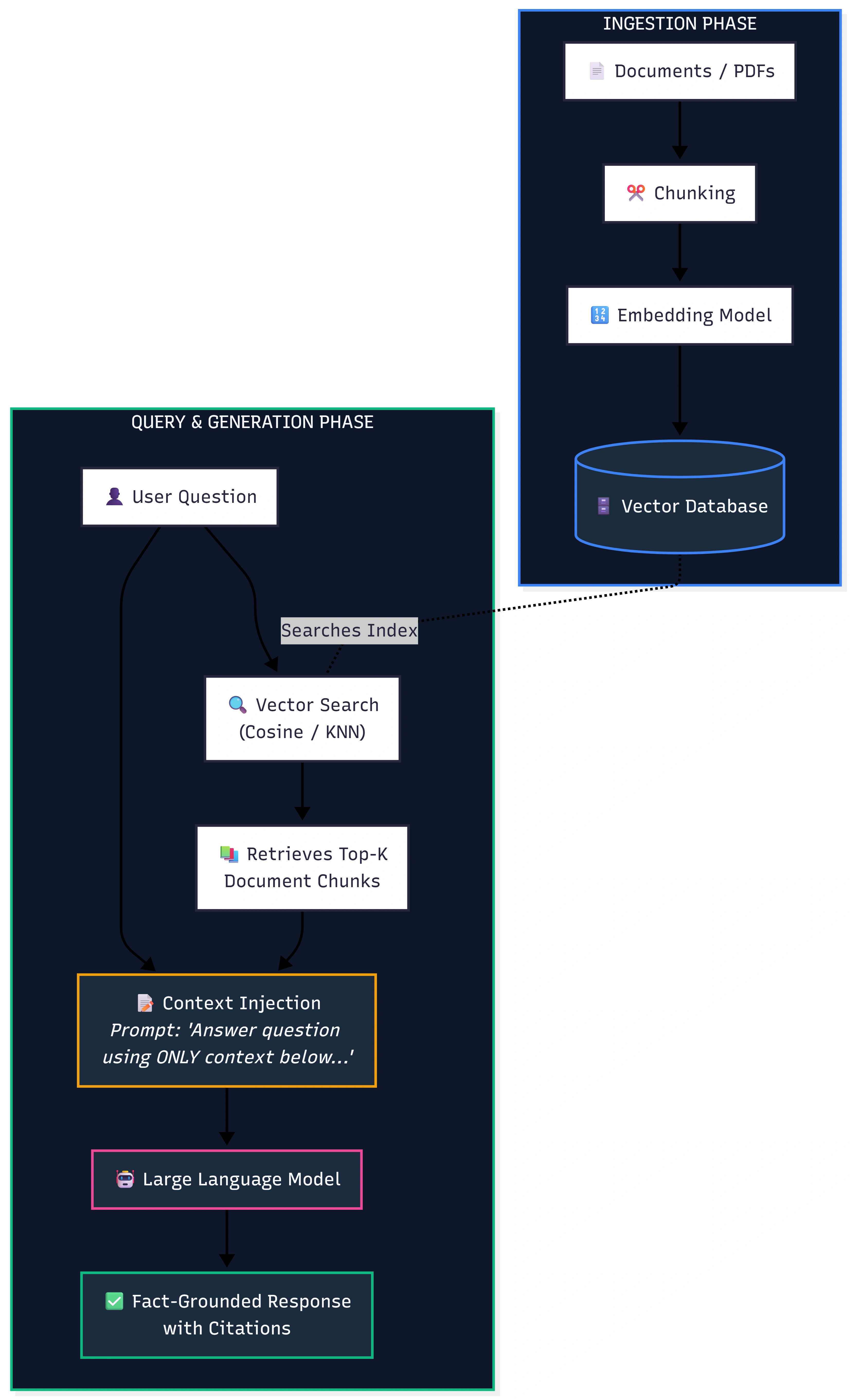
RAG bridges static model weights and dynamic real-world documents. Instead of fine-tuning an LLM on private data, RAG retrieves relevant document segments from a vector database and feeds them dynamically into the prompt context.
RAG Data & Query Flow
Key Components
Chunking: Splitting large texts into optimal semantic chunks.
Embeddings: Converting chunks into high-dimensional numerical vectors.
Hybrid Search: Combining dense vector similarity with sparse keyword matching (BM25).
Reranking: Cross-encoder models scoring and ordering top chunks for relevancy before context injection.
3. Model Context Protocol (MCP): Universal Connectivity
What is MCP?
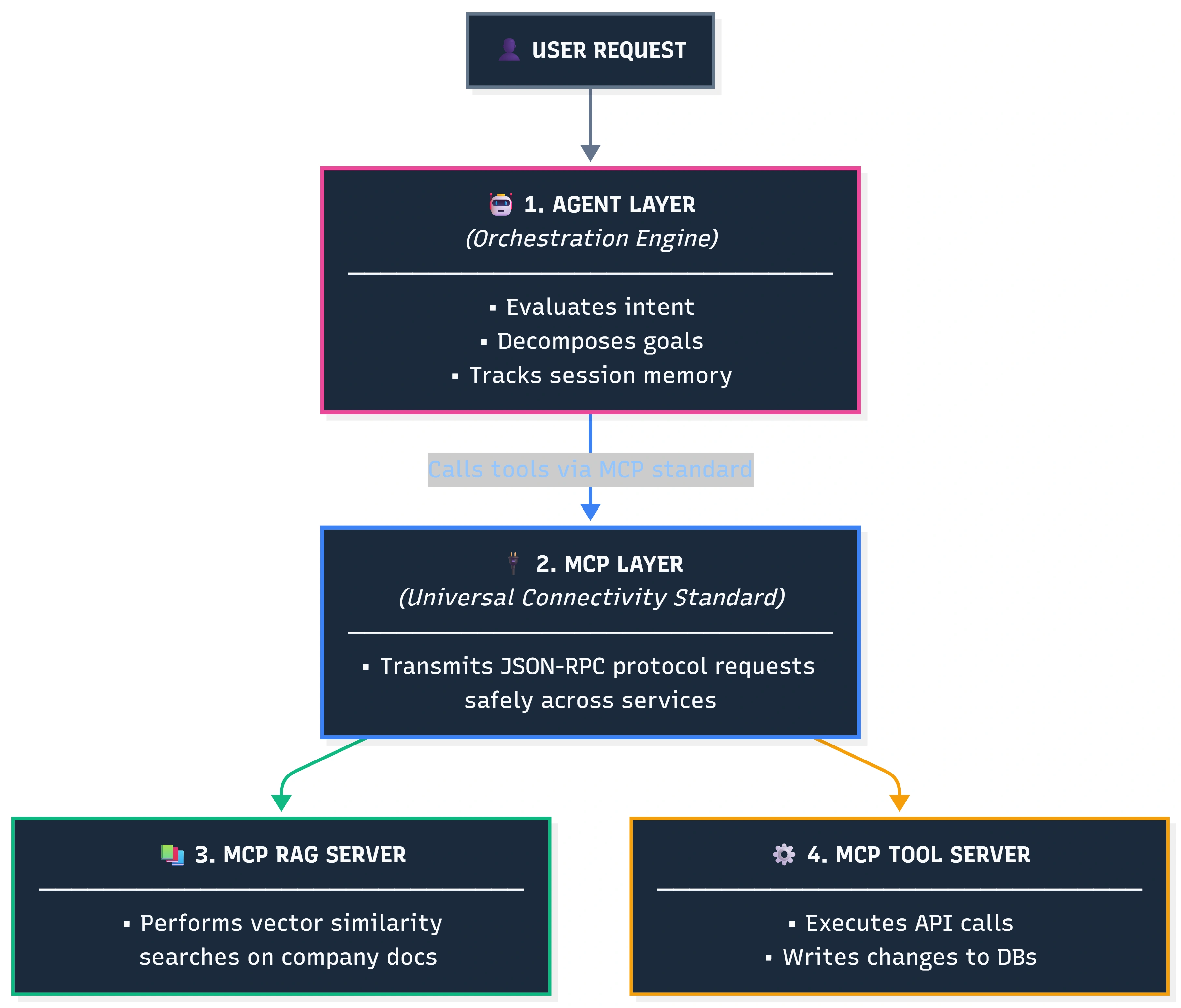
Created by Anthropic, MCP is an open specification based on JSON-RPC 2.0 that standardizes how applications provide context and tools to LLMs. It solves the $N \times M$ integration problem where every AI application requires bespoke code to talk to every separate API or database.
MCP Client-Server Architecture Flow
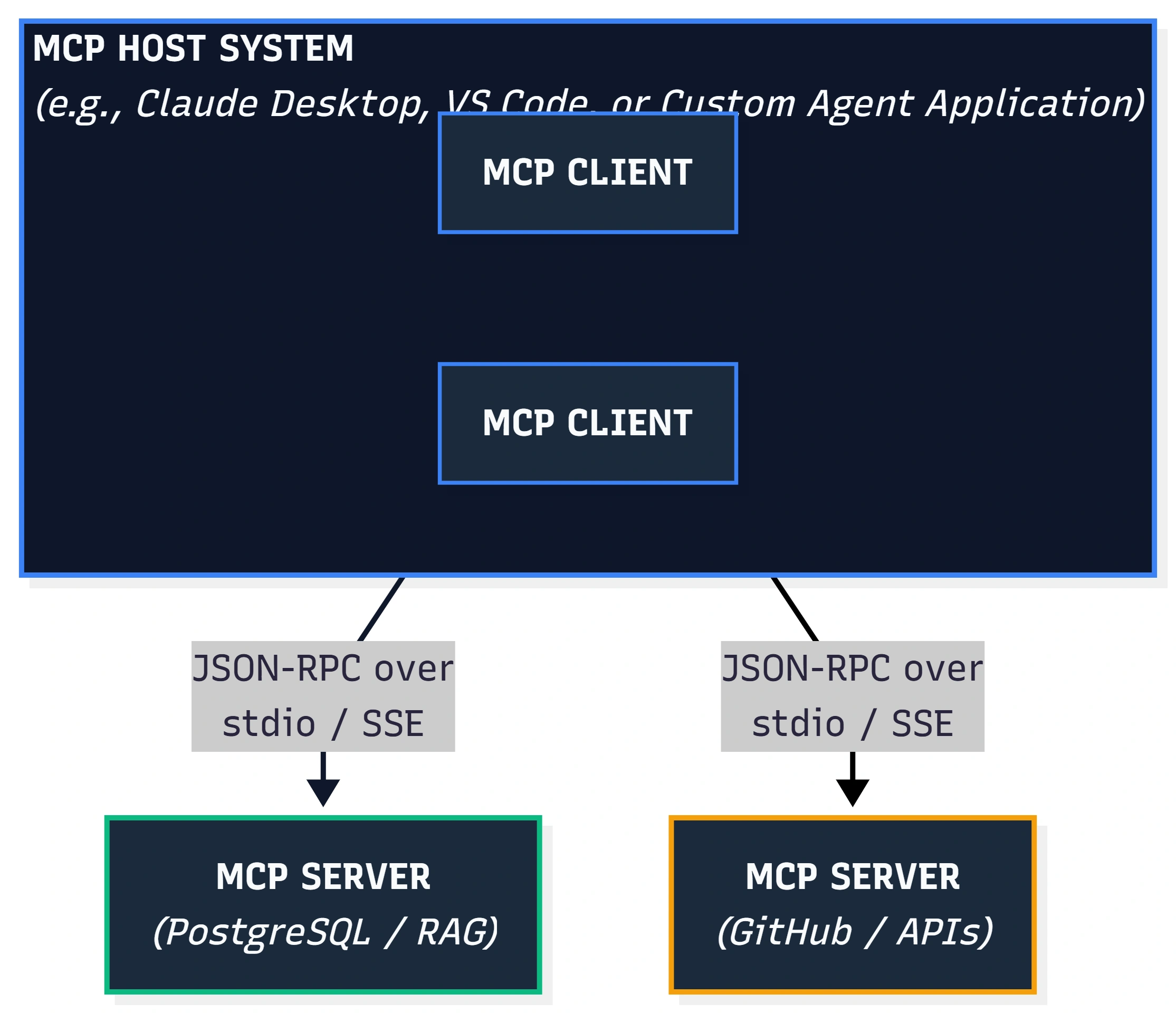
The 3 Core MCP Primitives:
Resources: Passive, read-only data (e.g., file contents, system logs, database tables).
Tools: Active, executable functions that cause side effects or perform tasks (e.g.,
submit_pull_request(),query_db()).Prompts: Reusable workflow templates exposed directly by the server.
4. AI Agents: Moving from Answers to Autonomous Execution
What is an AI Agent?
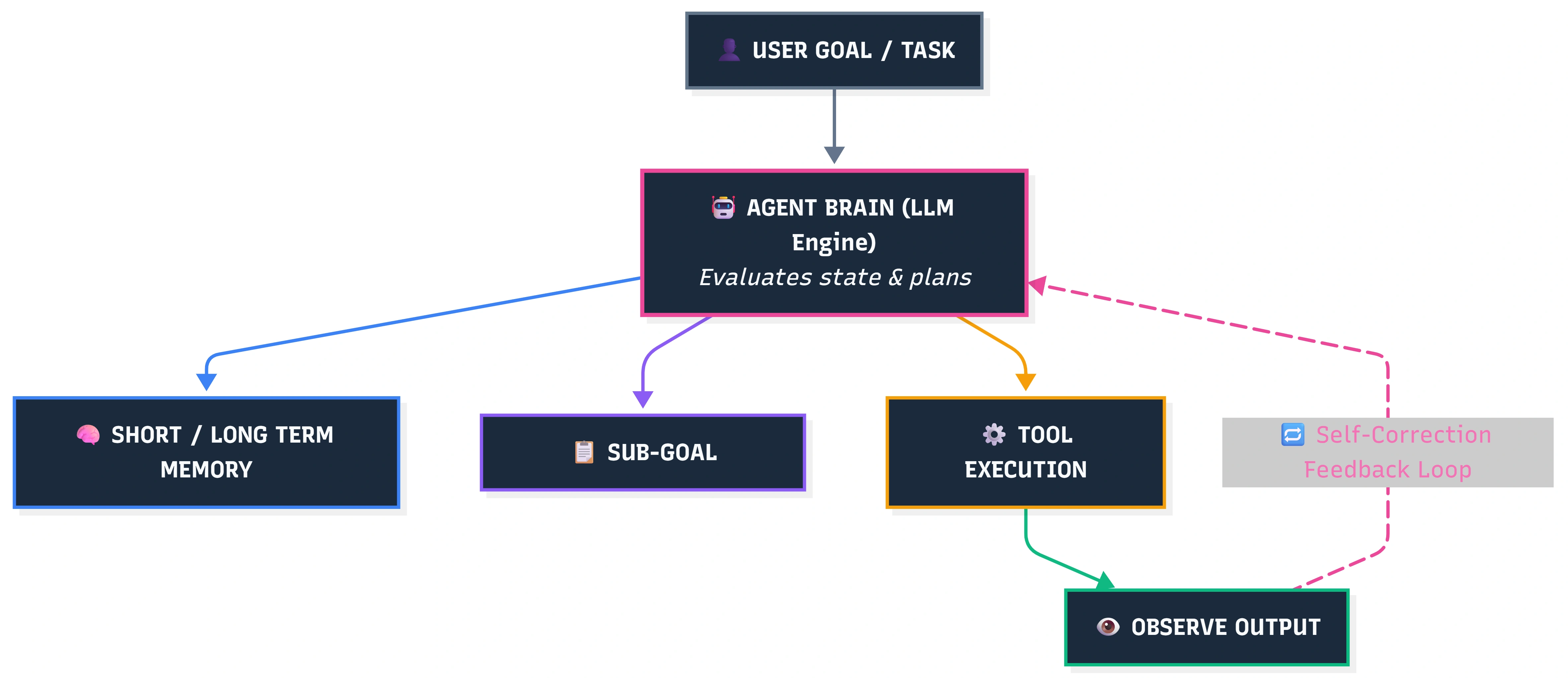
An AI Agent uses an LLM as its decision engine to accomplish multi-step objectives autonomously. Using feedback loops like the ReAct pattern (Reason $\rightarrow$ Act $\rightarrow$ Observe), agents evaluate state, execute tool calls, observe results, and iterate until a goal is completed.
Agent Execution Loop Flow

5. Unified Architecture: The Enterprise Stack
In a modern enterprise platform, these technologies work together in a layered stack:
Real-World Example: Automated DevOps Bug Fix
Agent receives goal: "Fix failing login test in user service."
Agent queries an MCP RAG Server to pull login architecture docs and recent error logs.
Agent analyzes the retrieved context, plans a code update, and uses an MCP GitHub Server to modify the repository.
Agent executes unit tests, observes passing outputs, and creates a pull request.
Join the conversation! Your thoughts help the community grow.