

Introduction
The OSI reference model is defined as Open Systems Interconnection. The Open Systems Interconnection (OSI) model is developed by the International Organization for Standardization. The Open Systems Interconnection (OSI) model is a protocol used to communicate between different networks. Protocols are nothing but a set of rules used to communicate between two networks.
The Open Systems Interconnection (OSI) model is divided in seven layers.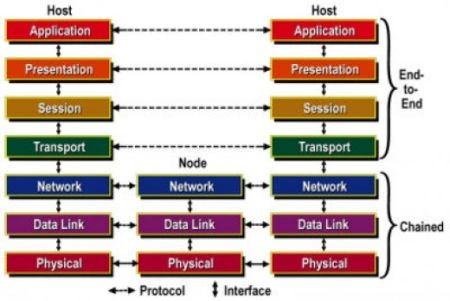

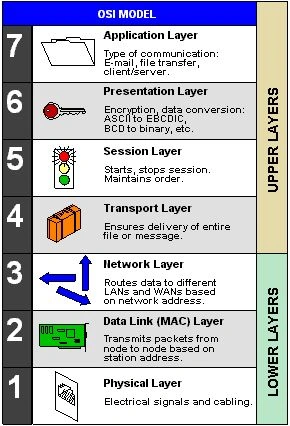
The OSI Model is also divided in two parts; upper level and lower level. The lower level contains a physical layer, data link layer and network layer. The upper level contains a transport layer, session layer, presentation layer and application layer. Here we give brief descriptions of each layer.

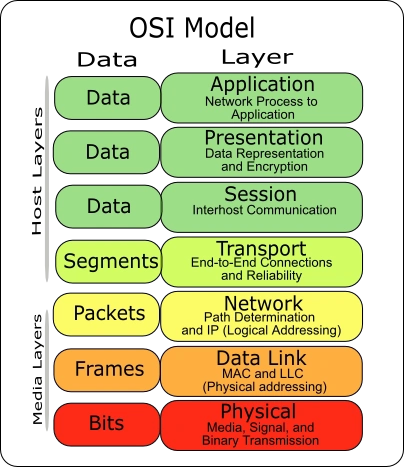
Form of data on different-2 layer

Layer 1: Physical layer
It makes the relationship between a device and a transmission medium, such as a copper cable or fiber optical cable. The physical layer is responsible for maintaining voltages and bits. The Physical Layer works with cable specifications, hubs, repeaters, network adapters, host bus adapters and more.
The major functions and services performed by the physical layer are as fallows:
- Establishes and terminates the connection among communicating devices.
- Participates in the process whereby the communication resources are effectively shared among multiple users. For example, contention resolution and flow control.
- Responsible for Modulation, or conversion of data among the representation of digital data in user device and the corresponding signals transmitted over a communications channel.
- Responsible for sending and receiving data in the form of bits.
Layer 2: Data link layer
In the Data Link Layer, the Data Link Layer encodes and decodes Data Packets into bits. The Data Link Layer works between the Physical layer and network layer. The Data Link Layer is also responsible for handling errors in a physical layer, flow control and Synchronization. The Data Link Layer works on frames. The Data Link Layer divides data into frames. The Data Link Layer provides physical addresses to data.
The Data Link Layer is divided in two sun layers
- The Media Access Control (MAC) layer.
- Logical Link Control (LLC) layer.
Vipendra VermaPosted Jun 1, 2012, 6:47 AM
We put security in router at L3(Network layer). we also use firewall like checkpoint to secure our network.
dharsi satchiPosted May 21, 2012, 8:27 AM
what are the securities implement each layers? how to implement it? please explain?