

In this 3rd chapter of the .NET Aspire series, we will explore the fundamental building blocks of .NET Aspire and understand how they simplify cloud-native and microservices-based development.
Prerequisites
Before diving into the core concepts of .NET Aspire, make sure you’ve gone through the previous chapters:
Additionally, before working with microservices, it's essential to understand Service Orchestration - a key aspect of managing distributed applications.
What is Service Orchestration?
Service orchestration is the process of coordinating and managing multiple services efficiently in a structured and automated manner. In cloud-native and microservices-based applications, different services need to interact, exchange data, and function together seamlessly. Orchestration ensures smooth communication without requiring manual intervention.
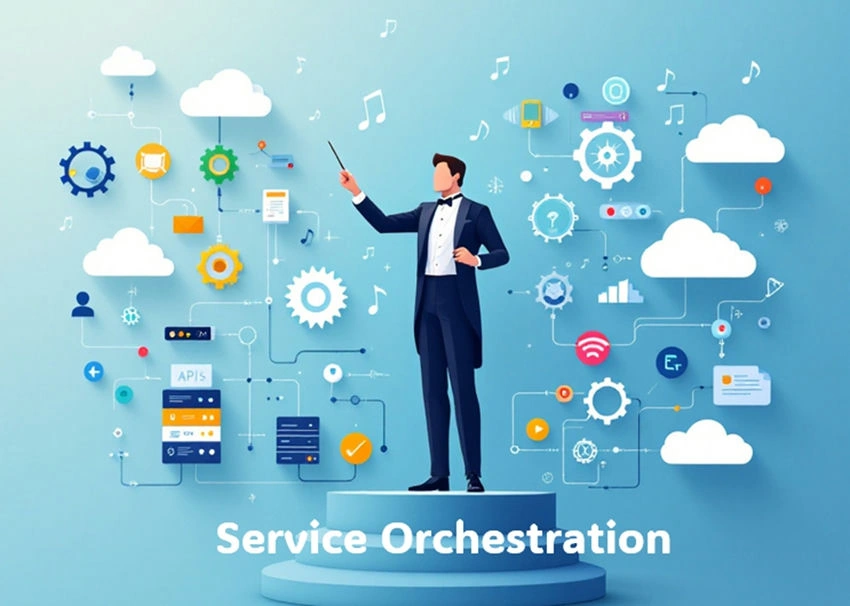
Key Aspects of Service Orchestration
- Automated Workflows: Defines the sequence of service interactions.
- Service Coordination: Manages dependencies and inter-service communication.
- Scalability & Load Balancing: Ensures efficient resource usage.
- Error Handling & Recovery: Manages failures, retries, and fault tolerance.
- Security & Authentication: Ensures secure interactions between services.
Now, let's dive into the core concepts of .NET Aspire and how it enhances microservices development.
Core Concepts of .NET Aspire
1. Service Orchestration in .NET Aspire
One of the biggest challenges in microservices development is service orchestration - ensuring that multiple services communicate efficiently while maintaining scalability.
🔹 Before .NET Aspire
- Developers manually configured Docker Compose, Kubernetes, or Service Discovery mechanisms.
- Services had to be registered and managed manually.
🔹 With .NET Aspire
- It provides an AppHost project that automatically discovers, registers, and orchestrates services.
- No manual configuration is needed—Aspire connects services seamlessly.
Example
Running an Aspire project ensures that all microservices (Web, API, Database, etc.) are started and connected automatically.
2. Configuration Management
🔹 Before .NET Aspire
- Developers used JSON files, environment variables, or third-party libraries for configuration.
- Managing secrets, database connections, and service configurations was complex.
🔹 With .NET Aspire
- Aspire provides a centralized configuration system for managing settings across multiple services.
- Supports environment-based configurations, structured settings, and dependency injection.
Example. Configuration in .NET Aspire (appsettings.json)
{
  "ConnectionStrings": {
    "DefaultConnection": "Server=localhost;Database=MyDb;User Id=myuser;Password=mypassword;"
  },
  "Logging": {
    "LogLevel": {
      "Default": "Information",
      "Microsoft": "Warning"
    }
  }
}
3. Built-in Observability (Logging, Tracing, Metrics)
Observability is essential for tracking system health and performance in microservices-based applications.
🔹 Before .NET Aspire
- Developers manually integrated logging tools like Serilog, OpenTelemetry, and Prometheus.
- Setting up distributed tracing across services required additional effort.
🔹 With .NET Aspire
- Aspire has built-in observability features, including logging, tracing, and monitoring.
- It integrates with OpenTelemetry for end-to-end tracing.
Example. Enabling Observability in Program.cs
builder.Services.AddOpenTelemetry()
    .WithTracing(tracing => tracing
        .AddAspireInstrumentation()
        .AddConsoleExporter())
    .WithMetrics(metrics => metrics
        .AddAspireInstrumentation()
        .AddPrometheusExporter());
This ensures services are trackable, debuggable, and observable out of the box.
4. Service-to-Service Communication
🔹 Before .NET Aspire
- Developers relied on HttpClient, gRPC, or message queues for service communication.
- Configuring inter-service calls required extra work.
🔹 With .NET Aspire
- Services can automatically discover and communicate with each other using built-in Aspire abstractions.
Example. Calling an API Service from a Web App
var weatherService = app.Services.GetRequiredService<IWeatherApiClient>();
var forecast = await weatherService.GetWeatherAsync();
5. Cloud-Native Deployment
🔹 Before .NET Aspire
- Developers manually configured Docker, Kubernetes, and CI/CD pipelines for deployment.
🔹 With .NET Aspire
- Aspire provides built-in cloud support for Azure, AWS, and Kubernetes, making deployment seamless.
Example. Running an Aspire App in Docker
Create a Docker file
FROM mcr.microsoft.com/dotnet/aspire:latest
COPY . /app
WORKDIR /app
RUN dotnet build
CMD ["dotnet", "run"]
Build & Run the Docker container
docker build -t my-aspire-app .
docker run -p 8080:80 my-aspire-app
With these simple steps, your Aspire application runs efficiently in a cloud environment.
Summary of Key Concepts
| Feature | Before .NET Aspire | With .NET Aspire |
|---|---|---|
| Service Orchestration | Manual service discovery and registration | Automatic service orchestration via AppHost |
| Configuration Management | JSON files, env variables, third-party tools | Centralized and structured approach |
| Observability | Manual integration of logging and tracing tools | Built-in OpenTelemetry-based monitoring |
| Service Communication | Manual HttpClient/gRPC setup | Simplified service-to-service interactions |
| Cloud Deployment | Custom Docker/Kubernetes setup | Native cloud-ready deployment |
What’s Next?
This chapter covered the core concepts of .NET Aspire and how it simplifies microservices development.
In Chapter 4, we will build a real-world microservices-based application using .NET Aspire! Stay tuned! 🚀
Join the conversation! Your thoughts help the community grow.