

Introduction
This article demonstrates an interesting and very useful concept in LINQ.
Question: What is CRUD with LINQDataSource?
In simple terms "It provides the ability to perform a CRUD operation with a data source based on a data context object".
Step 1: Create a new web application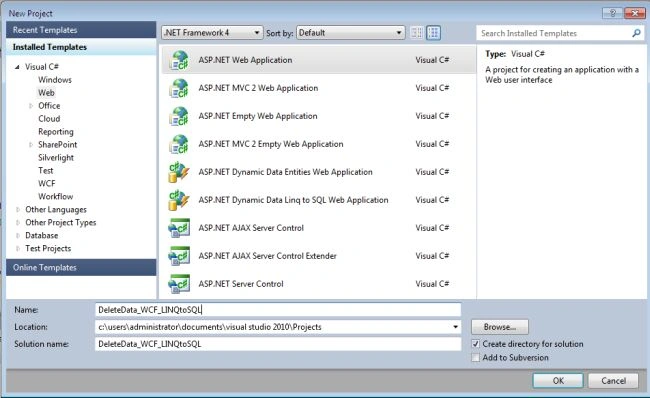
Step 2: Adding a new LINQ-to-SQL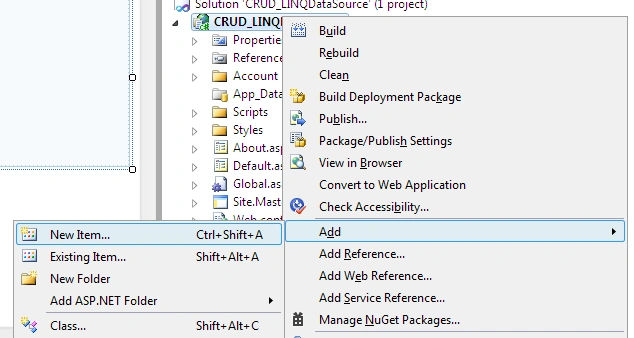
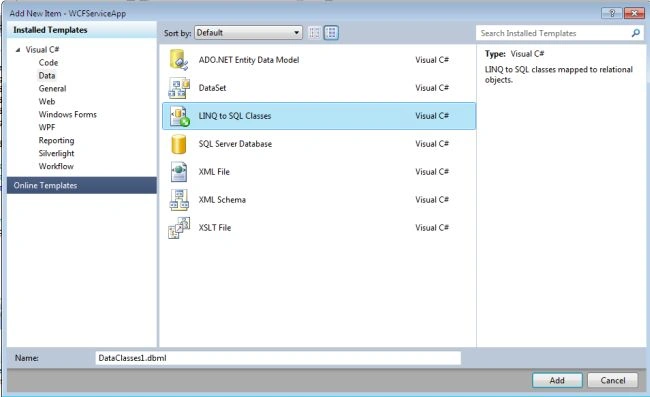
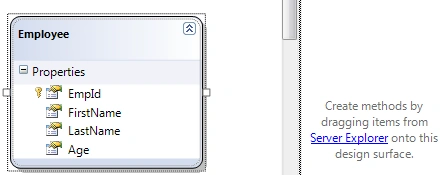
Step 3: Add a new data source to the GridView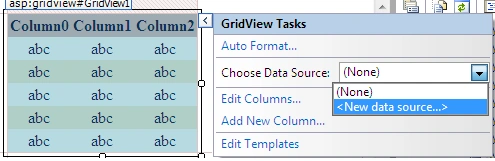
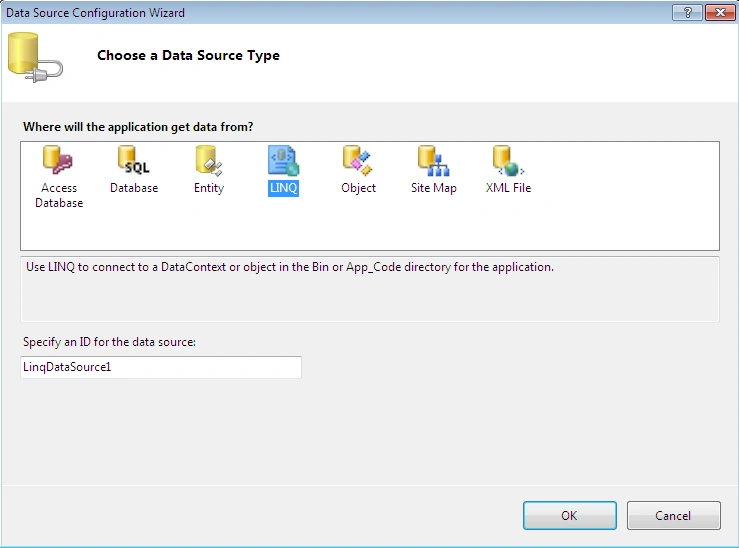
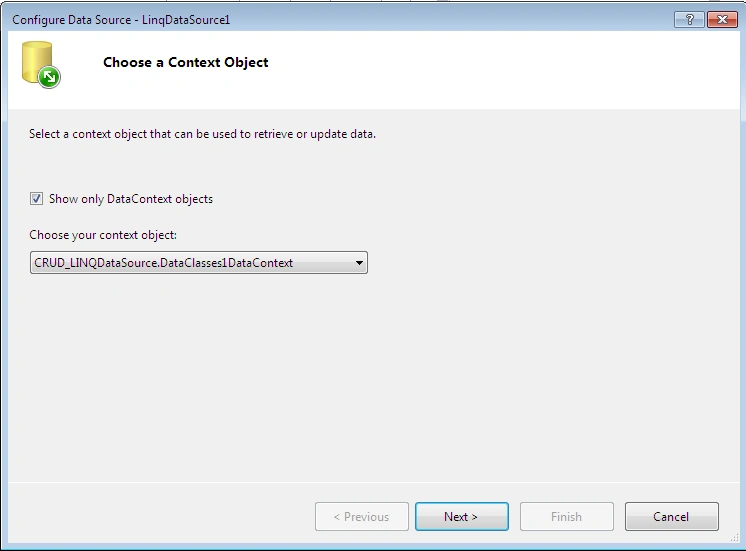
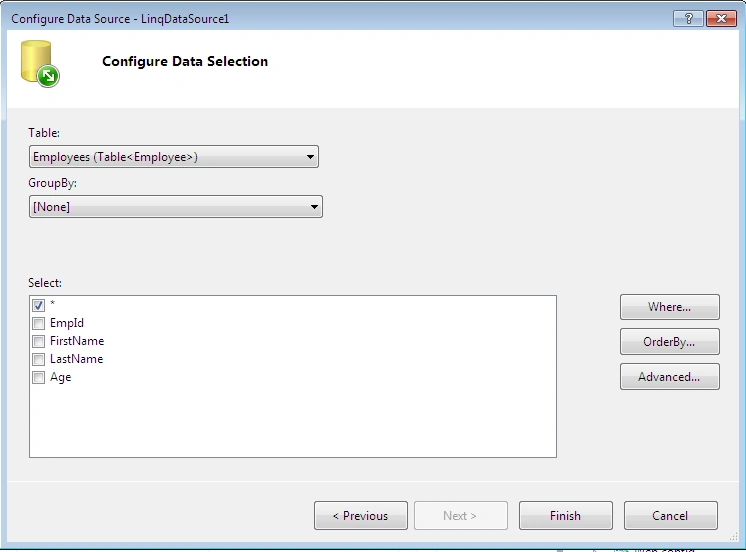
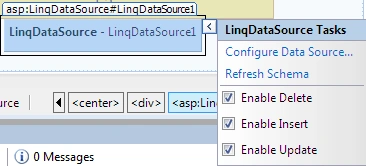
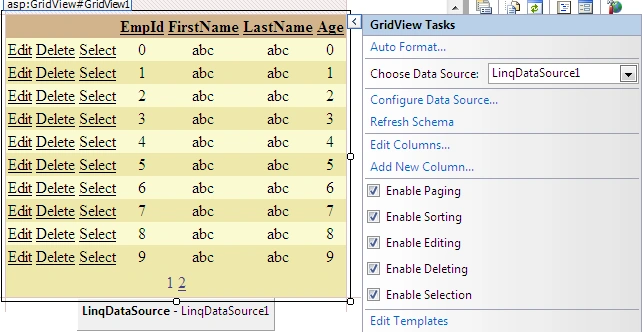
Step 4: The complete code of WebForm1.aspx is as in the following:
<%@ Page Language="C#" AutoEventWireup="true" CodeBehind="WebForm1.aspx.cs" Inherits="CRUD_LINQDataSource.WebForm1" %>
<!DOCTYPE html PUBLIC "-//W3C//DTD XHTML 1.0 Transitional//EN" "http://www.w3.org/TR/xhtml1/DTD/xhtml1-transitional.dtd">
<html xmlns="http://www.w3.org/1999/xhtml">
<head id="Head1" runat="server">
<title></title>
</head>
<body>
<form id="form1" runat="server">
<center>
<div>
<asp:GridView ID="GridView1" runat="server" AllowPaging="True" AllowSorting="True"
AutoGenerateColumns="False" BackColor="LightGoldenrodYellow" BorderColor="Tan"
BorderWidth="1px" CellPadding="2" DataKeyNames="EmpId" DataSourceID="LinqDataSource1"
ForeColor="Black" GridLines="None">
<AlternatingRowStyle BackColor="PaleGoldenrod" />
<Columns>
<asp:CommandField ShowSelectButton="True" ShowDeleteButton="True" ShowEditButton="True" />
<asp:BoundField DataField="EmpId" HeaderText="EmpId" InsertVisible="False" ReadOnly="True"
SortExpression="EmpId" />
<asp:BoundField DataField="FirstName" HeaderText="FirstName" SortExpression="FirstName" />
<asp:BoundField DataField="LastName" HeaderText="LastName" SortExpression="LastName" />
<asp:BoundField DataField="Age" HeaderText="Age" SortExpression="Age" />
</Columns>
<FooterStyle BackColor="Tan" />
<HeaderStyle BackColor="Tan" Font-Bold="True" />
<PagerStyle BackColor="PaleGoldenrod" ForeColor="DarkSlateBlue" HorizontalAlign="Center" />
<SelectedRowStyle BackColor="DarkSlateBlue" ForeColor="GhostWhite" />
<SortedAscendingCellStyle BackColor="#FAFAE7" />
<SortedAscendingHeaderStyle BackColor="#DAC09E" />
<SortedDescendingCellStyle BackColor="#E1DB9C" />
<SortedDescendingHeaderStyle BackColor="#C2A47B" />
</asp:GridView>
<asp:LinqDataSource ID="LinqDataSource1" runat="server" ContextTypeName="CRUD_LINQDataSource.DataClasses1DataContext"
EntityTypeName="" EnableDelete="true" EnableUpdate="true" TableName="Employees"
EnableInsert="True">
</asp:LinqDataSource>
<br />
</div>
</center>
</form>
</body>
</html>
Step 5: The complete code of WebForm1.aspx.cs is as in the following:
using System;
using System.Collections.Generic;
using System.Linq;
using System.Web;
using System.Web.UI;
using System.Web.UI.WebControls;
namespace CRUD_LINQDataSource
{
public partial class WebForm1 : System.Web.UI.Page
{
protected void Page_Load(object sender, EventArgs e)
{
}
}
}
Step 6: The output of the application is as in the following: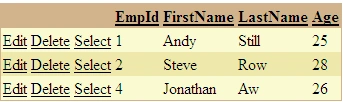
I hope this article was useful for you.
Gowtham RajamanickamPosted Apr 7, 2015, 6:24 AM
good one..