

In today’s digital economy, data is the backbone of business success. Organizations that leverage data effectively have a competitive advantage, drive innovation, and enhance decision-making. However, not all companies are at the same level of data maturity. A Data Maturity Assessment helps a company understand how well it manages and uses its data. Think of it like a health check-up for your business data.
Just like a person moves from basic fitness to peak performance with regular exercise and a good diet, companies also grow in their ability to handle data—from messy and unorganized to fully data-driven decision-making.
This assessment helps answer questions like.
- Is our data reliable and accurate?
- Are we using data to make smart decisions?
- Do we have the right tools and processes in place?
By evaluating where you stand, you can take the right steps to improve and make better, faster, and smarter business decisions.
What is Data Maturity?
Data maturity refers to an organization’s ability to manage, analyze, and utilize data effectively. It signifies the extent to which data is integrated into business processes, governance structures, and decision-making. Companies progress through different stages of maturity as they enhance their data management, analytics, and culture.
The Five Stages of Data Maturity
Organizations typically evolve through five stages of data maturity. Understanding these stages can help you benchmark your company’s progress.
- Informal
- Developing Stage
- Defined and Implemented
- Managed and Repeatable
- Integrated and Optimized
Where does your company fall in this spectrum?
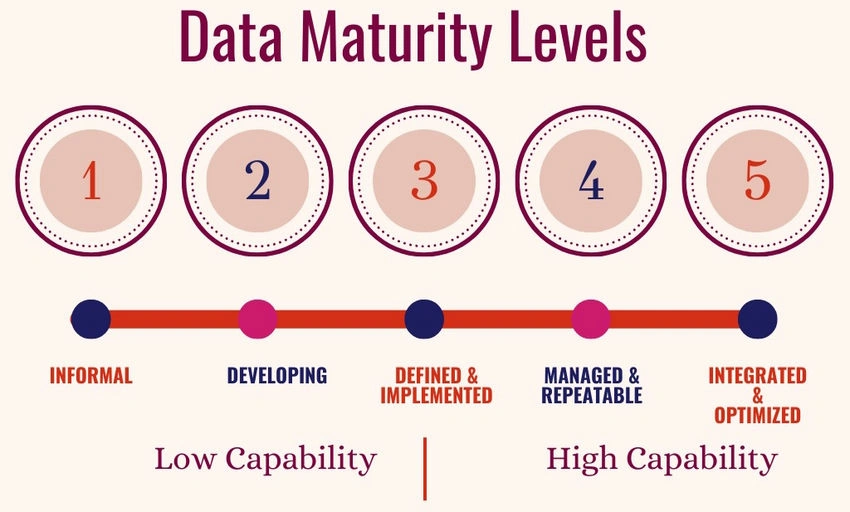
Image 1. Data Maturity Assessment Levels
Why Assessing Your Data Maturity is Crucial?
A data maturity assessment helps organizations.
- Identify Strengths and Gaps: Understand what’s working and where improvements are needed.
- Align Data Strategy with Business Goals: Ensure that data capabilities support growth and innovation.
- Prioritize Investments: Make informed decisions about technology, governance, and analytics.
- Enhance Competitive Advantage: Stay ahead by leveraging data for smarter decisions.
How to Conduct a Data Maturity Assessment?
There are several Data Maturity Assessment Models, each designed to evaluate an organization's ability to manage and leverage data effectively.
1. DAMA Data Management Maturity Model (DMM)
The DAMA Data Management Maturity Model (DMM) is a framework that helps organizations assess and improve their data management capabilities. It defines a structured path for organizations to progress from unstructured and ad-hoc data practices to a fully optimized, data-driven enterprise.
Five Levels of the DAMA DMM.
- Initial (Ad-hoc): Low Maturity
- Managed: Basic Maturity
- Defined: Intermediate Maturity
- Quantitatively Managed: Advanced Maturity
- Optimized: Full Maturity
Key Areas Evaluated in a DAMA DMM Assessment
A DAMA-based Data Maturity Assessment evaluates various aspects of data management.
- Data Governance: Policies, roles, and accountability.
- Data Quality: Accuracy, consistency, and completeness.
- Data Integration: Seamless flow of data across systems.
- Analytics & BI: How well data is leveraged for insights.
- Compliance & Security: Adherence to regulations like GDPR, HIPAA, etc.
2. Gartner’s Enterprise Information Management (EIM) Maturity Model
The Gartner Enterprise Information Management (EIM) Maturity Model helps organizations assess how effectively they manage and utilize their data assets. This model defines six levels of maturity, from basic awareness of data to a fully data-driven organization.
Six Levels of EIM Maturity
- Unaware (Level 0): No Data Management.
- No structured data governance or management.
- Data is scattered across systems, often duplicated and inconsistent.
- Decision-making is mostly based on intuition rather than data.
- Aware (Level 1): Recognition of Data as an Asset.
- Some business leaders recognize the importance of data.
- Initial efforts to consolidate and clean data.
- No formal policies or governance structures are in place.
- Reactive (Level 2): Data Management Begins.
- Data governance initiatives start, but they are isolated and inconsistent.
- Data is mainly used for operational tasks, with some basic reporting.
- Still facing issues with data silos and quality inconsistencies.
- Proactive (Level 3): Structured Data Governance.
- Standardized policies and procedures for data management.
- Improved data quality, integration, and security.
- Business intelligence (BI) and analytics are used for decision-making.
- Managed (Level 4): Data-Driven Business Processes.
- Enterprise-wide data strategy aligned with business objectives.
- Advanced analytics (predictive and prescriptive) are in use.
- Data governance, quality, and compliance are actively monitored.
- Effective (Level 5): Fully Data-Driven Organization.
- AI, machine learning, and automation are embedded in operations.
- Data-driven culture is embraced at all levels of the organization.
- Continuous improvement through real-time data insights.
Why Use the Gartner EIM Maturity Model?
- Helps organizations identify gaps in their data management strategy.
- Provides a roadmap for improving data governance, analytics, and integration.
- Ensures business decisions are driven by high-quality, well-managed data.
3. CMMI Data Maturity Model
The Capability Maturity Model Integration (CMMI) for Data Management helps organizations assess and improve their data management capabilities. It defines five levels of maturity, guiding businesses from ad-hoc data handling to optimized, data-driven decision-making.
Five Levels of the CMMI Data Maturity Model.
- Initial (Level 1): Ad-hoc & Unstructured
- Managed (Level 2): Basic Data Management
- Defined (Level 3): Standardized & Documented Processes
- Quantitatively Managed (Level 4): Data-Driven Optimization
- Optimized (Level 5): AI-Driven & Automated Data Management
Why Use the CMMI Data Maturity Model?
- Identifies gaps in data processes and governance.
- Provides a roadmap for improving data-driven decision-making.
- Ensures compliance with regulations (GDPR, HIPAA, etc.).
- Helps organizations scale AI and automation efforts.
4. TDWI Data Maturity Model
The TDWI (Transforming Data with Intelligence) Data Maturity Model is a framework designed to help organizations assess their data management and analytics capabilities. It evaluates how effectively a company collects, processes, and leverages data for decision-making.
Six Stages of the TDWI Data Maturity Model.
- Nascent (Initial Stage): No Formal Data Strategy
- Pre-Adoption (Developing Awareness)
- Early Adoption (Basic Data Management)
- Corporate Adoption (Enterprise-Wide Data Strategy)
- Mature/Visionary (Data-Driven Business Processes)
- Transformational (Fully Optimized & AI-Powered)
Key Areas Assessed in TDWI’s Model
- Data Governance & Quality: Ensures reliable, compliant data.
- Business Intelligence & Analytics: Uses data for insights & decision-making.
- Infrastructure & Integration: Seamless data flow across systems.
- AI & Automation: Enhances efficiency with predictive modeling.
5. AI and Data Maturity Model by McKinsey
McKinsey’s AI and Data Maturity Model helps organizations assess their ability to leverage data and artificial intelligence (AI) for decision-making, automation, and business transformation. It outlines four maturity levels, guiding companies from basic data usage to a fully AI-driven enterprise.
Four Levels of AI & Data Maturity.
- Foundational: Data Exists but is Siloed
- Competitive: Basic Data & Analytics Adoption
- Differentiating: Predictive & AI Models in Use
- Transformational: AI is Embedded Across the Organization
Key Dimensions of McKinsey’s AI & Data Maturity Model
- Data Governance & Management: Ensures high-quality, compliant data.
- AI & Analytics Adoption: Integrates AI across business processes.
- Technology Infrastructure: Cloud, big data, and real-time processing.
- Organizational Culture: Leadership and workforce embrace AI-driven decision-making.
6. IBM Data Governance Maturity Model
The IBM Data Governance Maturity Model (DGMM) is a framework designed to assess the maturity of an organization's data governance practices. It helps businesses understand their current state of data governance, identify areas for improvement, and create a roadmap to enhance their data management capabilities. The model typically consists of several maturity levels, each representing a stage in the evolution of data governance processes.
Here are the key levels in the IBM Data Governance Maturity Model.
- Initial/Ad-hoc
- Defined
- Managed
- Optimized
- Innovative
The IBM DGMM is useful for organizations to benchmark their progress, identify gaps, and build a clear path to elevate their data governance capabilities.
Each model has a unique focus—some prioritize governance, others emphasize AI integration, and some provide a holistic enterprise-wide assessment.
Common Pitfalls and Challenges
While assessing data maturity, companies often face challenges such as.
- Overestimating Maturity Level: Many organizations assume they are more advanced than they actually are.
- Lack of Executive Sponsorship: Without leadership buy-in, data initiatives often fail.
- Data Silos and Poor Integration: Different departments may use separate systems, hindering collaboration.
- Resistance to Change: Employees may lack data literacy or be hesitant to adopt new processes.
Moving Up the Data Maturity Ladder
Improving data maturity requires a strategic approach. Here are actionable steps for progression.
- Strengthen Data Governance: Implement clear policies and ensure data quality.
- Invest in Scalable Technology: Leverage cloud platforms, AI, and automation.
- Enhance Analytics Capabilities: Move beyond basic reporting to predictive and prescriptive analytics.
- Build a Data-Driven Culture: Train employees and foster a mindset of using data for decision-making.
- Ensure Compliance and Security: Adopt best practices for data protection and regulatory compliance.
Conclusion
Understanding your company’s data maturity is the first step toward becoming a truly data-driven organization. A structured Data Maturity Assessment helps you identify gaps, align strategy, and prioritize investments to unlock the full potential of data.
Where does your company stand in the data maturity journey? Assess, adapt, and take action to move up the ladder.
Call-to-action
Share your thoughts or experiences on data maturity in the comments. How has your company progressed in its data journey?
Join the conversation! Your thoughts help the community grow.