

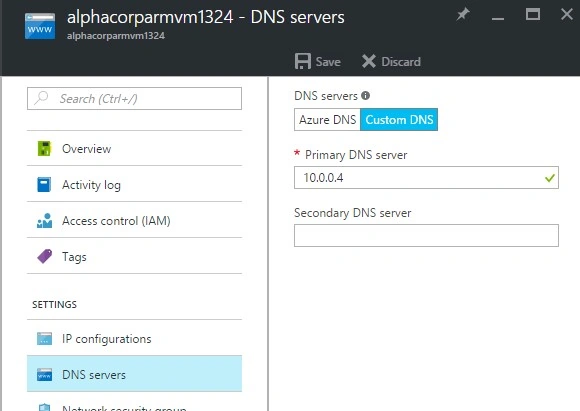
In the last article we saw the details of Azure Active Directory Domain Services and we also saw how to set it up, however, as mentioned currently ADDS only supports classic virtual networks and so only machines provisioned in the classic virtual network can communicate to the Azure AD domain controller.
What if one wants to establish communication between ARM VMs and ADDS? Well, workarounds are always there, the scenario above could be achieved through either of the solutions below
- Establish VNET to VNET connectivity between ARM VNET and ADDS classic VNET
- Use Azure VNET Peering between ARM VNET and ADDS classic VNET
(Note - this article assumes that you are aware of two different deployment models of Azure i.e. ASM and ARM, if you are not then it is highly recommended that you go through this MSDN link before going through this article.)
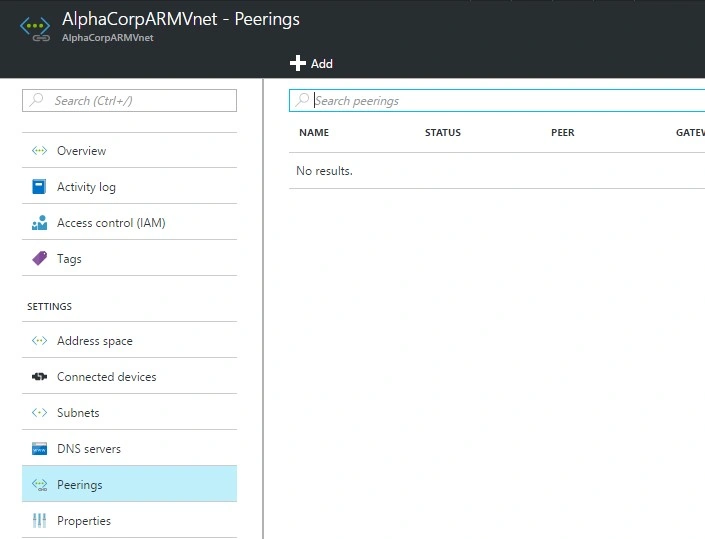
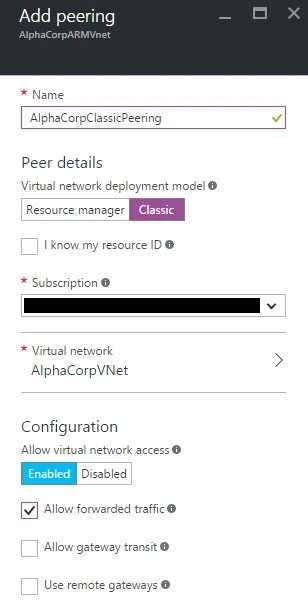
Solution 1 is very well explained in the mentioned link. We will be mostly focusing on the other solution i.e. using Azure ARM VNET Peering concept which is currently in Preview.
Before we move ahead and get in to the real action of setting up peering between our classic VNET and new ARM VNET for our ARM VMs, let’s first understand the concept of peering and see some details of it.
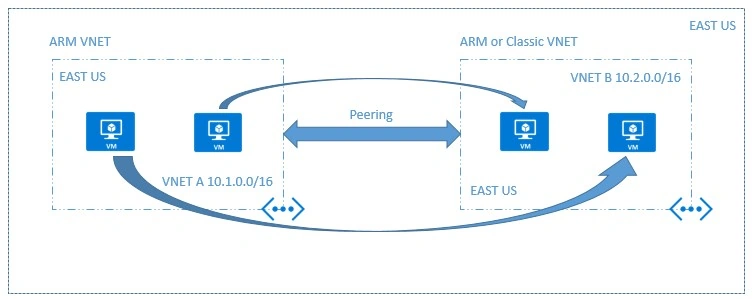
Directory meaning of peering is a connection between two entities for communication and so now you can easily guess the meaning of VNET peering. VNET peering is a way of establishing connection between two virtual networks so that resources provisioned in one VNET will be able to communicate to resources provisioned in the other VNET by using their private IP addresses.
There are some pre-requisites to setup peering between any two VNETs
- Both VNETs should be provisioned in the same location, no matter what deployment model of Azure they follow.
- Both VNETs should not contain any overlapping IP addresses space.
Once the networks are peered, they appear as one network and all the VNET to VNET communication between both will happen over Azure internal network and not over the internet which could be a big plus for some of the organizations who do not want to take the risk of transferring data over internet.
What are the possible ways to set up peering?
- Using Azure portal
- Using PowerShell
- Using ARM Templates
Which two VNETs can be peered?
- VNETs in same azure subscription
- VNETs in different azure subscriptions
VNET peering does not support cascading of networks i.e. suppose VNET A is peered with VNET B which again is peered with VNET C then this does not mean that VNET A is peered with VNET C.
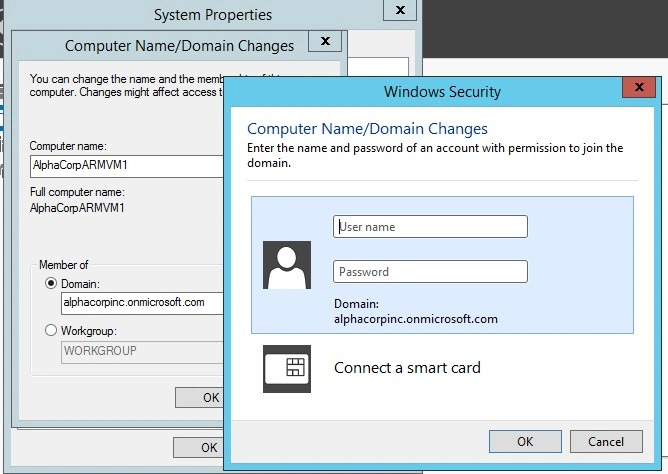
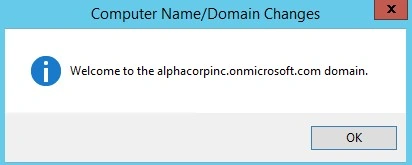
All right with all this information, let’s go ahead with our scenario of creating ARM VM and joining it to the domain created in previous articles.
To create ARM VM, the pre-requisite is to have the VNET and that too deployed in resource manager mode.
In ARM mode, everything has to be created inside a resource group so we will also create our resource group and name it as ‘AlphaCorpRG’.
Next, create ARM VNET in same location as that of our classic VNET i.e. AlphaCorpVNET which contains ADDS DNS. You can create this new network in advance before creating VM or choose new network creation option while creating VM.
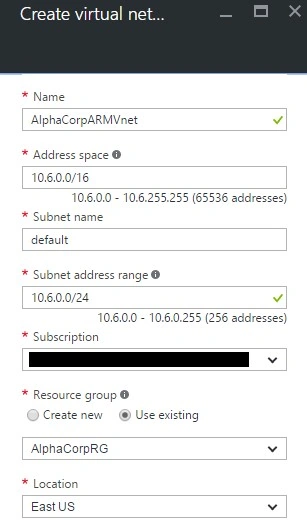
Click ok and ARM VNET i.e. AlphaCorpARMVnet will be provisioned for you.
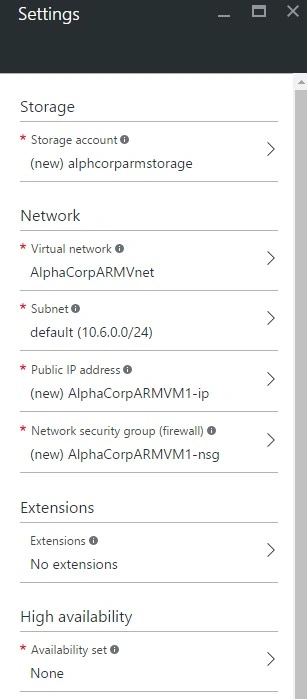
Next, create Windows Server 2012 R2 Data Center VM with name ‘AlphaCorpARMVM1‘and keep it in newly created ARM VNET and resource group.
Let the wizard create VM’s new PIP and NSG.
Prasham SabadraPosted Aug 25, 2016, 10:48 AM
Thanks Bhushan for Sharing!
Vignesh ManiPosted Aug 25, 2016, 6:29 AM
Nice oen