


Introduction
Hiring the right candidate is a time-consuming and resource-intensive process. Organizations are increasingly leveraging AI-powered solutions to streamline the interview process. Azure OpenAI provides a powerful framework for developing AI-based virtual interview assistants that can analyze responses, assess soft skills, and provide real-time feedback to candidates and recruiters alike.
This article explores how to develop a virtual interview assistant using Azure OpenAI’s GPT models, integrating Natural Language Processing (NLP) and automation to create an intelligent, scalable, and efficient recruitment process.
Why Use AI for Virtual Interviews?
AI-powered interview assistants bring significant advantages.
- Scalability: Conduct multiple interviews simultaneously without human intervention.
- Consistency: Eliminate human biases and standardize assessments.
- Efficiency: Reduce the time spent on screening candidates.
- Real-Time Feedback: Provide insights into a candidate’s answers, tone, and confidence.
- Multilingual Support: Conduct interviews in different languages without requiring a human translator.
Key Components of an AI-Based Virtual Interview Assistant
To build an effective virtual interview assistant, you need to integrate the following components.
- Azure OpenAI GPT Model: To process and generate human-like responses to interview questions.
- Speech-to-Text API: Convert candidates’ spoken answers into text for analysis.
- Text Analytics & Sentiment Analysis: Assess candidates’ confidence and clarity.
- Azure Bot Service: Enable interactive conversational AI capabilities.
- Azure Cognitive Services: Enhance the assistant with vision, speech, and language capabilities.
- Customizable Scoring Model: Define scoring metrics based on job requirements.
Setting Up an AI-Based Virtual Interview Assistant on Azure
Step 1. Set Up Azure OpenAI Service.
- Log in to the Azure Portal.
- Search for Azure OpenAI Service and create a new resource.
- Select your subscription, resource group, and region.
- Deploy a GPT model (GPT-4 or GPT-3.5) and retrieve the API key and endpoint URL.
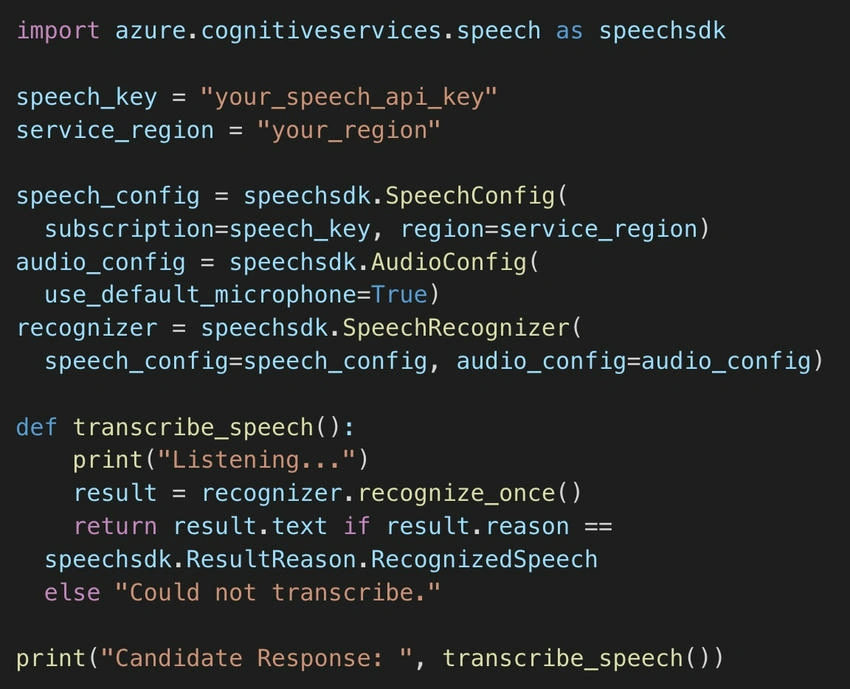
Step 2. Implement Speech-to-Text for Interview Responses.
Azure Speech-to-Text API converts a candidate’s spoken answers into text.
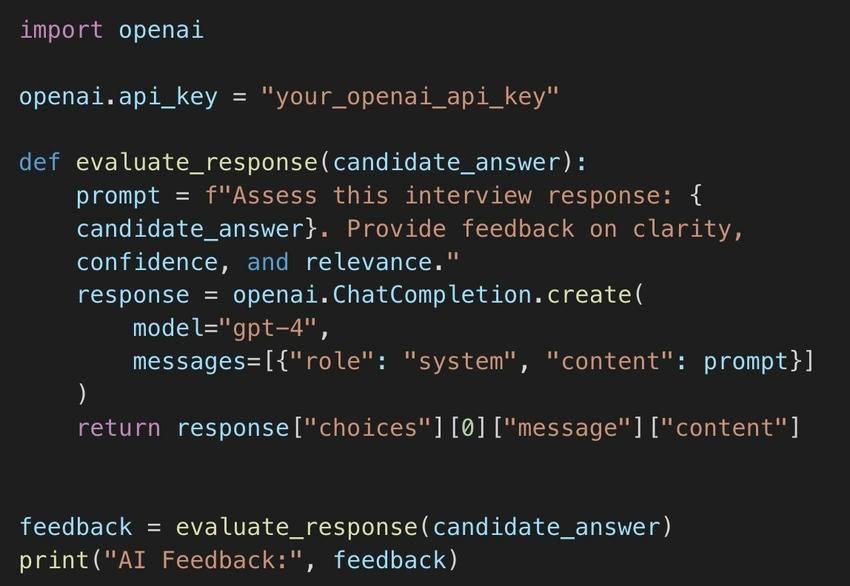
Step 3. Process Interview Responses Using Azure OpenAI.
Once the candidate’s response is transcribed into text, pass it to Azure OpenAI for evaluation.
candidate_answer = “I have five years of experience in software development, focusing on machine learning models.”
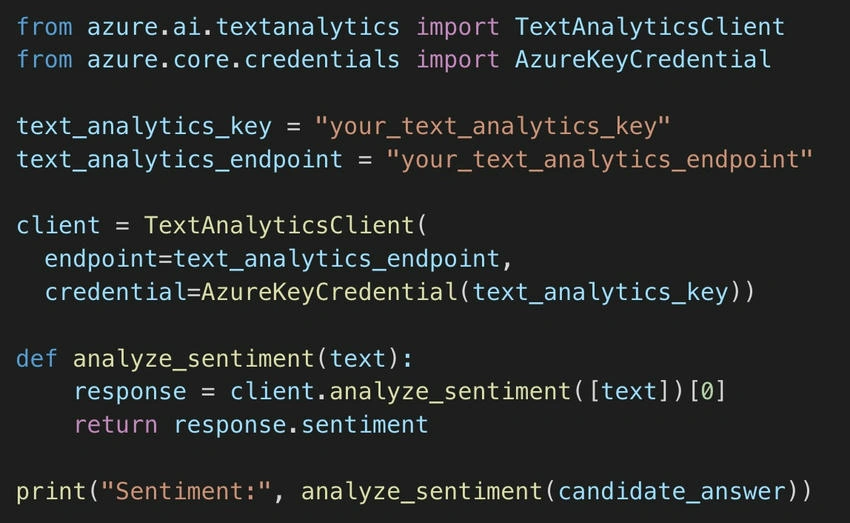
Step 4. Implement Sentiment Analysis.
Using Azure Text Analytics, analyze the sentiment of the candidate’s response.
Enhancing the Virtual Interview Assistant
- Real-Time Feedback Dashboard: Provide recruiters with insights and scores.
- Resume Screening Integration: Analyze resumes alongside interview responses.
- Facial Expression Analysis: Use Azure Face API to assess candidate emotions.
- Multimodal AI: Combine text, speech, and video analysis for a comprehensive interview experience.
Challenges and Best Practices
- Bias in AI Models: Regularly fine-tune models to reduce bias.
- Data Privacy: Secure sensitive candidate data in compliance with GDPR and industry regulations.
- Customization: Adapt the AI to match the organization's hiring criteria and culture.
- Human Oversight: AI should assist, not replace, human recruiters.
Conclusion
Developing AI-based virtual interview assistants with Azure OpenAI can revolutionize hiring by reducing recruiter workload, improving candidate evaluation, and enhancing efficiency. By integrating Azure’s AI capabilities, businesses can build a scalable, intelligent, and fair hiring process that aligns with modern recruitment demands.
Further Learning
Join the conversation! Your thoughts help the community grow.