

Microsoft Dynamics CRM 365 interview questions and answers
If you're looking for Microsoft Dynamics 365 Interview Questions for Experienced or Freshers, you are at the right place. In this article, we will see the following Microsoft Dynamics CRM 365 interview questions and their answers.
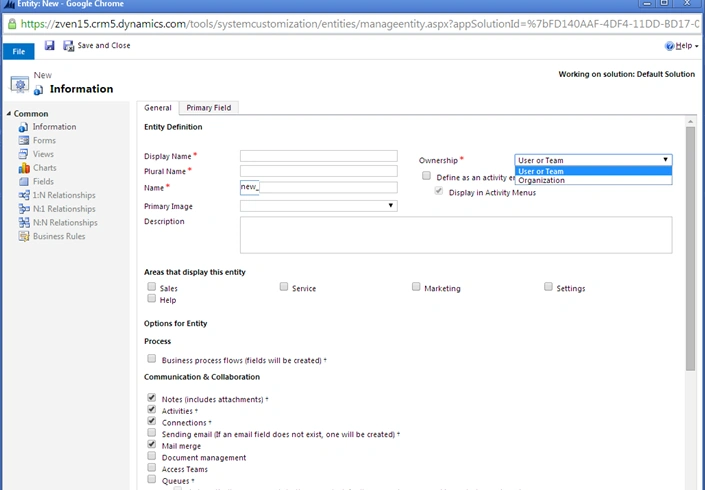
- Explain What is Entity Ownership?
- How many different types of Entity ownership are available in Dynamics 365?
- Where do you define/Specify the Entity Ownership?
- What is the difference between user/team-owned entities and organization-owned entities?
Entity ownership in Dynamics 365 CRM
- In Dynamics 365, most of the entities (including custom entities) are owned by the organization, by a user, or by a team.
- There are some business entities that do not have an owner, where the ownership is defined by its parent entity (ex. discount).
- The type of ownership determines some of the operations that can be performed on a record.
- Ownership for an entity is defined in the metadata property OwnershipType.
Entity Ownership types in Microsoft Dynamics 365
| Ownership Type | Description |
| Organization Owned | Contains data involving something that belongs to or that can be viewed by the whole organization. Organization-owned entities cannot be assigned or shared. For example, products are owned by the organization. These entities have an attribute named organization id. |
| Business Owned | Entities that belong to a business unit. These entities have an attribute named owningbusinessunit. |
| User or Team Owned | Assigned to a user or to a team. These entities contain data that relates to customers, such as accounts or contacts. Security can be defined according to the business unit of the user or team. These entities have attributes named owning the team and owning the user. |
| None | These entities are not owned by another entity. |
| Organization Owned | User/Team Owned |
| Contains data involving something that belongs to or that can be viewed by the whole organization. | Data involved can be accessed or viewed as per the security access of the user or team owning that record. |
| Organization-owned entities cannot be assigned or shared. | Can be Assigned to a user or to a team. |
| These entities have an attribute named organization id. | These entities have attributes named owning a team and owning a user. |
| Users can have either Full or No access on organization-owned entity records. | Users can have None, User Level, Business Unit level, Parent-child business unit level, or Organization level access on such entity records. |
Join the conversation! Your thoughts help the community grow.