

Introduction
Once a machine learning model is trained, the next crucial step is evaluating its performance and scoring new data. In Azure Machine Learning (Azure ML), model scoring is the process of applying a trained model to unseen data to generate predictions. This step is critical in determining how well the model generalizes and provides insights for real-world applications.
Scoring a model in Azure ML can be done in multiple ways, including batch inference for large datasets and real-time scoring via endpoints. This guide explores various approaches, tools, and best practices for scoring models in Azure ML efficiently.
1️⃣ Understanding Model Scoring in Azure ML
Model scoring involves running new data through the trained model and capturing predictions. The effectiveness of a model is determined by evaluating its accuracy, precision, recall, and other performance metrics.
Azure ML provides several ways to score models:
- ✔ Real-Time Inference: Ideal for applications requiring immediate responses (e.g., fraud detection, chatbots). Models are deployed as managed online endpoints and respond to requests via REST APIs.
- ✔ Batch Inference: Used for scoring large datasets in bulk (e.g., customer segmentation, forecasting). This is typically executed using Azure ML pipelines or jobs.
- ✔ Local Testing: Before deploying, models can be tested locally to verify performance using sample data.
Choosing the right method depends on your use case, scalability needs, and latency requirements.
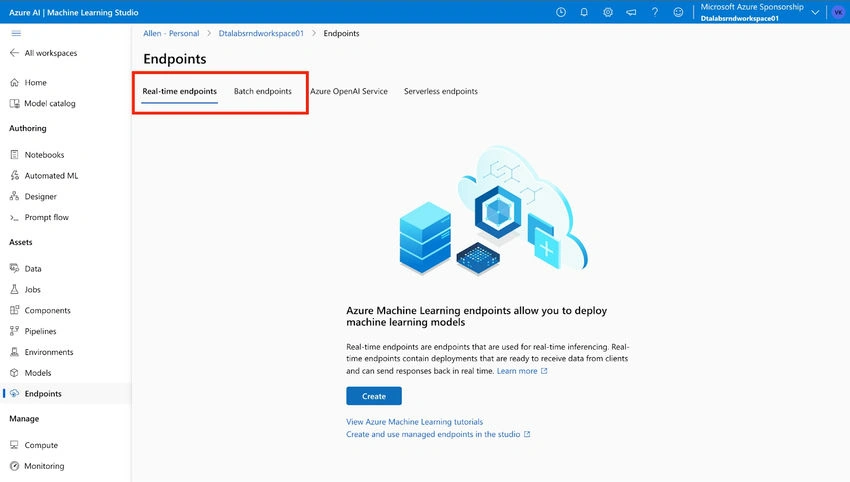
2️⃣ Deploying a Model for Scoring
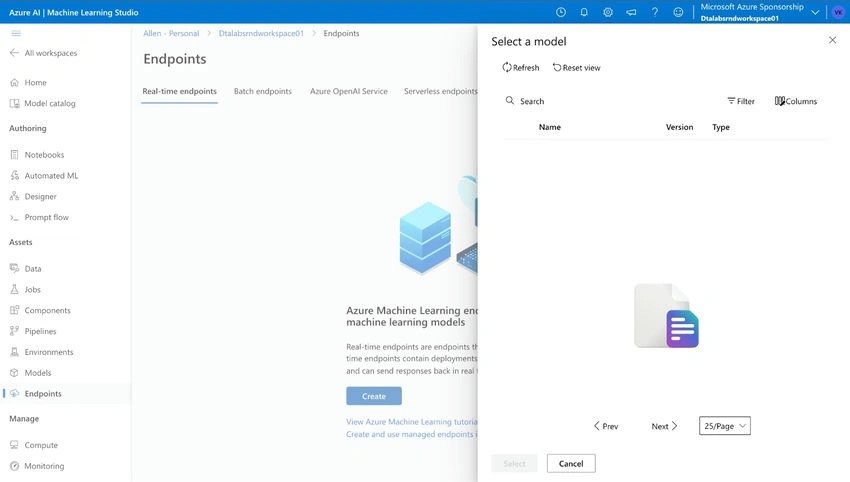
Before scoring, the model must be registered in Azure ML and deployed as an endpoint for easy access.
Registering the Model

📌 Why Register?
- Centralized access for multiple applications.
- Enables version tracking and model lifecycle management.
Deploying as a Managed Endpoint
Once registered, deploy the model as an online endpoint to facilitate real-time predictions.
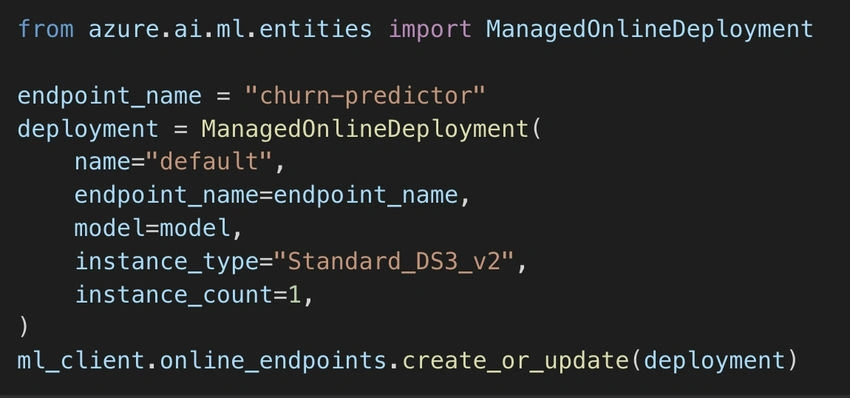
📌 What This Does?
- Creates an API endpoint for real-time scoring.
- Allocates cloud resources for hosting the model.
- Provides a REST interface for applications to call predictions.
3️⃣ Scoring New Data Using the Endpoint
After deployment, you can send new data to the model and receive predictions in real-time.
Sending a Request to the Endpoint

📌 Now, the model is accessible from any app, website, or automation script!
4️⃣ Batch Scoring for Large Datasets
When working with bulk data, scoring each row individually via an API can be inefficient. Instead, Azure ML allows batch inference using compute clusters.
Defining a Batch Scoring Job
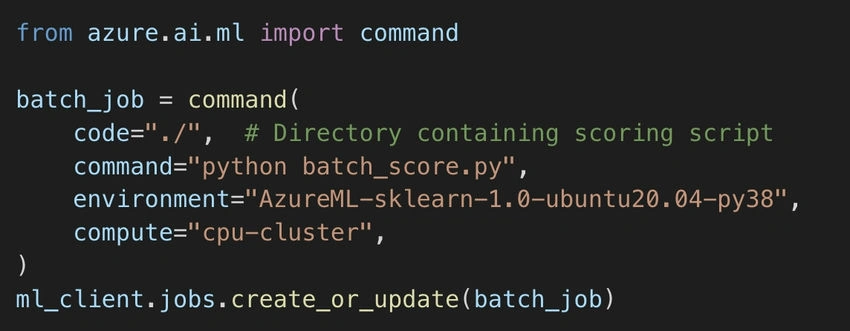
📌 Advantages of Batch Scoring
- Processes thousands or millions of records at once.
- Reduces API latency overhead.
- Optimized for scalability.
5️⃣ Evaluating Model Performance Post-Scoring
Once predictions are generated, it’s essential to evaluate their quality.
Common Evaluation Metrics
- ✔ Classification: Accuracy, Precision, Recall, F1-score
- ✔ Regression: RMSE, MAE, R-squared
- ✔ Anomaly Detection: False Positives vs. False Negatives
Example. Evaluating Classification Predictions
from sklearn.metrics import classification_report

y_true = [1, 0, 1, 1, 0, 0, 1]
y_pred = [1, 0, 1, 0, 0, 1, 1]

print(classification_report(y_true, y_pred))
📌 Why This Matters?
- Helps identify model bias and errors.
- Ensures predictions align with business objectives.
- Provides insights for further model tuning.
Final Thoughts: Optimizing Model Scoring in Azure ML
- ✔ Choose Real-Time or Batch Scoring based on performance needs.
- ✔ Monitor model endpoints for latency, errors, and drift.
- ✔ Version and track models to manage updates effectively.
- ✔ Continuously evaluate predictions to improve accuracy.
🔗 Further Learning
Join the conversation! Your thoughts help the community grow.