

This article has been
excerpted from book "A Programmer's Guide to ADO.NET in C#".
Events are useful for notifying a program of when an action happens to an
object. An event can have a method associated with it. This method is an event
handler. When an event occurs, the associated method executed. An event can have
multiple event handlers.
A class defines an event by providing an event declaration, which is of type
delegate. The following defines an event handler:
public delegate
void EventHandler(object
sender, System.EventArgs e);
EventHandler takes two arguments: one of type Object and the other of type
System.EventArgs. As you can see from figure 9-1, each of the event handlers has
an event argument type that corresponds to it. The event argument class contains
the data related to the event, which can be accessed through event argument
class members.
In this article, I'll show you how can handle events for ADO.NET objects.
Introducing ADO.NET events
You can divine ADO.NET classes into groups: disconnected classes and data
provider classes. The System.Data namespace defines the common event handlers
and event argument classes for all data providers. As you can see from figure
9-1, event handler classes come from the Delegate class, and event argument
classes come from the EventArgs class.
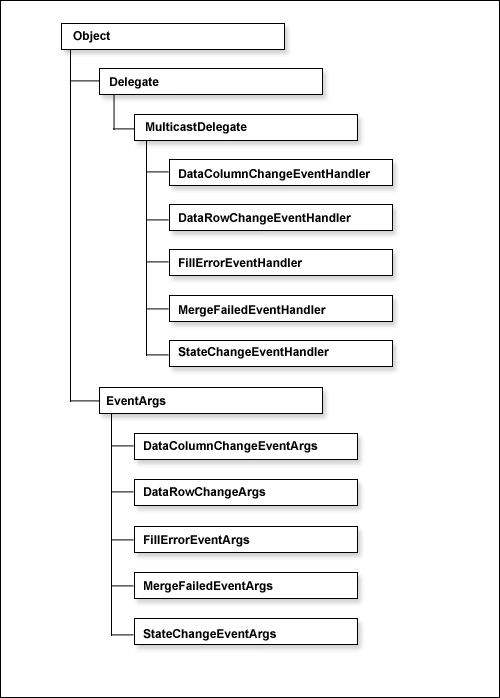
Figure 9-1 Event handler and event argument classes defines in the System.Data namespace
You use the DataColumnChangeEventHandler as an event handler for DataColumn when
you are changing a value for a column in a DataRow. You use
DataRowChangeEventHandler as an event handler that handles the RowChanging,
RowChanged, RowDeleting, and RowDeleted events of a DataTable. You use the
FillErrorEventHandler as an event handler that handles a data adapter's Fill
event. If an error occurs during the fill operation, then FillError fires, which
executes FillErrorEventHandler. MergeFailedEventHandler handles a dataset's MergeFailed event, which occurs when a dataset's merge operation fails. StateChangeEventHandler handles the StateChange event, which occurs when the
connection state changed. Besides the Data namespace defining the event handler
and event argument classes, the data provider-specific namespace also define the
data provider event handler and event argument classes. Some of these classes
and their usage may vary from provider to provider. Figure 9-2 shows the OleDbdata provider event handlers and event argument classes.
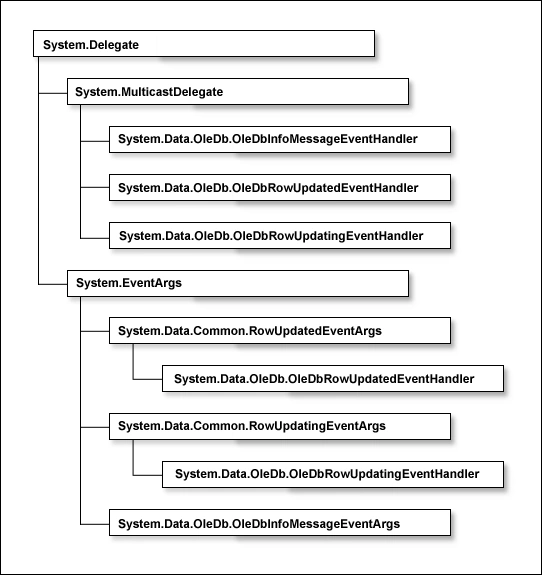
Figure 9-2 OleDb data provider event handler and event arguments
OleDbInfoMessageEventHandler handles the InfoMessage event of OleDbConnection.
An InfoMessage event occurs when a provider sends a warning or an informational
message to the application.
OleDbRowUpdateEventHandler handles the RowUpdate event of OleDbDataAdapter. The
RowUpdated event occurs when you call an Update method on a data adapter.
OleDbRowUpdatingEventHandler handles the RowUpdating event of OleDbDataAdapter.
The RowUpdating event occurs before a command executes against the data source.
Working with Connection Events
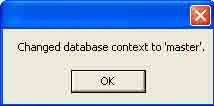
The Connection object has two events that notify the application if a connection
state changes. You can use these events to retrieve informational messages from
a data source or to determine if the state of Connection changes. These two
events are InfoMessage and StateChange. The InfoMessage event occurs when an
informational message is returned from a data source. The exception handling
doesn't catch these messages. The StateChange event occurs only when the state
of a connection changes.
The InfoMessage event receives an InfoMessageEventArgs object. The
InfoMessageEventArgs is as follows:
public delegate
void
OleDbInfoMessageEventHandler(object
sender, OleDbInfoMessageEventArgs e);
Where Sender is the source of the event of the event and e is an
OleDbInfoMessageEventArgs object that contains the event data. Table 9-1 defines
the InfoMessageEventArgs properties.
Table 9-1 The InfoMessageEventArgs properties
|
PROPERTY |
DESCRIPTION |
|
ErrorCode |
Returns HRESULT following the ANSI SQL standard for the database |
|
Errors |
Returns the collection of warnings sent from the data source |
|
Message |
Return the full text of the error |
|
Source |
Return the name of the object that generated the error |
Caution: Some if these members may vary for other data providers. For
example, the Sql data provider doesn't have an ErrorCode property.
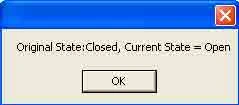
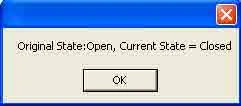
The StateChange event occurs when the state of Connection changes. The
StateChange event receives StateChangeEventArgs, which enables you to determine
the changes in state of Connection using the OriginalState and CurrentState
properties. The OriginalState property represents the original state of the
connection, and the CurrentState property represents the current state of the
connection. The ConnectionState enumeration defines properties for connection
states (see Table 9-2).
Table 9-2 The ConnectionState Properties
Join the conversation! Your thoughts help the community grow.