

Introduction
The official Integrated Development Environment (IDE) for developing Android Apps is Android Studio, which Google supports.Java was replaced by Kotlin on May 7, 2019, as a preferred language for developing Android Apps. But still, Java is being used for developing Android Apps. Android Studio 3.6.1 has the following features.
- Gradle-based build support.
- UI components can be created by drag and drop features in the layout editor.
- Common Android designs and components can be created by Template-based wizards.
- Built-in support for Google Cloud Platform enabling integration with Firebase Cloud Messaging (Earlier 'Google Cloud Messaging') and Google App Engine.
- Lint tools to catch performance, usefulness, version compatibility, and other problems.
This tutorial will show you the system requirements and various steps on how to download and install Android Studio on Windows 10.
System Requirements
Before downloading and installing Android Studio, the following requirements are essential.
- Operating System Version: Microsoft Windows 7/8/10 (32-bit or 64-bit).
- Random Access Memory (RAM): Minimum 4 GB RAM and 8 GB RAM recommended.
- Free Disk Space: Minimum 2 GB and 4 GB recommended.
- Minimum Required JDK Version: Java Development Kit (JDK) 8.
- Minimum Screen Resolution: 1280 * 800. resolution.
Download and Install Android Studio
Step 1. To download the Android Studio, visit the official Android Studio website in your web browser.
Step 2. Click on the "Download Android Studio" option.

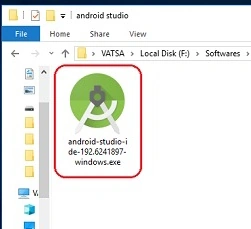
Step 3. Double-click on the downloaded "Android Studio-ide.exe" file.
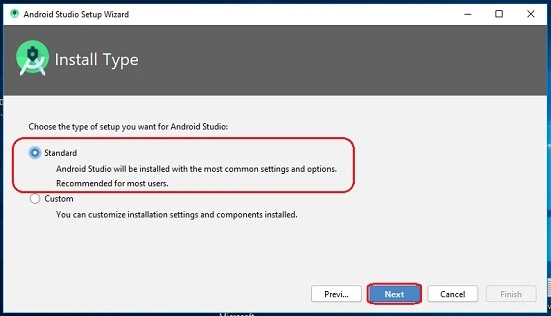
Step 4."Android Studio Setup" will appear on the screen and click "Next" to proceed.

Step 5. Select the components that you want to install and click on the "Next" button.

Step 6. Now, browse the location where you want to install the Android Studio and click "Next" to proceed.




Chaman GautamPosted Mar 11, 2020, 10:56 PM
Nice article for Android