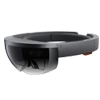

Introduction
HoloLense is called to the virtual reality. HoloLense embraces the virtual reality and augmented reality to create a new type—mixed reality. Virtual reality immerses you in a simulated world. Augmented reality overlays the digital information of your real world. By understanding your environment, mixed reality enables holograms to look and sound as they are part of your world. In HoloLense app, we run the Windows Universal App. it will be the Windows 10 App Development Kit. The HoloLens app is very easy to develop in the Visual Studio 2015.
Prerequisites
- Visual Studio 2015 update 2.
- HoloLense Kit(or) HoloLense Emulator.
Steps
It is easy to learn the HoloLense app development . The following steps are required to be followed:
Step 1
Go to the Visual Studio 2015 update 2 and install HoloLense development kit (sdk).
Open Visual Studio New-->New project -->select Visual C# --->select Windows -->Universal -->select Blank Windows Universal App and give your app a name (ex: sample).
In the blank Windows universal app, you can develop any type of app in the HoloLense, Mobile app, Windows app, and IoT. This is the feature of Windows Universal app.

Step 2
Step 2
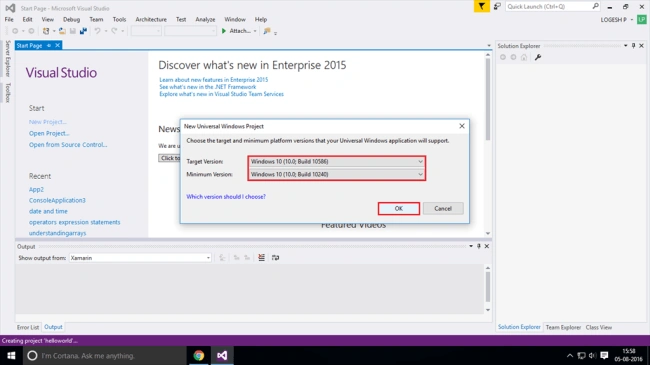
Next step is to select the version of the Windows 10 SDK version (Windows 10 Build 10240). This version supports new Visual Studio update 2.
Minimum version Windows 10 Build :10240
Maximum version Windows 10 Build :10240
Step 3
Next step is the designing part or the coding part.
Go to the Solution Explorer. Solution Explorer has all app pages available and all sources will be there (Ex: images, files).
Now, go the MainPage.xaml and subsequently, go to designing the UI page (user interface). Double click to open the MainPage.xaml. It will open after you design the UI.

Step 4
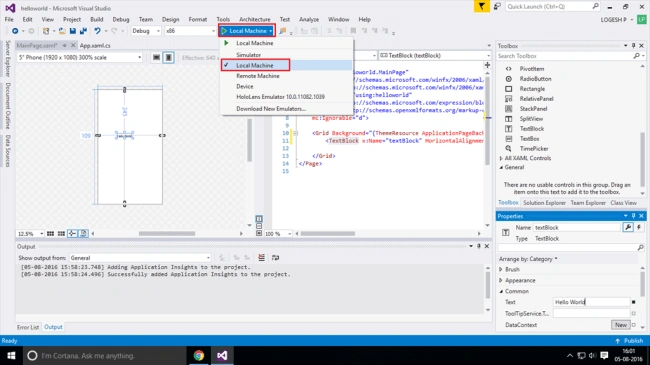
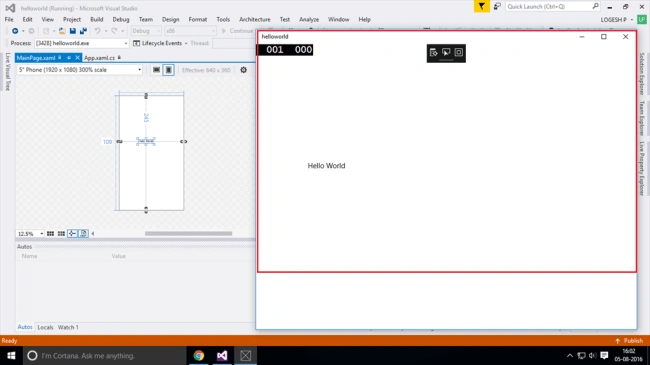
After opening the MainPage.xaml, go to the tool box window. In the tool box, it has many types of components available (ex: text box, radio button, label, image box, scroll bar). Select the TextBlock in the text block and is called the label in the Windows universal. Name it as TextBlock. Drag and drop the TextBlock in the MainPage.xaml. It will automatically come to the MainPage.xaml.

Step 5



Santhosh KumarPosted Aug 28, 2016, 4:40 AM
Good
Santhosh KumarPosted Aug 28, 2016, 4:40 AM
Goo
Delpin Susai RajPosted Aug 28, 2016, 2:24 AM
Thanks for comments to article
Vivek KumarPosted Aug 21, 2016, 4:40 PM
Nice one
Ramesh PalaniappanPosted Aug 19, 2016, 3:34 AM
Good One
Vignesh ManiPosted Aug 18, 2016, 8:34 AM
Nice one
Mahesh ChandPosted Aug 18, 2016, 7:33 AM
Visual Studio Update 3 is available now. I recommend using Update 3. Cheers!