

Microsoft Teams channel as a ChatGPT using Power Automate
As an AI language model, ChatGPT can be integrated into Microsoft Teams as a bot, which can then be used in channels to facilitate communication and assist users.
To use the Microsoft Teams channel as a ChatGPT using Power Automate when a new channel message is added, you can follow the steps below,
- Create a new Power Automate flow- In Power Automate, create a new flow and select the "When a new channel message is added (V3)" trigger.
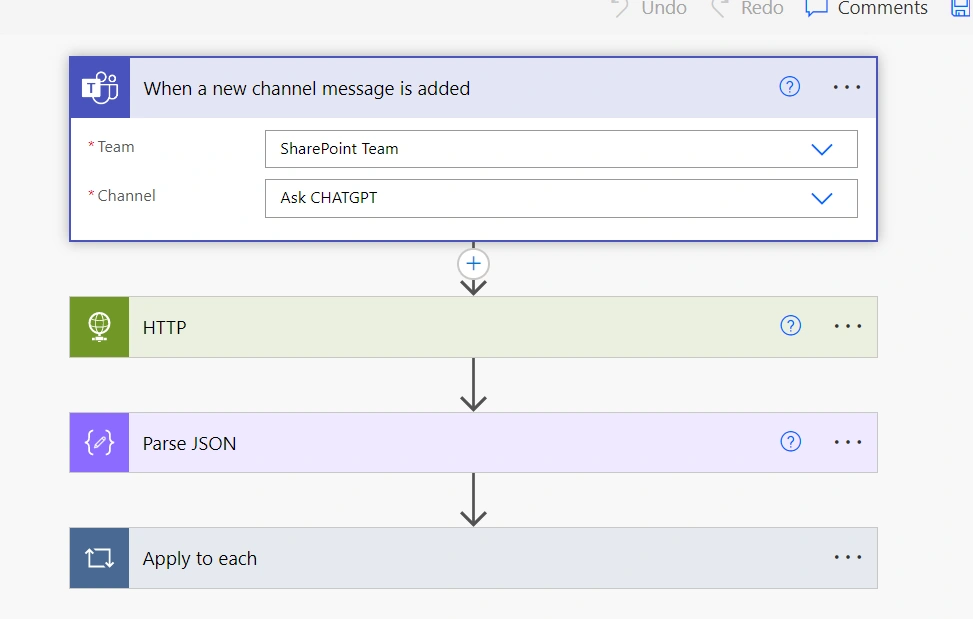
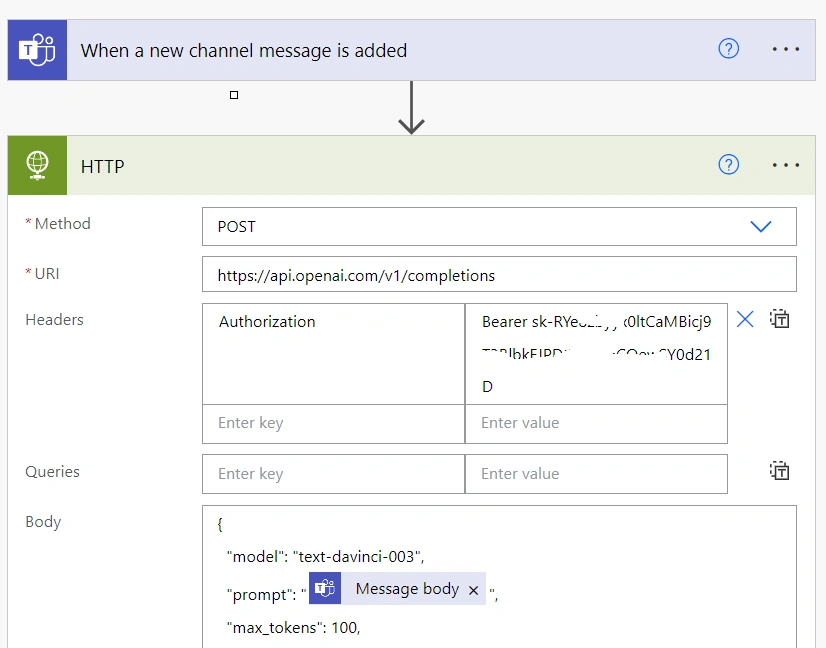
- Add the "HTTP" action: In the Power Automate flow, configure a new "HTTP" action to send a POST request to your ChatGPT API endpoint. You must provide the message text from the Teams channel as a parameter in the request body.
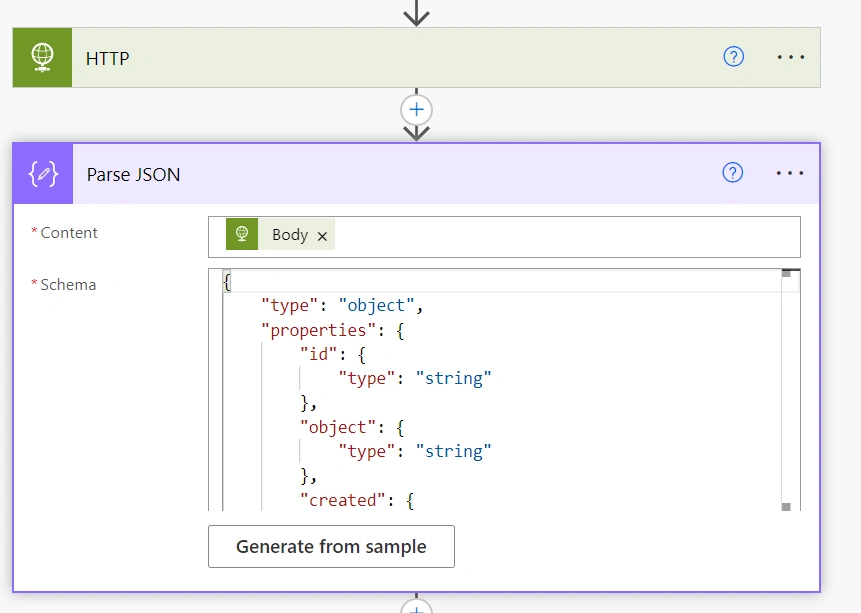
- Next, add the PARSE JSON to convert the result to JSON format like below.
- Add the "Microsoft Teams - Post a message (V3)" action: Once you receive the response from the ChatGPT API, you can use the "Microsoft Teams - Post a message (V3)" action to send the response message back to the Teams channel.
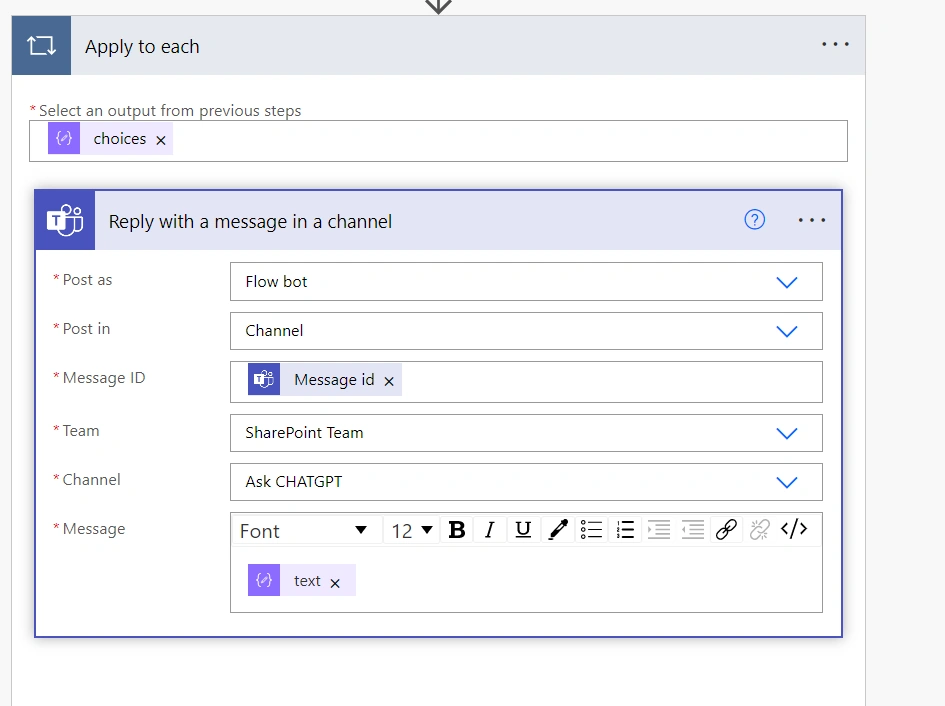
- Configure the Teams message: In the "Microsoft Teams - Post a message (V3)" action, configure the message that will be posted back to the Teams channel. You can use the response message from the ChatGPT API as the message text.
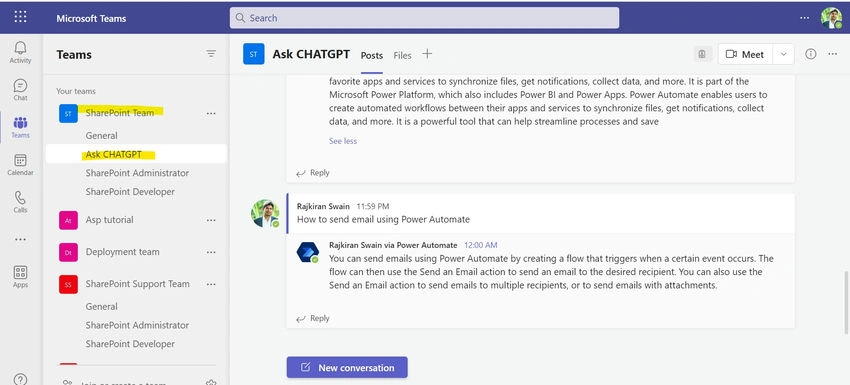
- Save and test the flow: Save the Power Automate flow and test it by adding a new message to the Teams channel.
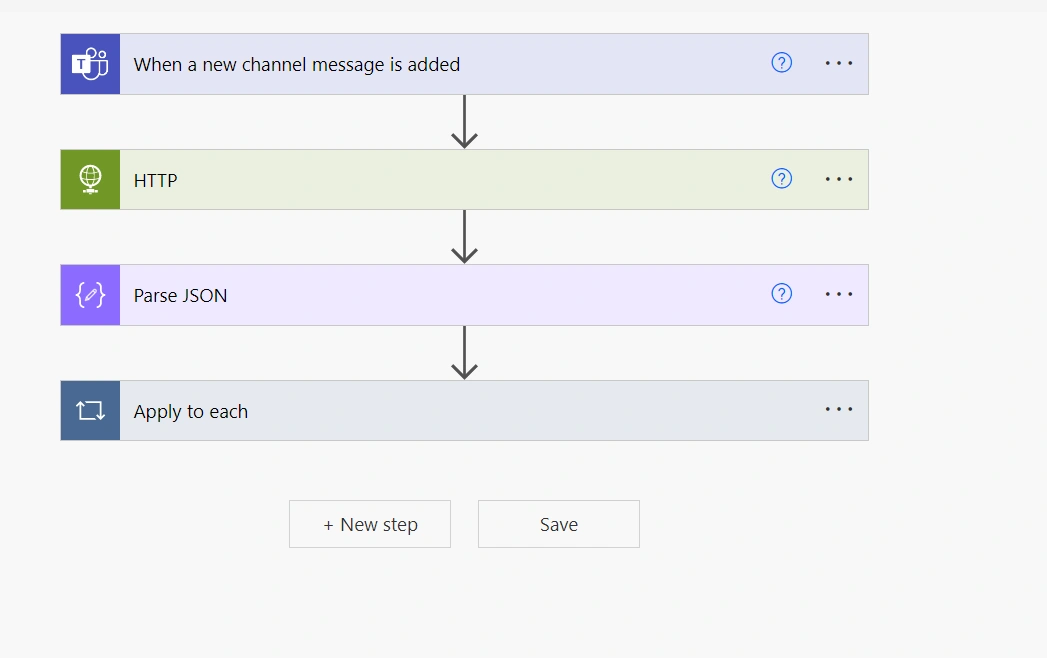
Following these steps, you can use Power Automate to integrate ChatGPT with Microsoft Teams and create a conversational experience for your users when a new channel message is added.
Create an API key in OpenAI.com
-
Sign up for an account on OpenAI.com: If you don't already, go to https://beta.openai.com/signup/ and sign up for a new account.
-
Go to your dashboard: After signing up and logging in, click on your name in the top right corner and select "Dashboard" from the dropdown menu.
-
Create a new API key: In your dashboard, click on the "API Keys" tab in the left-hand menu, then click the "New API Key" button.
-
Enter a name for your API key: In the "Create API Key" dialog box, enter a name for your API key in the "Name" field.
-
Select the permissions for your API key: In the same dialog box, select the permissions you want your API key to have. For example, you may want to allow the API key to access the GPT-3 language model but not others.
-
Create your API key: Click the "Create" button to create your API key.
-
Copy your API key: After creating your API key, copy it to your clipboard by clicking on the "Copy" button next to it.
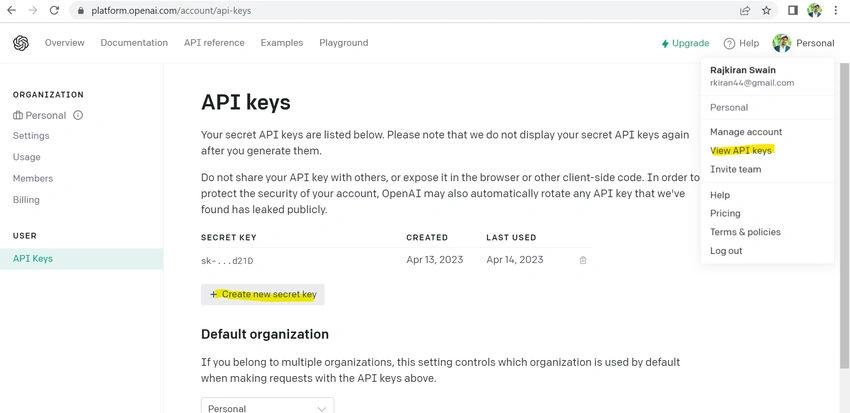
Once you have created your API key, you can access OpenAI's language models and other APIs. Make sure to keep your API key secure and not share it with anyone who should not have access to it.
Code Example
To create JSON from a sample in Power Automate, you can use the code below.
{
    "type": "object",
    "properties": {
        "id": {
            "type": "string"
        },
        "object": {
            "type": "string"
        },
        "created": {
            "type": "integer"
        },
        "model": {
            "type": "string"
        },
        "choices": {
            "type": "array",
            "items": {
                "type": "object",
                "properties": {
                    "text": {
                        "type": "string"
                    },
                    "index": {
                        "type": "integer"
                    },
                    "logprobs": {},
                    "finish_reason": {
                        "type": "string"
                    }
                },
                "required": [
                    "text",
                    "index",
                    "logprobs",
                    "finish_reason"
                ]
            }
        },
        "usage": {
            "type": "object",
            "properties": {
                "prompt_tokens": {
                    "type": "integer"
                },
                "completion_tokens": {
                    "type": "integer"
                },
                "total_tokens": {
                    "type": "integer"
                }
            }
        }
    }
}
In Power Automate, when you use the HTTP action, you must provide a body for the HTTP request. The format of the body will be like the one below.
{
  "model": "text-davinci-003",
  "prompt": "@{triggerOutputs()?['body/body']}",
  "max_tokens": 100,
  "temperature": 0
}
n OpenAI's API, there are several parameters that you can use to customize the behaviour of the language models that you are interacting with. Some of the most commonly used parameters include,
-
Model- The "model" parameter allows you to specify which language model you want to generate text. OpenAI offers several models, including GPT-3, GPT-2, and Codex, each with different capabilities and characteristics.
-
Max tokens- The "max tokens" parameter controls the maximum number of tokens (i.e., words and punctuation marks) that the language model should generate in response to your request. This parameter can be used to limit the length of the generated text, which can be useful if you only need a short response.
-
Temperature- The "temperature" parameter controls the creativity or randomness of the text generated by the language model. A higher temperature will produce more creative and diverse responses, while a lower temperature will produce more predictable and conservative responses.
It's important to note that these parameters are just a few available in OpenAI's API. The specific parameters you should use will depend on your use case and the language model you interact with. Be sure to consult the API documentation and experiment with different parameter values to find the best settings for your needs.
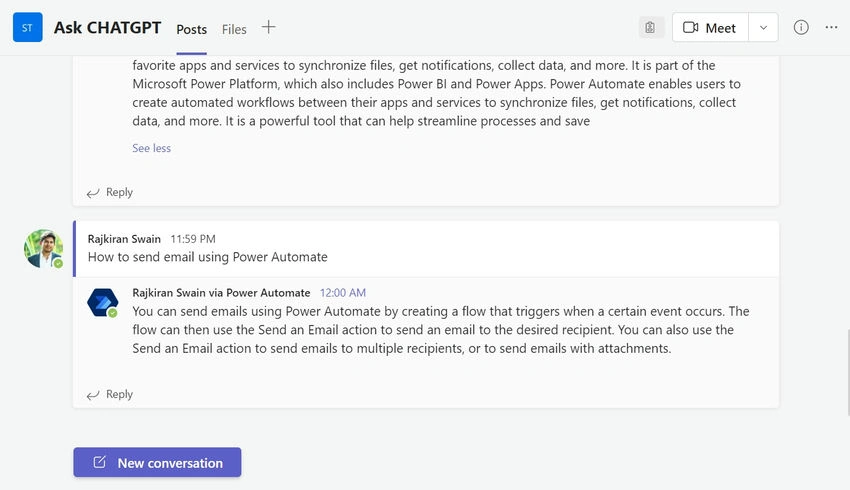
O/P
Deepak RawatPosted Apr 14, 2023, 12:32 PM
Like the way you have elaborate