

Introduction
Blockchain technology has changed the way digital transactions and data management systems work by introducing decentralization, transparency, and strong security mechanisms. The trust model of blockchain mainly depends on cryptographic algorithms that protect user identities, transaction records, and network communication.
However, the rapid development of quantum computing has created new questions regarding the long-term security of existing blockchain systems. Quantum computers are based on quantum principles that allow them to process certain problems significantly faster than traditional computing systems. Algorithms such as Shor’s Algorithm and Grover’s Algorithm have the potential to affect widely used cryptographic techniques including RSA, ECDSA, and SHA-256.
This article discusses how quantum computing may influence blockchain security and explores possible challenges and future approaches toward building quantum-resistant blockchain architectures.
Keywords: Blockchain Security, Quantum Computing, RSA, ECDSA, SHA-256, Shor’s Algorithm, Grover’s Algorithm, Post-Quantum Cryptography
1. Overview
Blockchain is considered one of the most secure technologies because of its decentralized structure and cryptographic foundation. Instead of storing information at a single location, blockchain maintains a distributed ledger where every transaction is verified by multiple network participants.
The security of blockchain does not depend only on its distributed nature but also on the cryptographic algorithms used for authentication and data protection. Digital signatures, hashing techniques, and consensus mechanisms work together to maintain trust between unknown participants.
With the emergence of quantum computing, this security model may face new challenges. Quantum computers use quantum bits (qubits) that can process information differently compared to traditional computers. Although current quantum computers are not powerful enough to break blockchain security, future advancements may create possibilities where existing cryptographic techniques become vulnerable.
2. Role of Cryptography in Blockchain Security
Cryptography acts as the foundation of blockchain security. It provides:
Secure user authentication
Transaction verification
Data integrity
Protection against unauthorized modifications Most blockchain platforms currently depend on public-key cryptography and hash functions. Algorithms such as RSA, ECDSA, and SHA-256 play important roles in maintaining security.
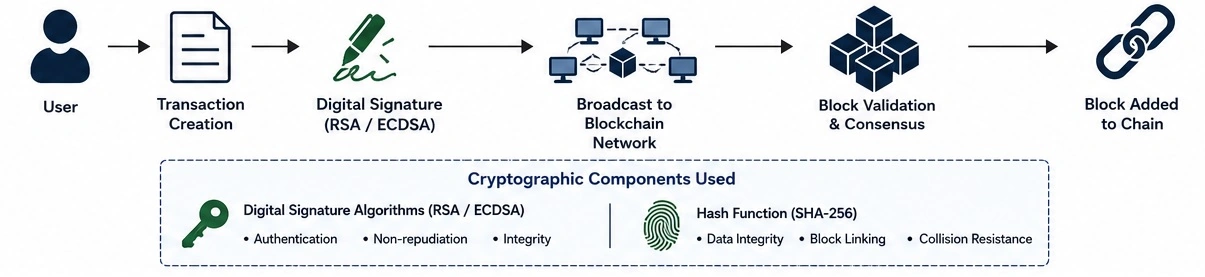
Figure 1: A Current Blockchain Security Mechanism
3. Impact on RSA Algorithm
RSA (Rivest–Shamir–Adleman) is a public-key cryptographic algorithm that uses mathematical complexity to secure communication. It works using a pair of keys:
Public Key for encryption and verification
Private Key for decryption and signing
The security of RSA depends on the difficulty of factoring very large numbers. Traditional computers require a significant amount of time to solve these mathematical problems.
However, quantum computing introduces a major concern through Shor’s Algorithm. This algorithm can solve factorization problems much more efficiently on a sufficiently powerful quantum computer.
In a blockchain ecosystem, RSA-based cryptographic mechanisms are used to protect user identities, authenticate transactions, and maintain trust between network participants. However, the emergence of powerful quantum computers with algorithms such as Shor’s Algorithm can threaten RSA encryption by solving the mathematical problems behind its security. If RSA protection is compromised, the following security risks may occur:
Exposure of private keys
RSA relies on the difficulty of deriving a private key from a public key. A sufficiently powerful quantum computer running Shor’s Algorithm could break this relationship and recover the private key. Once a private key is exposed, an attacker could gain control over the user's blockchain identity, digital assets, or sensitive transaction information.
Unauthorized Access to Blockchain Accounts
Private keys act as the proof of ownership in blockchain systems. If attackers obtain these keys, they may impersonate legitimate users and perform unauthorized transactions, transfer digital assets, or access protected blockchain resources without the owner's permission.
Creation of Fake Digital Signatures
Digital signatures ensure that a transaction was created by the actual owner and has not been modified. If RSA-based signature security is broken, attackers could generate fraudulent signatures that appear valid. This may allow malicious transactions to be accepted by the blockchain network, affecting trust and data integrity.
Loss of Trust in Blockchain Authentication
Blockchain systems depend on cryptographic algorithms to establish trust among unknown participants. A successful attack on RSA could weaken the authentication process and challenge the reliability of existing blockchain security models.
Long-Term Data Exposure Risk
Even if current blockchain systems remain secure today, attackers may collect encrypted information and attempt to decrypt it later when quantum computing becomes powerful enough. This creates a "store now, decrypt later" threat for sensitive blockchain data.
Therefore, RSA-based security systems may require replacement with quantum-resistant alternatives in the future.
4. Impact on ECDSA (Elliptic Curve Digital Signature Algorithm)
ECDSA is one of the most commonly used digital signature algorithms in blockchain networks. It helps verify ownership and ensures that transactions are created by authorized users.
For example, when a user transfers digital assets, the transaction is signed using a private key. The network verifies this signature using the corresponding public key.
ECDSA provides strong security because solving the mathematical problems behind elliptic curves is extremely difficult for classical computers.
However, Shor’s Algorithm can potentially solve these mathematical problems using quantum computing techniques.
Possible risks include:
Private key discovery
Transaction manipulation
Wallet compromise
This makes ECDSA one of the important areas requiring attention in quantum-safe blockchain research.
5. SHA-256 and Quantum Computing
SHA-256 is a cryptographic hash function widely used in blockchain systems. It converts transaction data into a fixed-size hash value.
A small change in input data creates a completely different hash output, making blockchain records resistant to modification.
SHA-256 provides:
Data integrity
Collision resistance
Secure block linking
Unlike RSA and ECDSA, SHA-256 is not completely broken by quantum computing. However, Grover’s Algorithm can improve search efficiency and reduce the effective security level.
This means quantum computers may perform hash-based attacks faster compared to traditional computers.
To maintain security, future blockchain systems may require stronger hash functions or larger key sizes.
6. Role of Shor’s Algorithm
Shor’s Algorithm is a quantum algorithm designed to solve certain mathematical problems efficiently.
It mainly affects:
Integer factorization
Discrete logarithm problems
Since RSA and ECDSA rely on these mathematical principles, Shor’s Algorithm represents one of the biggest threats to current blockchain cryptography.
A future quantum attacker using Shor’s Algorithm could potentially:
Recover private keys
Create unauthorized signatures
Access protected blockchain assets
7. Role of Grover’s Algorithm
Grover’s Algorithm is another important quantum algorithm that improves searching operations.
In blockchain security, it mainly affects cryptographic hash functions.
The algorithm reduces the effort required to find matching hash values, which can impact the security margin of hashing techniques.
Although SHA-256 remains secure with current technology, future blockchain designs must consider quantum improvements while selecting hashing mechanisms.
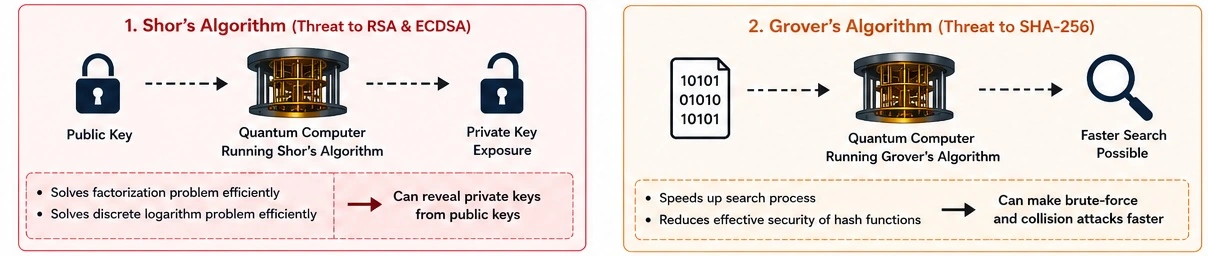
Figure 2: Potential Impact on Blockchain Security
The above illustration highlights the potential impact of quantum computing on traditional blockchain security mechanisms. Current blockchain networks mainly depend on cryptographic algorithms such as RSA, ECDSA, and SHA-256 to provide authentication, data integrity, and transaction security. However, the development of quantum algorithms introduces new challenges for these security models.
Shor’s Algorithm presents a significant threat to public-key cryptography systems like RSA and ECDSA. A powerful quantum computer executing Shor’s Algorithm could solve complex mathematical problems such as integer factorization and discrete logarithms much faster than classical computers. As a result, attackers may recover private keys from public keys, leading to identity compromise, unauthorized transactions, and forged digital signatures.
Similarly, Grover’s Algorithm affects hash-based security mechanisms by improving the efficiency of searching through possible solutions. Although SHA-256 is not completely broken by Grover’s Algorithm, its security strength can be reduced, making brute-force and collision-based attacks more practical with advanced quantum capabilities.
These quantum-based threats indicate that existing blockchain architectures must evolve toward quantum-resistant cryptographic techniques. The integration of post-quantum cryptography (PQC) approaches, such as lattice-based, hash-based, and code-based cryptographic methods, can help build blockchain systems capable of protecting digital assets and maintaining trust in the quantum era.
8. Future of Quantum-Resistant Blockchain
To overcome quantum threats, researchers are exploring Post-Quantum Cryptography (PQC).
Quantum-resistant blockchain systems focus on cryptographic techniques that remain secure even against quantum attacks.
Some possible approaches include:
Lattice-based cryptography
Hash-based digital signatures
Code-based cryptography
The transition toward quantum-resistant blockchain will require updates in digital wallets, transaction verification methods, and network protocols.

Figure 3: Future Requirement
The transition towards a quantum-safe blockchain ecosystem requires replacing traditional cryptographic techniques with advanced Post-Quantum Cryptography (PQC) methods. As quantum computing introduces potential risks to existing algorithms such as RSA and ECDSA, blockchain networks need security mechanisms that can withstand attacks from future quantum computers.
Post-Quantum Cryptography focuses on developing cryptographic algorithms that remain secure even against quantum-based attacks. These techniques include lattice-based, hash-based, and code-based cryptographic algorithms, which rely on mathematical problems that are considered difficult for both classical and quantum computers to solve.
By integrating these quantum-resistant algorithms, blockchain systems can implement quantum-safe digital signature schemes that provide secure user authentication, transaction verification, and data integrity. These improved signature mechanisms ensure that only legitimate users can authorize transactions and prevent attackers from generating fake identities or fraudulent records.
The adoption of quantum-resistant cryptography will help create a secure and future-ready blockchain ecosystem where digital assets, smart contracts, and decentralized applications can continue to operate safely in the quantum computing era. This approach ensures long-term trust, privacy, and reliability for next-generation blockchain networks.
Summary
Quantum computing represents a major technological advancement, but it also introduces new security challenges for blockchain systems. Existing cryptographic algorithms such as RSA and ECDSA may become vulnerable against future quantum attacks, while hash algorithms like SHA-256 may experience reduced security levels.
The future of blockchain security depends on preparing systems before quantum computers reach a stage where they can break traditional cryptography. Developing and adopting quantum-resistant algorithms will play an important role in maintaining trust, privacy, and security in next-generation blockchain networks.
Blockchain is not becoming insecure today, but preparing for the quantum era is an important step toward a safer digital future.
Join the conversation! Your thoughts help the community grow.