

To build a resilient enterprise event bus, teams must adhere to battle-tested patterns:
1. Implement the Transactional Outbox Pattern
Never publish directly to Kafka within an active database transaction. Instead, write business data and outbox events into the local database within a single transaction, then use a background process (e.g., Debezium or an Outbox Worker) to publish to Kafka. This guarantees that events are only published if the database write succeeds.
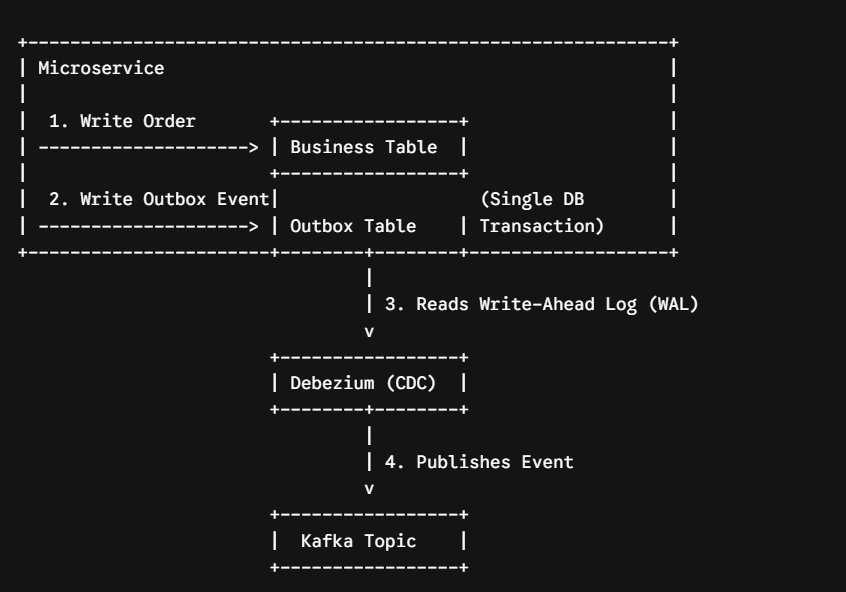
SQL Schema & Transaction
-- Single Transaction Guarantees Atomicity
BEGIN TRANSACTION;

-- Step 1: Update main application table
INSERT INTO orders (order_id, customer_id, total_amount, status)
VALUES ('ord_9876', 'cust_4321', 149.50, 'PENDING');

-- Step 2: Insert into outbox table in the SAME transaction
INSERT INTO outbox_events (id, aggregate_type, aggregate_id, event_type, payload)
VALUES (
  'evt_001',
  'Order',
  'ord_9876',
  'OrderCreated',
  '{"orderId": "ord_9876", "customerId": "cust_4321", "amount": 149.50}'
);

COMMIT;
2. Design Idempotent Consumers
Network hiccups and retries mean consumers will occasionally receive duplicate messages. Microservices must be designed to handle duplicate events gracefully using unique transaction IDs or state-checking mechanisms before applying changes.
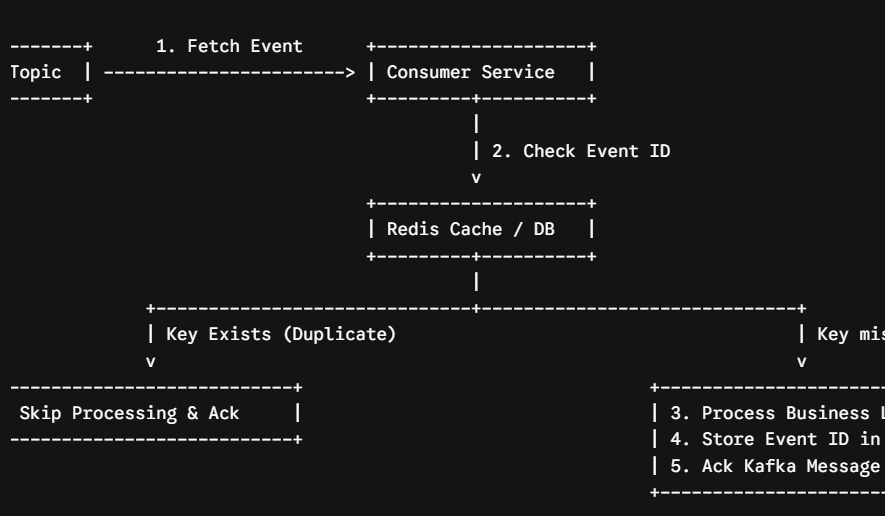
3. Handle Dead Letter Queues (DLQs) Explicitly
Do not let corrupt or unprocessable messages ("poison pills") block entire topic partitions. Route failing messages to a designated DLQ topic with enriched exception headers, allowing the main pipeline to continue while engineers inspect and re-drive the failed payloads.
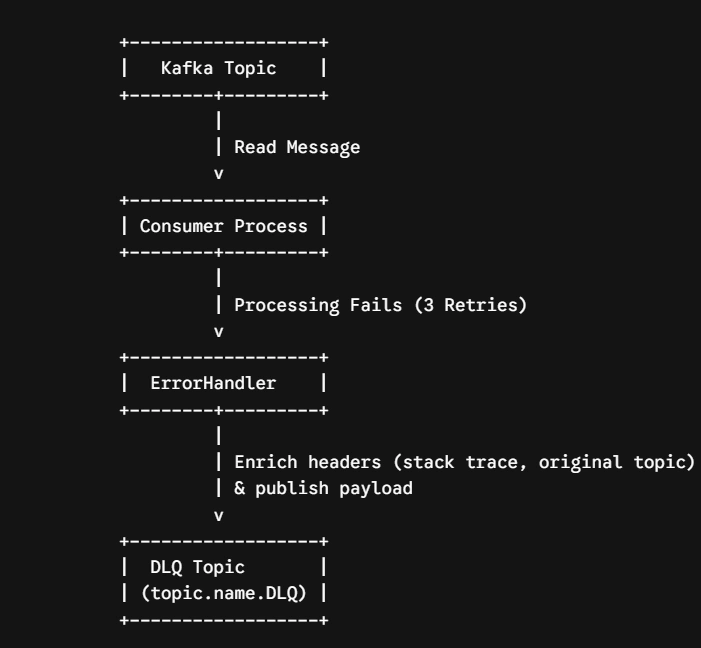
Message Header Structure in DLQ
When a message is routed to the DLQ, enrich its headers to simplify debugging:
{
  "headers": {
    "kafka_dlt-original-topic": "order-events",
    "kafka_dlt-original-partition": "2",
    "kafka_dlt-original-offset": "10492",
    "kafka_dlt-exception-message": "NullPointerException: Customer ID cannot be null",
    "kafka_dlt-exception-stacktrace": "com.enterprise.OrderProcessor.process(OrderProcessor.java:42)..."
  },
  "payload": {
    "order_id": "ord_9876",
    "customer_id": null
  }
}
4. Enforce Schema Governance
In multi-team enterprise environments, unexpected changes to JSON payloads can instantly break downstream consumers. Use a Schema Registry (with Avro or Protobuf) to enforce strict schema evolution rules (backward and forward compatibility) across all services.
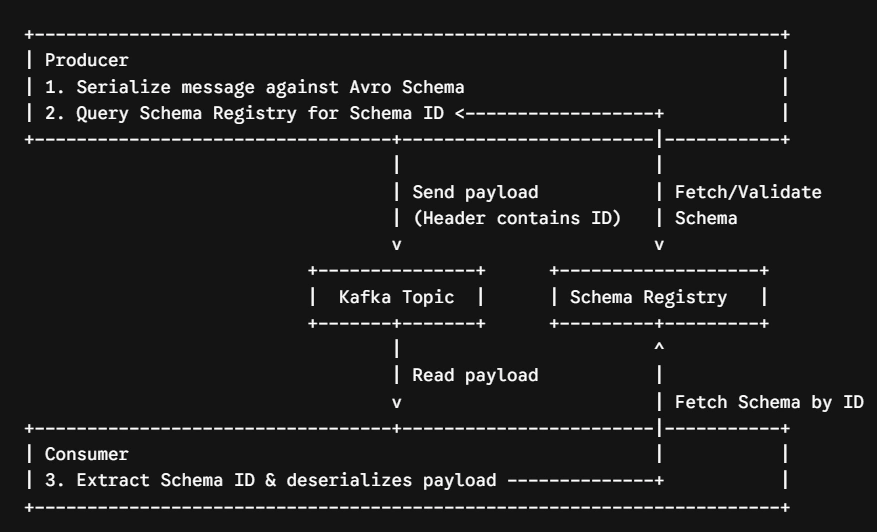
Schema Evolution Example (Apache Avro)
Version 1 (v1.avsc):
{
  "type": "record",
  "name": "UserRegistered",
  "namespace": "com.enterprise.events",
  "fields": [
    { "name": "user_id", "type": "string" },
    { "name": "email", "type": "string" }
  ]
}
Version 2 (v2.avsc - Backward Compatible Change):
{
  "type": "record",
  "name": "UserRegistered",
  "namespace": "com.enterprise.events",
  "fields": [
    { "name": "user_id", "type": "string" },
    { "name": "email", "type": "string" },
    {
      "name": "account_tier",
      "type": "string",
      "default": "STANDARD"  // Default value allows v1 consumers to read v2 messages safely
    }
  ]
}
Conclusion
Enterprise applications favor Apache Kafka because it transforms messaging from a fragile, short-term queue into a durable, scalable, and audit-friendly real-time event log. By adopting patterns like the Transactional Outbox, Idempotent Consumers, and Schema Governance, organizations can build resilient microservices capable of preventing data loss and surviving infrastructure failures.
Join the conversation! Your thoughts help the community grow.