

Managed private endpoints in Microsoft Fabric represent a significant advancement in securing data access for organizations leveraging cloud technologies. This feature enables workspace administrators to establish secure connections to data sources that are either shielded by firewalls or inaccessible via the public internet, thus enhancing data security and integrity. By utilizing managed private endpoints, your fabric Spark workloads can interact with various data sources, such as Azure storage and Azure SQL dbs, without exposing the sensitive data to the public network or requiring complicated network configurations.
The process for creating managed private endpoints is streamlined, allowing workspace admins to specify the resource ID of the desired data source, identify the target sub-resource, and provide a justification for the connection request. This capability not only simplifies the connection process but also ensures that data remains protected throughout its lifecycle. However, it is crucial to note that managed private endpoints come with certain limitations. For instance, workspaces that utilize managed virtual networks cannot access starter pools, which can lead to delays in initiating the session. Additionally, these endpoints are only supported in specific regions where Fabric Data Engineering workloads are available. Hence organizations must carefully consider their geographic deployment strategies when implementing this feature.
Furthermore, there are capacity requirements to keep in mind; managed private endpoints are only available for Fabric trial capacities and those of F64 or higher. This necessitates that organizations evaluate their current capacity and potentially upgrade to meet these requirements if they want. Another consideration is the potential for Spark job resilience issues, which can arise if workspaces with managed private endpoints are not migrated to compatible Fabric capacity SKUs.
Despite all these limitations, the advantages of managed private endpoints are clear. They provide a robust solution for organizations looking to enhance their data security posture while maintaining efficient access to critical data sources. By eliminating the need for complex network configurations and ensuring that data is only accessible through secure channels, managed private endpoints empower organizations to leverage the full potential of Microsoft Fabric while adhering to strict compliance and security standards.
As organizations continue to navigate the complexities of data management in cloud environments, features like managed private endpoints will play a pivotal role in securing sensitive information and facilitating seamless data access. By understanding both the capabilities and limitations of this feature, workspace admins can make informed decisions that align with their organizational goals and security requirements. As Microsoft Fabric evolves, ongoing enhancements to features like managed private endpoints will likely further streamline data access and security, making it an essential tool for modern data-driven enterprises.
Real-Time Example
Implementing a Managed Private Endpoint
To illustrate the implementation of a managed private endpoint, consider a scenario where a company wants to securely access an Azure SQL Database from its Azure Data Factory environment.
The following steps roughly outline the process.
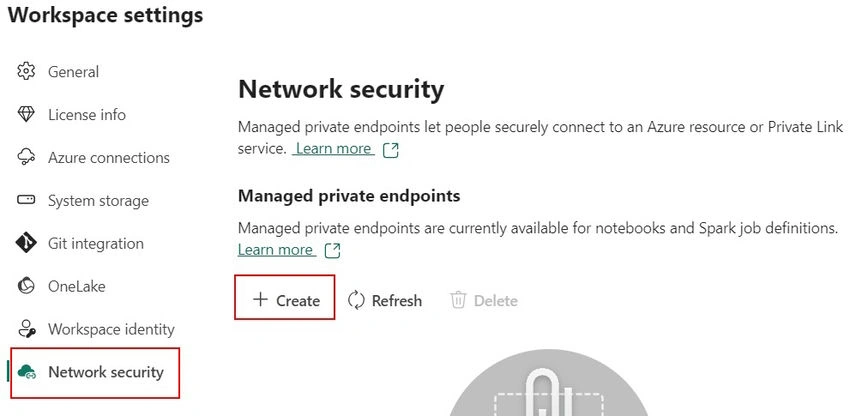
- In your Fabric workspace, go to Workspace Settings and click on the Network Security tab.
- Click Create to start setting up a new managed private endpoint.
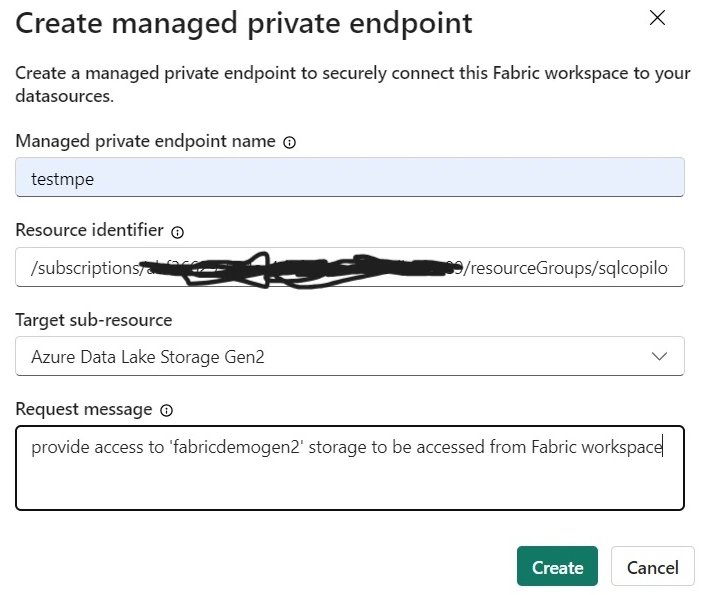
- Provide a name for the managed private endpoint.
- Go to the Azure resource you want to connect to, such as a storage account, and copy its Resource ID
- For a storage account, you can find the resource ID under the Properties blade in the Azure portal
- Paste the resource ID into the Resource Identifier field in Fabric
- Select the appropriate Target Sub Resource based on the type of Azure resource, such as dfs for Azure Data Lake Storage Gen2
- Add a justification message and click Create.
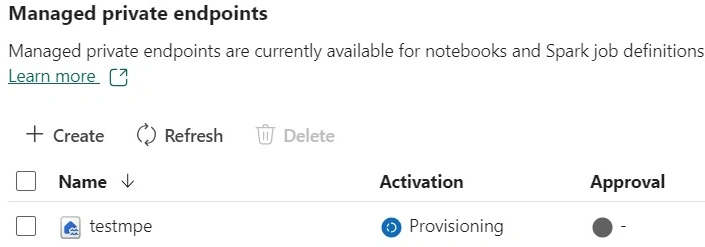
Approve the Private Endpoint Connection
- In the Azure portal, navigate to the resource you set up the managed private endpoint from the storage account.
- Go to the Security + networking blade, then Networking, and select Private Endpoint Connections.
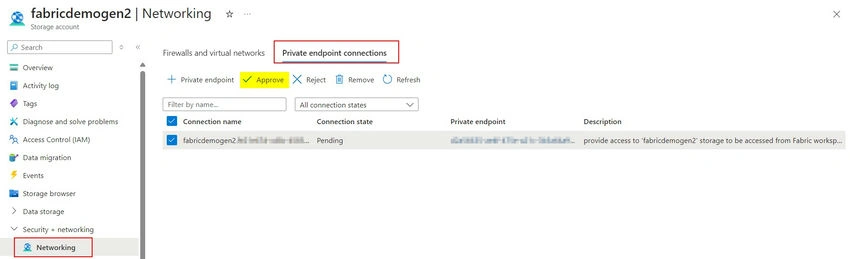
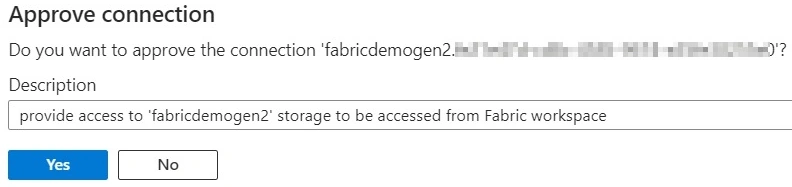
- Find the private endpoint created by Fabric, select it, and click Approve.
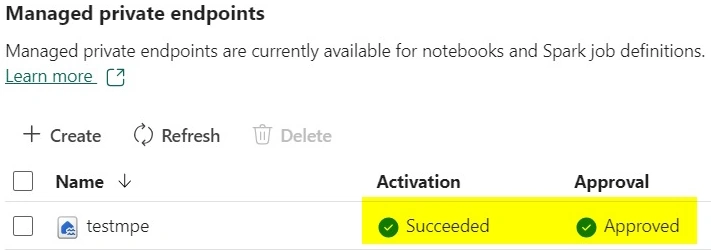
- You can verify if the bridging is completed successfully by making sure the highlighted fields in the below image is green.
Connect to the Secured Data Source
- In your Fabric workspace, create a new notebook or a spark job
- Use the full ABFSS path to access the secured data source, such as https://learn.microsoft.com/en-us/azure/storage/blobs/data-lake-storage-abfs-driver
- Now you should be able to query and see your data saved in the storage from the notebook securely
Conclusion
Managed private endpoints in Microsoft Fabric represent a significant advancement in securing cloud resources. They provide a robust solution for organizations prioritizing data privacy and security, enabling them to operate efficiently within the Azure ecosystem while safeguarding sensitive information.
Join the conversation! Your thoughts help the community grow.