

Introduction
In the fast-moving world of enterprise AI, the real challenge has never been the model’s ability to generate text; it’s been its lack of deep contextual understanding. At Ignite 2025, Microsoft broke down these long-standing barriers with the debut of a “Unified Context Layer,” comprising three tightly connected intelligence systems: Work IQ, Fabric IQ, and Foundry IQ. Together, they mark a transformational shift in architecture, moving beyond basic document retrieval toward a unified semantic intelligence that empowers AI agents to think and respond with the contextual awareness of an experienced employee. These layers transform the way applications, data, and knowledge connect with AI. For architects, engineers, and DevOps teams, they signal a move from simply “adding AI features” to intentionally “building agent-native systems.”
Work IQ – The User Context Layer
Work IQ serves as the intelligence layer in Microsoft 365, focused on unstructured and semi-structured data that drives everyday productivity. From a technical standpoint, it blends data, inference, and most importantly, memory to build a rich understanding of both individual and organizational work patterns.
Work IQ captures how people collaborate on documents, meetings, conversations, relationships, and daily interactions within Microsoft 365.
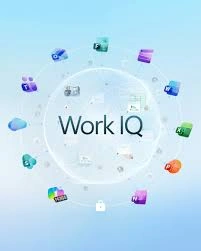
This layer acts as the personalization engine for AI agents. Instead of operating as a generic assistant, it enables agents to recognize who you work with, what you focus on, and how you typically accomplish tasks.
For architects, Work IQ serves as the user-context layer, forming the critical link between human behaviors and the actions agents execute across the enterprise.
Fabric IQ – The Data Context Layer
Fabric IQ unifies analytical, time-series, and location-aware data with your operational systems into a single, business-aligned model. This creates a real-time, connected view of your organization, enabling both people and AI to make timely, informed decisions.
From a solution architecture perspective, Fabric IQ serves as the data-context layer critical for building analytics solutions, decision systems, and operational AI workflows. For DevOps teams, it adds a new responsibility: versioning, governing, deploying, and monitoring semantic models with the same rigor applied to code.
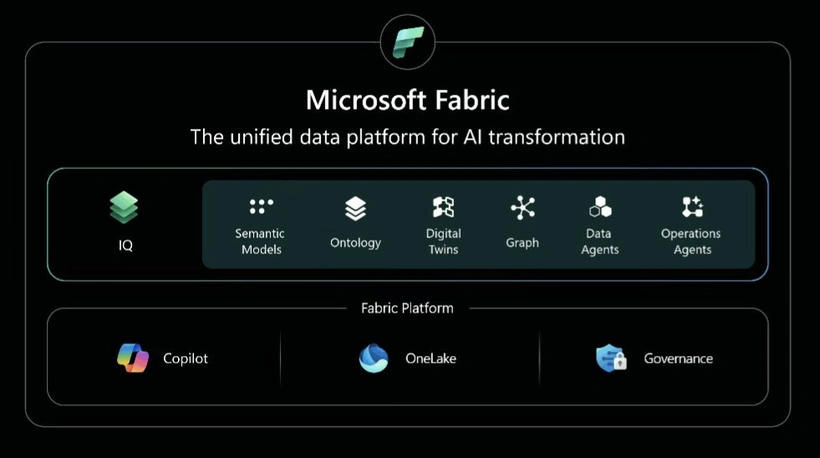
For customers already leveraging Power BI for business intelligence, your existing data models instantly become a catalyst providing agents with the rich, business-specific context that reflects exactly how your organization operates.
Foundry IQ – The Knowledge Context Layer
Foundry IQ extends this vision with a fully managed knowledge system that grounds AI agents across a wide range of data sources including Microsoft 365 (Work IQ), Fabric IQ, custom applications, and the web.
Foundry IQ addresses one of the hardest challenges in agent design: knowledge retrieval and grounding. It links agents to policy-governed knowledge sources across Microsoft 365, cloud storage, data platforms, and internal repositories—all through a unified retrieval engine.
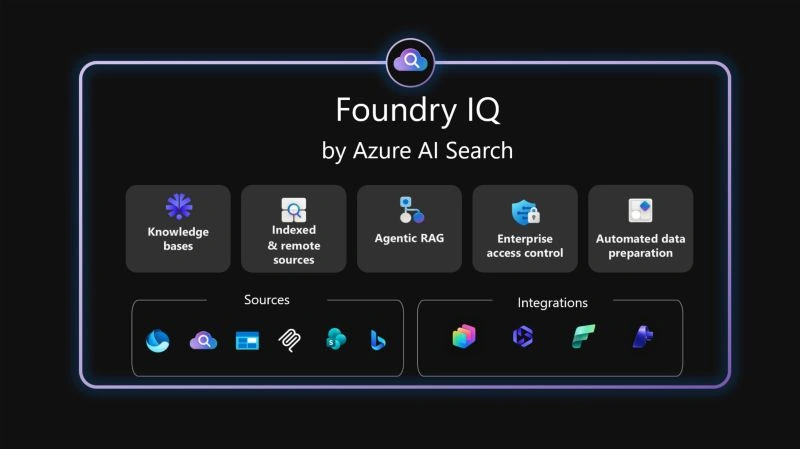
With this, agents can perform iterative search, reason across multiple data sources, and apply permission-aware grounding, eliminating the need for fragile, manually built retrieval pipelines.
In modern architectures, this becomes the knowledge-access layer, providing the traceability, auditability, and dependable decision-making required for autonomous workflows.
It provides a unified knowledge endpoint with built-in routing and intelligence, allowing agents to reason more effectively, act more safely, and deliver greater value for developers and organizations.
Unified Intelligence Layer Across Intelligence, Data & Knowledge
Together, Fabric IQ, Foundry IQ, and Work IQ make up IQ Microsoft’s unified intelligence layer that spans data, applications, and productivity. Microsoft states that agents built on this foundation will gain rich enterprise context, enabling them to make more reliable decisions and continuously refine operations for improved outcomes.
Summary
Microsoft’s vision for a unified intelligence layer powered by Work IQ, Fabric IQ, and Foundry IQ marks a significant leap forward in how enterprises build, deploy, and scale AI agents. By bringing together user context, data context, and knowledge context into a cohesive foundation, organizations can finally enable AI systems that understand, reason, and act with true enterprise awareness. This architectural shift not only elevates the capabilities of AI agents but also empowers architects, engineers, and DevOps teams to design solutions that are intelligent, autonomous, and deeply aligned with real business operations.
I hope you have enjoyed reading this article. Stay tuned for more updates there’s much more to explore as the agentic future unfolds. Happy learning and reading!
Join the conversation! Your thoughts help the community grow.