

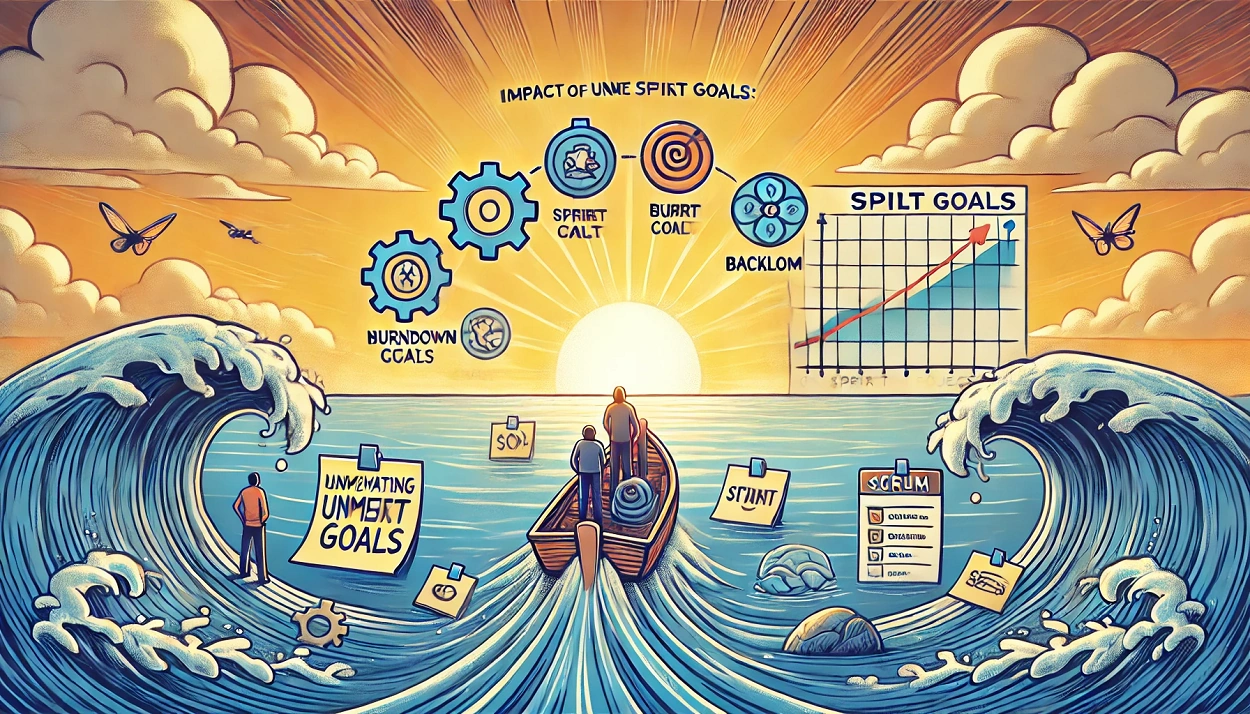
The impact of not meeting a sprint goal can vary based on the project's nature, stakeholders' expectations, and the Agile team's ability to adapt. Here's a detailed look at the potential impact on the project when a sprint goal is not met:
1. Delayed Deliverables
- Impact:
- The planned functionality or feature may not be delivered on time.
- This can disrupt the overall project timeline, especially if the deliverable is a dependency for subsequent sprints or milestones.
- Example:
- If a login system for an app is incomplete, other features dependent on authentication cannot proceed.
2. Reduced Stakeholder Confidence
- Impact:
- Stakeholders may lose trust in the team's ability to deliver on commitments.
- This could lead to increased scrutiny, micromanagement, or even reconsideration of Agile practices.
- Mitigation:
- Transparent communication and a clear recovery plan can help rebuild confidence.
3. Increased Technical Debt
- Impact:
- Rushing to complete work or cutting corners to meet deadlines in future sprints might increase technical debt.
- Over time, this can result in higher maintenance costs and reduced system performance.
- Mitigation:
- Allocate time in future sprints to refactor code and address technical debt.
4. Impact on Team Morale
- Impact:
- Team members may feel demotivated or under pressure due to unmet goals, especially if they feel overcommitted or undervalued.
- A blame culture can develop if the team does not handle the failure constructively.
- Mitigation:
- Use retrospectives to encourage a growth mindset and identify actionable improvements without assigning blame.
5. Scope Creep
- Impact:
- Unfinished work might lead to the accumulation of unplanned tasks, increasing project scope without adjusting timelines.
- Example:
- If several sprint goals are unmet consecutively, the product backlog can grow disproportionately, making it harder to prioritize and manage.
6. Financial Implications
- Impact:
- Delays in delivering key features may result in financial losses, especially in time-sensitive projects.
- For example, a missed feature for a product launch can reduce market competitiveness.
- Mitigation:
- Reassess priorities and focus on delivering the highest-value items first.
7. Misaligned Expectations
- Impact:
- If stakeholders were expecting a demo of specific features by the end of the sprint, an unmet goal can cause misalignment between the development team and business leaders.
- Mitigation:
- Clearly communicate progress and blockers during the sprint to manage expectations proactively.
8. Compromised Product Quality
- Impact:
- In a rush to compensate for unmet goals, quality might be compromised in subsequent sprints.
- This can lead to increased bugs, rework, or poor user experience.
- Mitigation:
- Stick to the Definition of Done and prioritize quality over quantity.
9. Bottlenecks in Dependent Teams
- Impact:
- If another team or department relies on the incomplete deliverable, it could create a bottleneck in their work.
- Example:
- In a scaled Agile framework, one team's failure to deliver can delay other teams in the same Agile Release Train (ART).
10. Opportunity Costs
- Impact:
- Resources spent on incomplete or low-priority items could have been allocated to higher-value tasks.
- Example:
- Spending time on a low-impact feature instead of fixing a critical bug can hurt customer satisfaction.
11. Complications in Release Planning
- Impact:
- If a sprint deliverable was part of a planned release, the overall release schedule might be jeopardized.
- Example:
- Missing a feature that is part of a Minimum Viable Product (MVP) can delay the product launch.
Strategies to Minimize Impact
-
Reprioritize Backlog Items:
- Focus on high-value tasks in the next sprint to regain momentum.
-
Analyze and Adapt:
- Use the retrospective to identify patterns and address systemic issues.
-
Refine Planning:
- Adjust sprint commitments to align with the team’s actual capacity.
-
Stakeholder Engagement:
- Keep stakeholders informed about progress and recovery plans to maintain trust.
-
Buffer Time:
- Include contingency time in sprints for unexpected issues.
-
Continuous Feedback:
- Gather feedback from stakeholders to ensure alignment and manage expectations.
Summary
Unmet sprint goals can cause delays, reduce confidence, and create technical debt, but with proper communication, planning, and focus on continuous improvement, these impacts can be minimized. Agile’s flexibility allows teams to adapt and recover while keeping the project on track.
Join the conversation! Your thoughts help the community grow.