

Introduction
As autonomous AI agents move from experimentation into real-world automation, communication channels become a critical architectural layer. Frameworks like OpenClaw are designed around a local-first autonomous agent model where Large Language Models interact with real systems through tools, workflows, and messaging platforms.
However, many developers and educators encounter an unexpected problem when setting up OpenClaw communication automation:
Telegram works immediately.
WhatsApp does not.
This article provides a detailed technical analysis explaining why this happens, what is actually occurring under the hood, and how engineers should structure production deployments and training environments to avoid instability.
This is an engineering diagnosis.
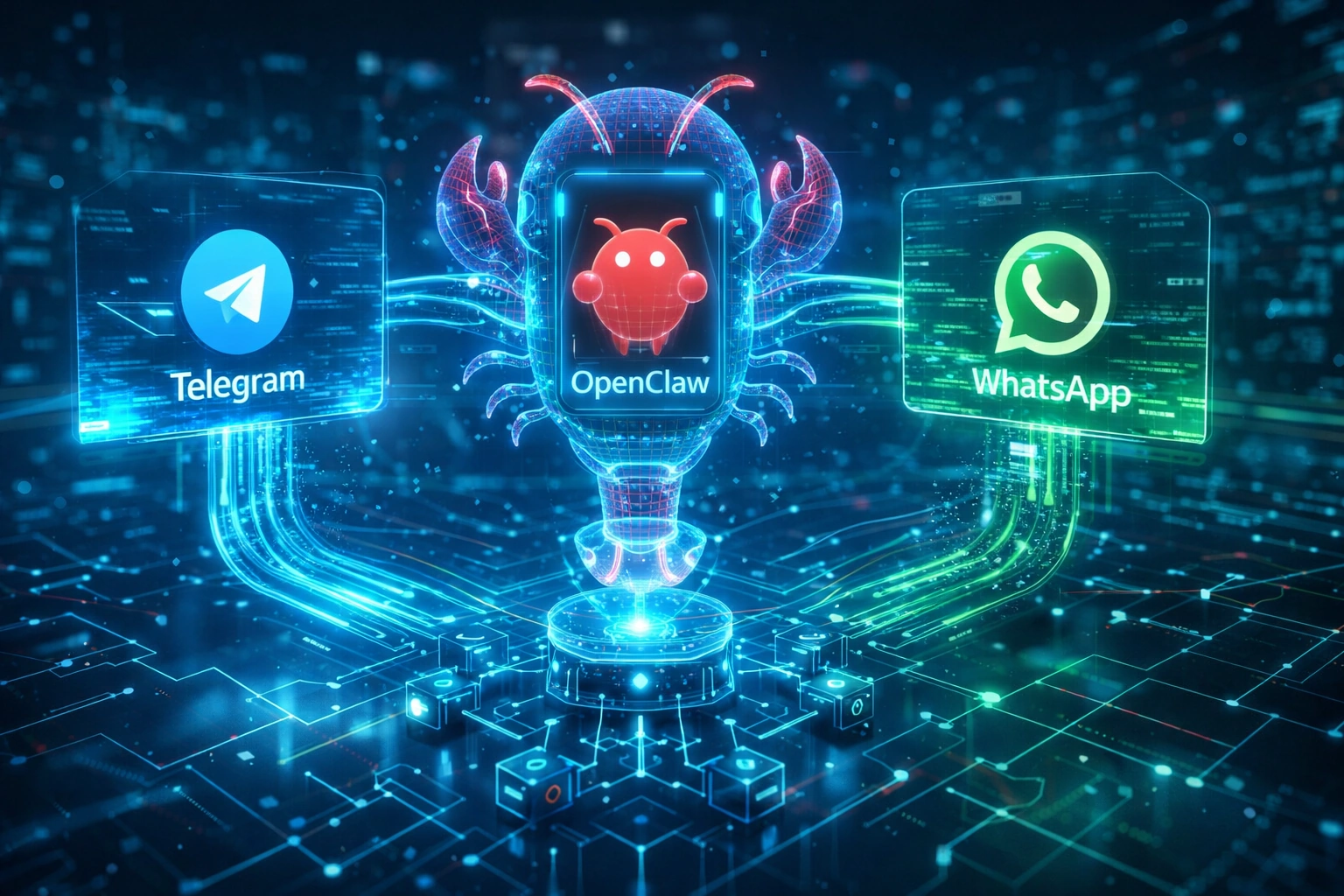
The Role of Communication Channels in OpenClaw
OpenClaw agents operate through three core layers:
Reasoning Layer — LLM decision making
Execution Layer — tools and skills
Communication Layer — external interaction
The communication layer allows agents to transition from terminal-based automation into event-driven systems.
Instead of running commands manually:
User → Terminal → Agentcommunication channels enable:
User → Messaging Platform → Gateway → Agent → Action → ResponseThis transformation turns OpenClaw into a digital operator rather than a local assistant.
Supported communication channels typically include:
Telegram
Slack
WhatsApp (theoretically)
Custom integrations
But practical support differs significantly.
The Reality of OpenClaw Environments in 2026
A clean OpenClaw installation typically produces the following result:
openclaw skills checkOutput:
✓ telegram available
✗ wacli missing
This single dependency explains the majority of setup failures developers encounter.
What This Means
Telegram integration is bundled.
WhatsApp integration depends on an external runtime.
That runtime is not publicly distributed.
Therefore, WhatsApp is not immediately usable.
Why Telegram Works Immediately
Telegram integration follows a modern API-first architecture.
Authentication Model
Telegram uses token-based authentication via BotFather:
Bot Token → OpenClaw Gateway → Telegram APINo additional infrastructure is required.
Engineering Advantages
Telegram integration requires:
No external binaries
No local device pairing
No session persistence hacks
No browser automation layer
Once configured, the gateway maintains a stable API connection.
This makes Telegram ideal for:
local development
server deployment
training environments
reproducible demos
Why WhatsApp Fails in Standard Setups
WhatsApp does not provide an open bot API equivalent to Telegram.
Instead, most automation solutions rely on WhatsApp Web emulation.
OpenClaw expects a binary called:
wacliThis tool acts as a bridge between WhatsApp Web and the OpenClaw gateway.
The Problem
In OpenClaw 2026:
wacliis not available on npmno official Docker image exists
no public distribution channel exists
Attempting installation leads to:
npm ERR! 404 Not Foundor container registry denial errors.
The integration dependency is effectively missing.
Architectural Difference: API vs Emulation
The core issue is architectural.
| Platform | Integration Type | Stability |
|---|---|---|
| Telegram | Official API | High |
| Slack | OAuth API | High |
| Web session emulation | Fragile |
Telegram communicates through documented APIs.
WhatsApp automation simulates a logged-in browser session.
That difference introduces multiple failure points.
Engineering Risks of WhatsApp Automation
1. Session Instability
WhatsApp Web sessions may expire or disconnect.
Agents lose communication silently.
2. Device Dependency
The phone must remain authenticated.
Network changes can invalidate sessions.
3. Infrastructure Complexity
Working setups often require:
headless browser runtime
persistent container
QR authentication lifecycle
state storage management
At this point, complexity exceeds the OpenClaw learning scope.
Production Deployment Perspective
Real autonomous agent deployments prioritize:
deterministic setup
minimal external dependencies
API-based integrations
reproducibility
Telegram satisfies these conditions.
WhatsApp requires additional engineering investment.
Organizations typically introduce WhatsApp only after building a stable agent infrastructure.
Security Considerations
Telegram integration also benefits from OpenClaw’s pairing system:
Unknown user → Pairing code → Owner approval → Trusted identityThis ensures controlled access without external authentication servers.
WhatsApp bridges must implement security independently, increasing attack surface area.
Final Engineering Advice
At present: Telegram is stable and production-ready, WhatsApp requires unavailable or custom infrastructure.
Forcing WhatsApp early leads to:
setup failures
student frustration
support overhead
unreliable demonstrations
Engineering maturity means choosing reliable layers first.
Start with supported integrations.
Build predictable systems.
Add complexity only when necessary.
Conclusion
OpenClaw represents a shift toward autonomous, local-first AI systems. But autonomy depends on reliable communication infrastructure.
Telegram succeeds because it aligns with API-first engineering principles.
WhatsApp struggles because it relies on emulation rather than native automation support.
Understanding this distinction allows developers, educators, and teams to design systems that scale without unnecessary friction.
In autonomous systems, stability is not optional — it is foundational.
Join the conversation! Your thoughts help the community grow.