

Introduction
In the world of AI applications, latency is a critical factor that directly impacts user experience and system efficiency. Whether it's real-time predictions in financial trading, healthcare diagnostics, or chatbots, the speed at which an AI model responds is often as important as the accuracy of the model itself.
Azure Machine Learning Endpoints provide a scalable and efficient way to deploy models while optimizing latency. In this article, we’ll explore strategies to reduce model latency using Azure ML Endpoints, covering concepts such as infrastructure optimization, model compression, batch processing, and auto-scaling.

Understanding Azure Machine Learning Endpoints
Azure Machine Learning provides two types of endpoints.
- Managed Online Endpoints: Used for real-time inference with autoscaling and monitoring.
- Batch Endpoints: Optimized for processing large datasets asynchronously.
Each type of endpoint has different optimizations depending on the use cases. For latency-sensitive applications, Managed Online Endpoints are the best choice due to their ability to scale dynamically and support high-throughput scenarios.
Strategies to Reduce Model Latency
1. Optimize Model Size and Performance
Reducing model complexity and size can significantly impact latency. Some effective ways to achieve this include.
- Model Quantization: Convert floating-point models into lower-precision formats (e.g., INT8) to reduce computational requirements.
- Pruning and Knowledge Distillation: Remove unnecessary weights or train smaller models while preserving performance.
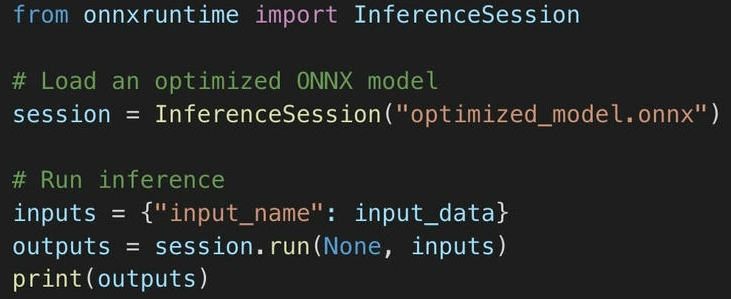
- ONNX Runtime Acceleration: Convert models to ONNX format for better inference speed on Azure ML.
2. Use GPU-Accelerated Inference
Deploying models on GPU instances rather than CPU-based environments can drastically cut down inference time, especially for deep learning models.
Steps to enable GPU-based endpoints.
- Choose NC- or ND-series VMs in Azure ML to utilize NVIDIA GPUs.
- Use TensorRT for deep learning inference acceleration.
- Optimize PyTorch and TensorFlow models using mixed-precision techniques.
3. Implement Auto-Scaling for High-Throughput Workloads
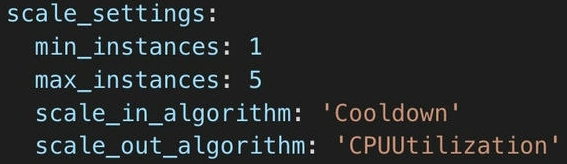
Azure ML Managed Online Endpoints allow auto-scaling based on traffic demands. This ensures optimal resource allocation and minimizes unnecessary latency during peak loads.
Example. Configuring auto-scaling in Azure ML
4. Reduce Network Overhead with Proximity Placement
Network latency can contribute significantly to response delays. Using Azure’s proximity placement groups ensures that compute resources are allocated closer to end-users, reducing round-trip times for inference requests.
Best Practices
- Deploy inference endpoints in the same region as the application backend.
- Use Azure Front Door or CDN to route requests efficiently.
- Minimize data serialization/deserialization overhead with optimized APIs.
5. Optimize Batch Inference for Large-Scale Processing
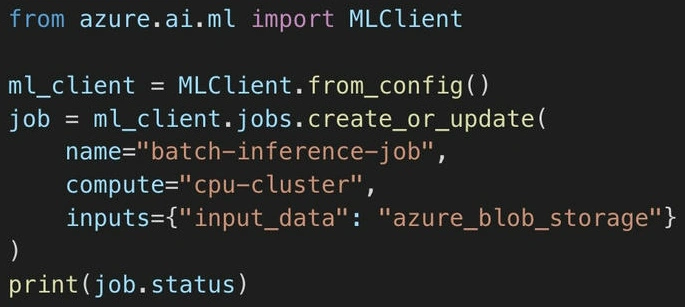
For applications that do not require real-time responses, using Azure ML Batch Endpoints can significantly reduce costs and improve efficiency.
Steps to set up a batch endpoint.
- Register the model in Azure ML.
- Create a batch inference pipeline using Azure ML SDK.
- Schedule the batch jobs at regular intervals.
6. Enable Caching and Preloading
Reducing the need for repeated model loading can improve response time.
- Keep model instances warm by preloading them in memory.
- Enable caching at the API level to store previous results for frequently requested inputs.
- Use FastAPI or Flask with async processing to handle concurrent requests efficiently.
Conclusion
Reducing AI model latency is crucial for building responsive, high-performance applications. By leveraging Azure ML Endpoints and employing strategies such as model optimization, GPU acceleration, auto-scaling, and network optimizations, organizations can significantly improve inference speed while maintaining cost efficiency.
As AI adoption grows, ensuring low-latency responses will be a key differentiator in delivering seamless user experiences. Start optimizing your Azure ML endpoints today and unlock the full potential of real-time AI applications!
Next Steps
Join the conversation! Your thoughts help the community grow.