

Background
This article is in continuation of the series of articles regarding how equality works in .NET; the purpose is to give developers a more clear understanding of how .NET handles equality for different types.
What we learned so far
Following are the key points that we learned from the previous parts so far:
- C# does not syntactically distinguish between the value and reference equality, which means it can sometimes be difficult to predict what the equality operator will do in particular situations.
- There are often multiple different ways of legitimately comparing the values. .NET addresses this by allowing the types to specify their preferred natural way to compare for equality, also providing a mechanism to write equality, which allows you to place default equality for each type.
- It is not recommended to test floating point values for equality because rounding errors can make this unreliable.
- There is an inherent conflict between implementing equality, type-safety, and good Object Oriented practices.
- .NET provides the types of equality implementation out of the box, a few methods are defined by the .NET framework on the Object class, which are available for all the types.
- By default, the virtual Object.Equals method does reference equality for the reference types and the value equality for the value types, but for the value types, it uses reflection, which is a performance overhead for the value types and any type can override Object.Equals method to change the logic of how it checks for the equality; e.g., String, Delegate, and Tuple do this for providing value equality, even though these are reference types.
- Object class also provides a static Equals method, which can be used when there is a chance that one or both of the parameters can be null, other than that it behaves identically to the virtual Object.Equals method.
- There is also a static ReferenceEquals method, which provides a guaranteed way to check for reference equality.
- IEquatable<T> interface can be implemented on a type to provide a strongly typed Equals method, which also avoids boxing for the value types. It is implemented for the primitive numeric types but unfortunately, Microsoft has not been very proactive in implementing other value types in the FCL( Framework Class Library )
- For Value Types, using the == operator gives us the same result as calling Object.Equals but the underlying mechanism of == operator is different in IL (Intermediate Language ) as compared to Object.Equals, so the Object.Equals implementation provided for that primitive type is not called, instead, an IL instruction ceq gets called, which says to compare the two values which are being loaded on the stack right now and perform equality comparison, using CPU registers.
- For Reference Types == operator and Object.Equals method calls, both work differently behind the scenes, which can be verified by inspecting the IL code generated. It also uses ceq instruction, which does the comparison of the memory addresses.
If you want to read the other parts published so far, you can read them here-
- Story of Equality in .NET – Part 1
- Story of Equality in .NET – Part 2
- Story of Equality in .NET – Part 3
- Story of Equality in .NET – Part 4
- Story of Equality in .NET – Part 5
Equality Operator for String
- class Program
- {
- static void Main(String[] args) {
- string s1 = "Ehsan Sajjad";
- string s2 = String.Copy(s1);
- Console.WriteLine(ReferenceEquals(s1, s2));
- Console.WriteLine(s1 == s2);
- Console.WriteLine(s1.Equals(s2));
- Console.ReadKey();
- }
- }

Behind the Scenes of Equality Operator for String
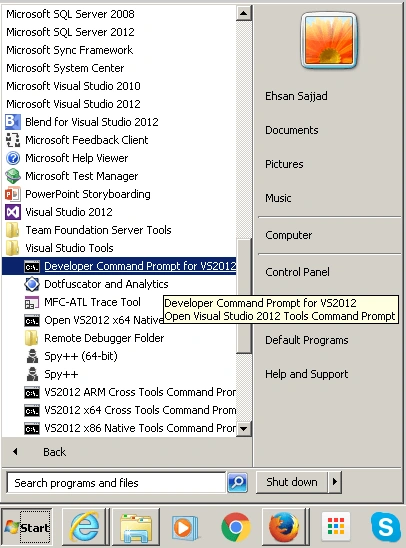

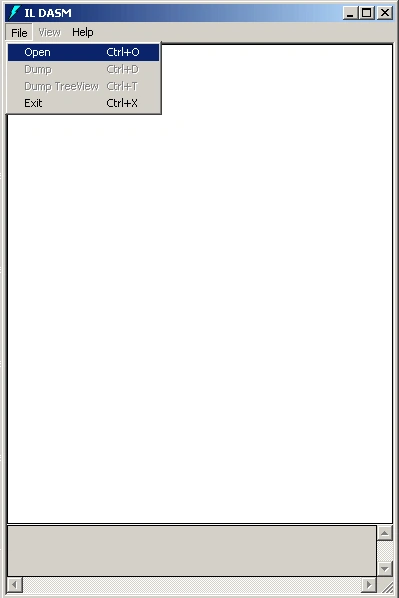
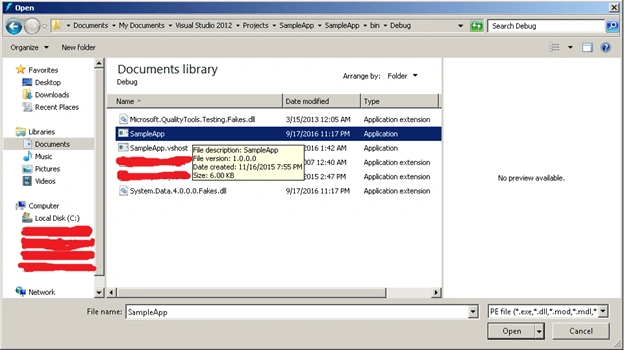

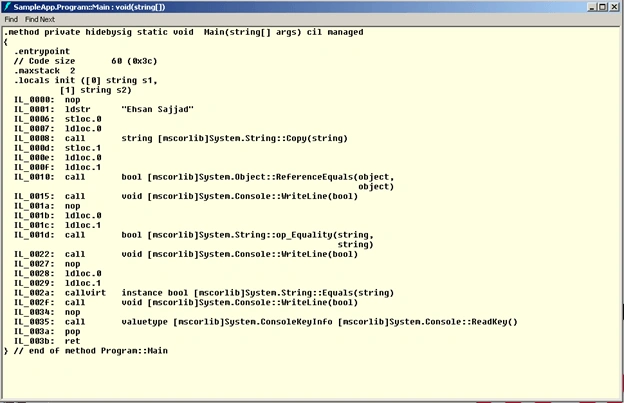
IL for Equals Method
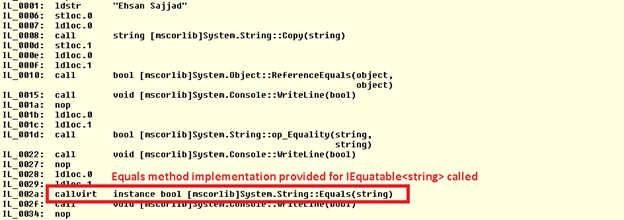
IL for == operator for String
- public class Person
- {
- public int Id {
- get;
- set;
- }
- public string Name {
- get;
- set;
- }
- public static bool operator == (Person p1, Person p2) {
- bool areEqual = false;
- if (p1 == null || p2 == null) areEqual = false;
- if (p1 == null && p2 == null) areEqual = true;
- if (p1.Id == p2.Id) areEqual = true;
- else areEqual = false;
- return areEqual;
- }
- }
The code given above is pretty simple. We have declared an operator overload, which would be a static method, but the thing to notice here is that the name of the method is operator == and the similarity of declaring an operator overload with the static method is not a coincidence. Actually, it is compiled as a static method by the compiler, because we know and it had been discussed before IL (Intermediate Language) has no concept of operators, events, etc. It only understands the fields and methods, so the operator overload can only exist as a method, which we observed in the IL code, given above. The overload operator code is turned by the compiler into a special static method called op_Equality().
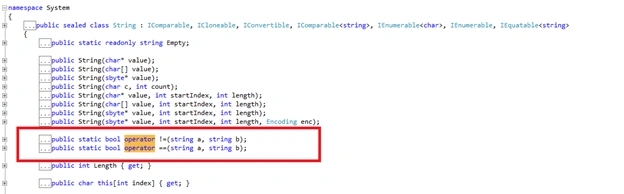
Summary
- We have now enough understanding of what the C# Equality operator does in the case of Reference Types. Following are the things to be kept in mind-
- If there is an overload for the equality operator for the type being compared, it uses that operator as a static method.
- If there is no overload of an operator for the reference type, the equality operator compares the memory addresses, using ceq instruction.
- One thing to note is that Microsoft made sure that == operator overload and Object.Equals override always gives the same result even though they are in fact different methods. This is an important thing, we need to keep in mind, when we start implementing our own Equals override, we should also take care of the equality operator as well, otherwise our type will end up giving a different result using Equals override and equality operator, which would be problematic for the consumers of the type. We will be seeing in another post, how we can override Equals method in a proper way.
- If we are changing how equality works for a type, we need to make sure we provide an implementation for both Equals override and == operator overload, so that they both give the same result and it's obvious, else, it would be confusing for other developers, who will be using our developed type.
Join the conversation! Your thoughts help the community grow.