

In today’s dynamic business environment, organizations require frameworks that foster adaptability, collaboration, and efficiency. Scrum, an agile process model, has emerged as one of the most widely adopted methodologies for managing complex projects. It provides a structured yet flexible approach to product development, enabling teams to deliver high-quality results incrementally.
Core Principles of Scrum
Scrum is built on the foundation of empirical process control, which emphasizes transparency, inspection, and adaptation. Its guiding principles include:
Iterative progress: Work is divided into short cycles called sprints.
Collaboration: Teams work closely with stakeholders to ensure alignment.
Adaptability: Continuous feedback allows teams to refine processes and outputs.
Value delivery: The focus remains on delivering customer-centric outcomes.
Key Roles in Scrum
Scrum defines specific roles to ensure clarity and accountability:
Product Owner: Responsible for maximizing product value by managing the product backlog.
Scrum Master: Facilitates the process, removes impediments, and ensures adherence to Scrum principles.
Development Team: A cross-functional group that delivers the product increment during each sprint.
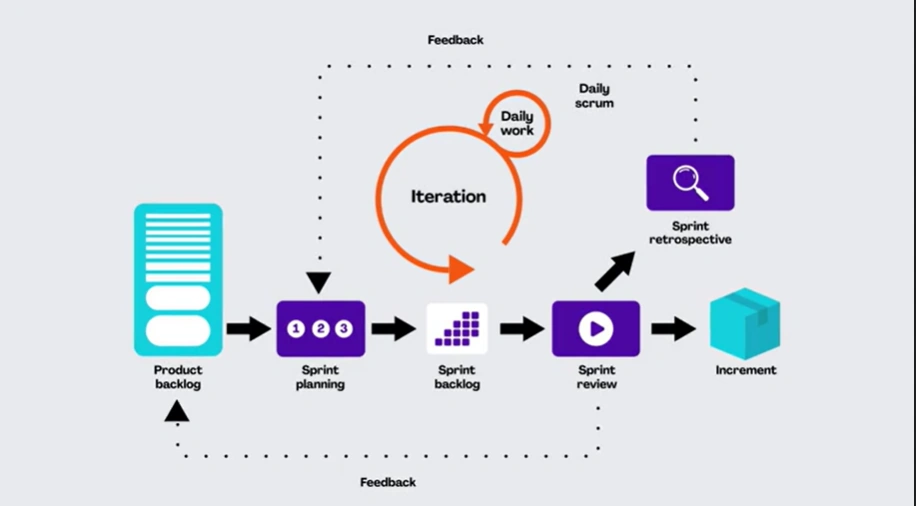
Scrum Artifacts
Artifacts in Scrum provide transparency and track progress:
Product Backlog: A prioritized list of features, enhancements, and fixes.
Sprint Backlog: A subset of the product backlog selected for a sprint.
Increment: The sum of completed work that meets the definition of “done.”
Scrum Events
Scrum organizes work through time-boxed events:
Sprint Planning: Defines the sprint goal and selects backlog items.
Daily Scrum: A short meeting to synchronize activities and plan for the next 24 hours.
Sprint Review: Demonstrates the increment to stakeholders and gathers feedback.
Advantages of the Scrum Model
Encourages continuous improvement through regular retrospectives.
Enhances team collaboration and stakeholder engagement.
Provides predictability with fixed-length sprints.
Ensures customer satisfaction by delivering incremental value.
The Scrum process model is more than just a project management technique—it is a mindset that embraces change, fosters collaboration, and prioritizes value delivery. By adhering to its principles, roles, artifacts, and events, organizations can navigate complexity and achieve sustainable success in product development.
Join the conversation! Your thoughts help the community grow.