

Introduction
In today's digital landscape, nearly every company relies on a cloud service provider. But navigating the world of cloud computing can be overwhelming. Unlike traditional services, there's a vast array of cloud providers, often offering similar features. This article aims to simplify your search by helping you determine the best cloud service provider for your specific needs.
Cloud computing explained
Cloud computing refers to web-based computing resources. Businesses and individuals can access virtual machines, databases, processing power, storage, and various services – all on a pay-as-you-go basis. This model offers significant advantages over older methods. Unlike traditional computing where you pay upfront for resources you might not always utilize, cloud services allow you to scale your usage and only pay for what you consume. Imagine it like a utility bill – you only pay for the electricity or water you use, not the entire power plant or reservoir.
Benefits of Cloud Computing
Cloud computing offers a multitude of benefits for businesses:
- Cost Savings: Reduce operational and fixed monthly costs associated with hardware, databases, servers, and software licenses. Cloud computing can also lead to a decrease in IT staff requirements as managing servers and software is handled by the cloud provider.
- Increased Uptime and Reliability: Cloud providers offer exceptional uptime (often exceeding 99.99%). Their data centers are professionally managed and geographically dispersed, ensuring redundancy and faster access speeds. Leading companies like Microsoft and Amazon Web Services (AWS) have data centers strategically located around the world.
- Scalability: Cloud services are highly scalable and adaptable. You can easily increase resources (processing power, storage) during peak periods and scale down when needed, ensuring you only pay for what you use.
- Automatic Updates and Maintenance: Cloud providers handle software updates, operating system upgrades, database maintenance, and third-party software updates, reducing your IT team's workload and associated costs.
Cloud Service Models
Cloud computing offers three primary service models:
Infrastructure as a Service (IaaS): Provides the fundamental building blocks of IT infrastructure, including virtual machines, storage, networking, and servers. Essentially, IaaS allows you to rent these resources on-demand over the Internet, eliminating the need for physical data centers and their associated upkeep.
Platform as a Service (PaaS): Offers a complete development and deployment environment in the cloud. This includes tools and services for development (dev), testing (test), quality assurance (QA), debugging, and deployment. Essentially, PaaS allows you to focus on building your applications without worrying about managing the underlying infrastructure.
Software as a Service (SaaS): Delivers software applications over the internet, eliminating the need for local installations and software management. Businesses or individuals can access and use these applications on a subscription basis, paying only for what they need.
Leading IaaS Cloud Providers
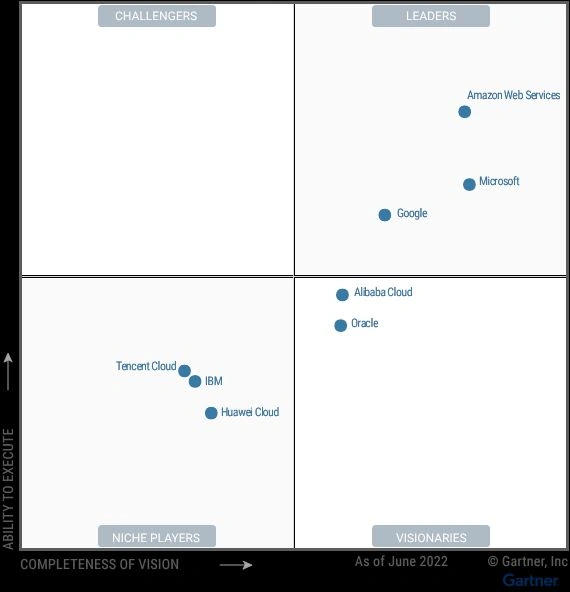
IaaS offers a complete IT infrastructure solution delivered and managed via the internet. It can replace existing development and testing environments, virtual machines, website hosting, storage, and more. Leading cloud providers like AWS, Microsoft Azure, and Google Cloud Platform are prominent players in the IaaS market, according to Gartner's Magic Quadrant.
This revised introduction provides a clearer structure, improved sentence flow, and eliminates unnecessary phrases. It also offers a more concise explanation of cloud computing concepts and benefits.
According to Gartner Magic Quadrant, AWS leads among top cloud services providers, followed by Microsoft and Google Cloud in the IaaS position.
Leading PaaS Cloud Providers
The PaaS component of cloud computing offers a complete development and deployment environment in the cloud, including dev, test, QA, debugging, and deployment tools and services. SaaS is Software developed and hosted by someone else. Businesses or individuals can use them as needed.
Today, most top cloud service providers offer all these services. The two leaders in cloud computing are Amazon and Microsoft, followed by Google, Alibaba, and IBM. This article will compare the top cloud computing providers and their categories.
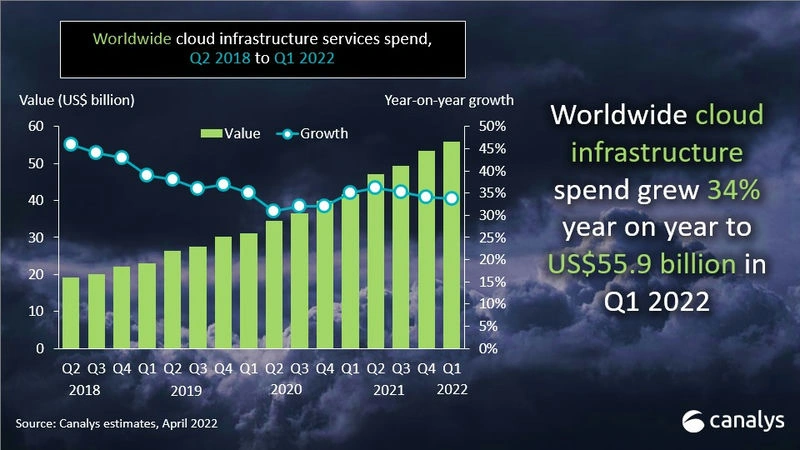
According to a report by Canalys, worldwide cloud infrastructure services spending increased 34% to US$55.9 billion in Q1 2022 as organizations prioritized digitalization strategies to meet market challenges. The latest Canalys data estimates expenditure was over US$2 billion more than in the previous quarter and US$14 billion more than in Q1 2021.
Top 10 Cloud Service Providers
Here is a list of the top 10 cloud service providers:
- Amazon Web Services (AWS)
- Microsoft Azure
- Google Cloud
- Alibaba Cloud
- IBM Cloud
- Oracle
- Salesforce
- SAP
- Rackspace Cloud
- VMWare
The following table summarizes the top 3 key players and their offerings in cloud computing. For Q3 2022, AWS reported revenue increased 27 percent year-over-year to $20.5 billion from $16.5 billion in Q3 2021. In addition, AWS's operating income was $5.4 billion, compared with operating revenue of $4.9 billion in the third quarter of 2021.
For the same quarter, Microsoft reported revenue from its Intelligent Cloud of $20.3 billion, which increased 20 percent from the previous quarter in 2021. Google Cloud says revenue of $6.86 billion, up from $4.99 billion in 2021. However, its losses widened slightly, from $644 million to $699 million.
| AWS | Azure | Google Cloud | |
| Company | AWS Inc. | Microsoft | |
| Launch year | 2006 | 2010 | 2008 |
| Geographical Regions | 25 | 54 | 21 |
| Availability Zones | 78 | 140 (countries) | 61 |
| Key offerings | Compute, storage, database, analytics, networking, machine learning, AI, mobile, developer tools, IoT, security, enterprise applications, blockchain. | Compute, storage, mobile, data management, messaging, media services, CDN, machine learning and AI, developer tools, security, blockchain, functions, IoT. | Compute, storage, databases, networking, big data, cloud AI, management tools, Identity and security, IoT, API platform |
| Compliance Certificates | 46 | 90 | |
| Q3, 2022 Revenue | $20.5 billion | $20.3 billion | $6.8 billion |
1. Amazon Web Services (AWS)
Amazon Web Services (AWS) is an Amazon company that was launched in the year 2002. AWS is the most popular cloud service provider in the world.
Amazon Web Services (AWS) is the world's most comprehensive and broadly adopted cloud platform, offering over 165 fully-featured services from data centers globally. Millions of customers use this service.
AWS's revenue in 2018 was $25.6 billion, with a profit of $7.2 billion. The revenue is expected to grow to $33 billion in 2019.
AWS Services
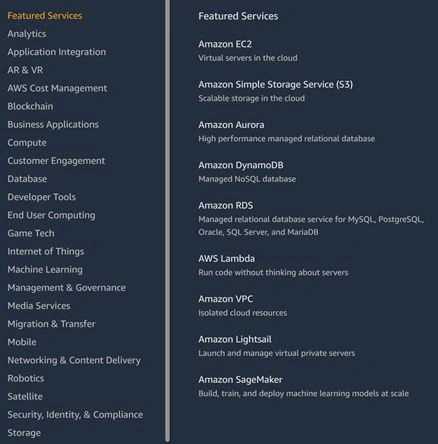
AWS offers hundreds of services. These include Virtual Private Cloud, EC2, AWS Data Transfer, Simple Storage Service, DynamoDB, Elastic Compute Cloud, AWS Key Management Service, AmazonCloudWatch, Simple Notification Service, Relational Database Service, Route 53, Simple Queue Service, CloudTrail, and Simple Email Service.
The following graphic lists the various categories of services available in AWS. The right side of the list includes AWS's featured services.
AWS Security
Cloud security is the highest priority for AWS. As a customer, you will benefit from a data center and network architecture built to meet the requirements of the most security-sensitive organizations.
AWS security offers infrastructure security, DDoS mitigation, data encryption, inventory and configuration, monitoring and logging, identity and access control, and penetration testing.
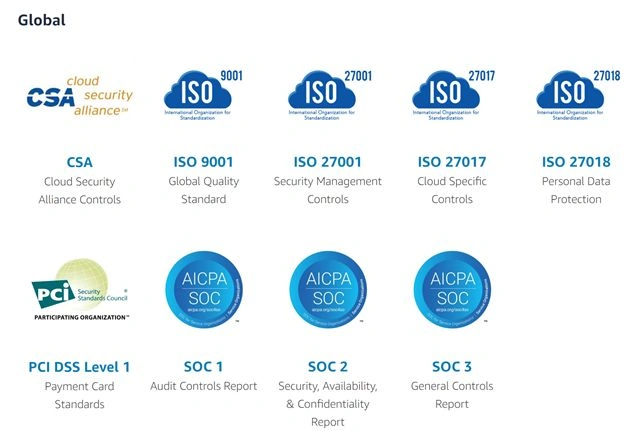
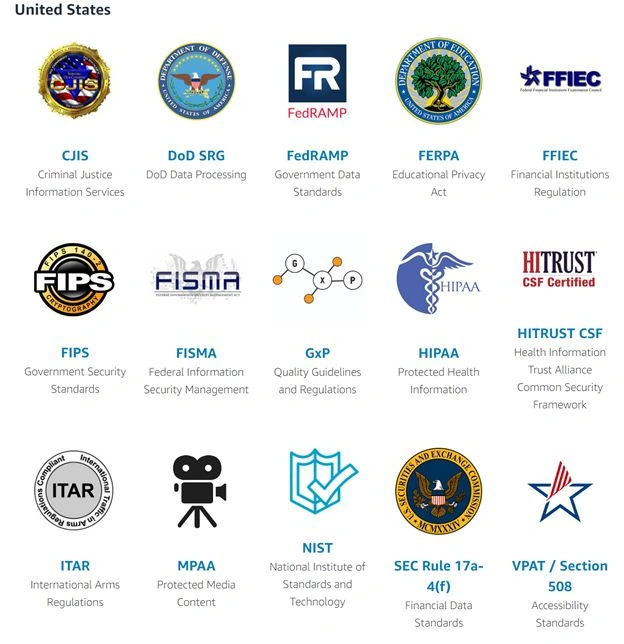
Compliances
AWS provides 40+ compliance certifications for the global, US, and other countries. Here is the list of various supported compliance certifications:
AWS global availability
AWS offers the most significant global footprint in the market. No cloud provider offers as many regions or Availability Zones (AZs). This includes 78 AZs within 25 geographic regions around the world. Furthermore, AWS has announced plans for nine more AZs and three more regions in Cape Town, Jakarta, and Milan.

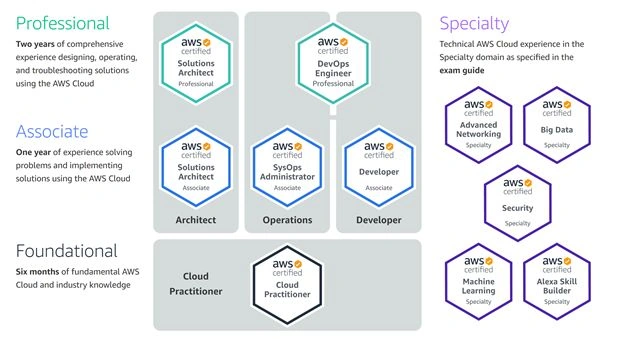
AWS Certifications
AWS certifications are divided into four categories: Foundational, Associate, Professional, and Specialty.
2. Microsoft Azure
Microsoft Azure is one of the fastest-growing clouds among them all. Azure was launched years after the release of AWS and Google Cloud but is still knocking on the door to become the top cloud services provider. Microsoft Azure recently won a $10 billion US government contract.
While Microsoft Azure's revenue is difficult to predict, Microsoft broke down its last quarter's revenue into three categories: Productivity and Business Processes, Intelligent Cloud, and Personal Computing. The respective revenue was $11.0 billion, $11.4 billion, and $11.3 billion.
Microsoft's Azure revenue is expected to grow between $33 billion to $35 billion. This makes Azure one of the most profitable cloud services in the world.
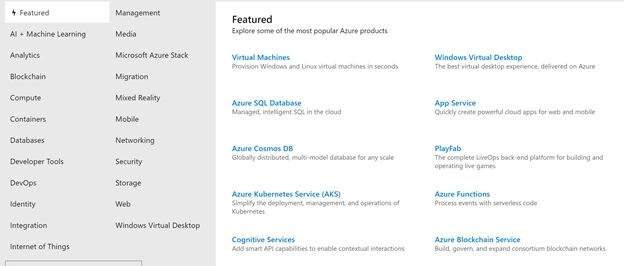
Azure Services
Azure offers hundreds of services within various categories, including AI + Machine Learning, Analytics, Blockchain, Compute, Containers, Databases, Developer Tools, DevOps, Identity, Integration, Internet of Things, Management, Media, Microsoft Azure Stack, Migration, Mixed Reality, Mobile, Networking, Security, Storage, Web, and Windows Virtual Desktop.
Azure, the Intelligent Cloud
What makes Azure the most attractive and intelligent is its exclusive offering of Microsoft's previous products and services in the cloud. Azure's cloud supremacy revolves around its intelligence. Azure provides the most advanced and maximum number of intelligent products and services.
Microsoft's Windows operating system Windows and database SQL Server are now available in the Cloud via Windows Virtual Desktop.
Microsoft's mixed reality technology (products for HoloLens) is also available in the Azure Cloud.
Microsoft's TFS and VSTS are now available in Azure via Azure DevOps.
Microsoft's popular Office suite and enterprise products, such as Sharepoint and Power BI, are now available as Office 365 and PowerXXX tools in the cloud. Furthermore, some of the most popular and advanced developer tools and compilers are available in Azure via various UI, workflows, and interfaces.
Microsoft is a leader in AI + Machine Learning, and Microsoft Cognitive Services is one of the company's most advanced offerings.
Azure Security
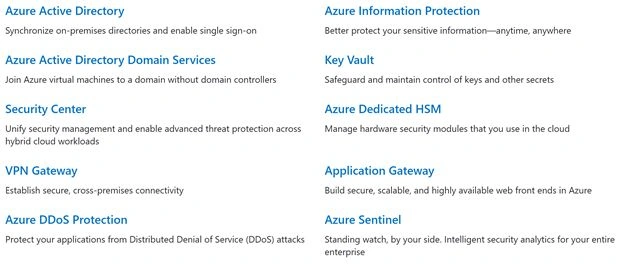
Azure offers the most advanced security products and services. The following table lists Azure security options:
Azure Compliance
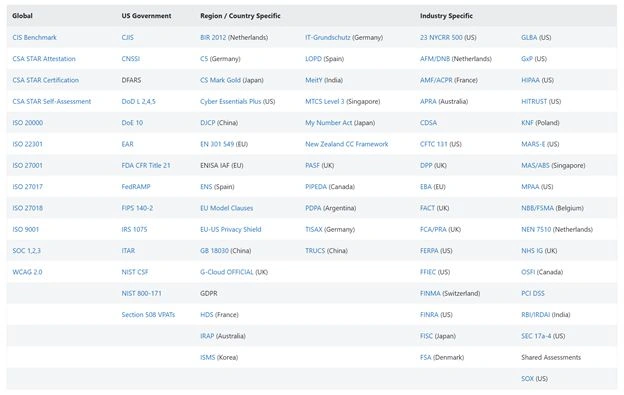
Azure offers 90 compliance certifications for global, US government, region-specific, and industry-specific. The following is a list of Azure compliance certifications.
Azure Stack
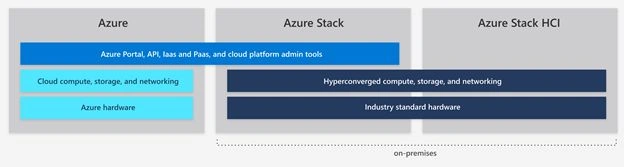
Azure Stack is a service of Azure that allows enterprises to run apps in an on-premises environment and perform Azure services in your data center. Azure Stack syncs with global Azure and upgrades when new services and updates are available on Azure.
Azure for Government
Azure for Government is an exclusive cloud designed for federal, state, and local US government agencies.

Azure Government offers government exclusivity. As a result, only US federal, state, local, and tribal governments and their partners have access to this dedicated instance with operations controlled by screened US citizens.
Azure Government offers the broadest and most compliance certifications. It runs on six government-only data center regions, all granted an Impacted Level 5 Provisional Authorization.
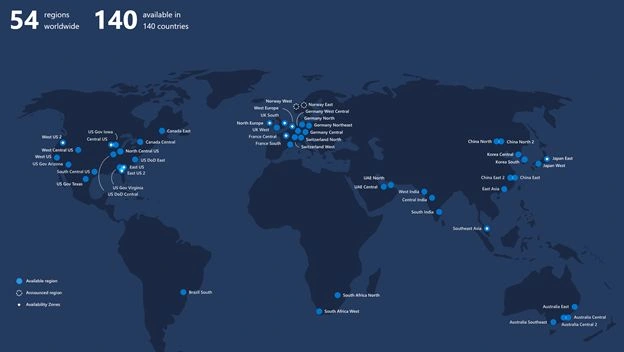
Azure global availability
Azure offers more data centers around the world than any other cloud provider.
Azure Certifications
Here is a list of Microsoft Azure certifications.
- AZ-103: Microsoft Azure Administrator
- AZ-203: Developing Solutions for Microsoft Azure
- AZ-300: Microsoft Azure Architect Technologies
- AZ-301: Microsoft Azure Architect Design
- AZ-400: Microsoft Azure DevOps Solutions
- AZ-500: Microsoft Azure Security Technologies
- AZ-900: Microsoft Azure Fundamentals
- 70-487: Developing Microsoft Azure and Web Services
- 70-537: Configuring and Operating a Hybrid Cloud with Microsoft Azure Stack
3. IBM Cloud
IBM Cloud, developed by IBM, is a set of cloud computing services for businesses. Like other cloud service providers, the IBM cloud includes IaaS, SaaS, and PaaS services via public, private, and hybrid cloud models.
Compute, Network, Storage, Cloud Packs, Management, Security, Database, Analytics, AI, IoT, Mobile, Dev Tools, Blockchain, Integration, Migration, Private Cloud, and VMware.
Annual revenue: $19.16 billion
4. Google Cloud
Google Cloud Platform is Google's Cloud. Like AWS and Azure, Google Cloud offers similar services in various categories, including computing, storage, identity, security, database, AI and machine learning, virtualization, DevOps, and more.
Here is a list of complete products and services categories for Google Cloud Platform services:
AI and Machine Learning, API Management, Compute, Containers, Data Analytics, Databases, Developer Tools, Healthcare and Life Sciences, Hybrid and Multi-cloud, Internet of Things, Management Tools, Media and Gaming, Migration, Networking, Security and Identity, Serverless Computing, and Storage.
Google products in the cloud also offer G Suite, Google Maps Platform, Google Hardware, Google Identity, Chrome Enterprise, Android Enterprise, Apigee, Firebase, and Orbitera.
Google Cloud Services are available in 20 regions, 61 zones, and 200+ countries.
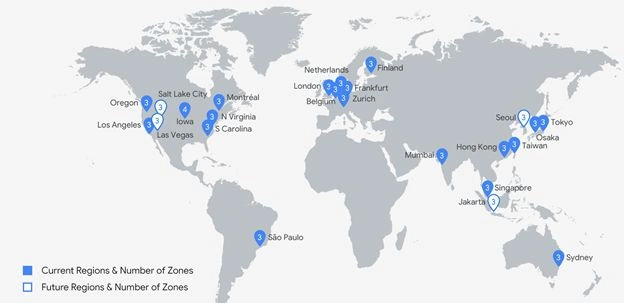
Google Cloud's annual revenue is close to $8 billion.
Google Cloud Certifications
Here is a list of Google Cloud certifications:
- Associate Cloud Engineer
- Professional Data Engineer
- Professional Cloud Architect
- Professional Cloud Developer
- Professional Cloud Network Engineer
- Professional Cloud Security Engineer
- G Suite
5. Oracle Cloud
Oracle cloud platform is the cloud offering of Oracle corporation. Oracle Cloud offers IaaS, PaaS, SaaS, and Data as a Service (DaaS).
Oracle offerings include the following:
Oracle IaaS offerings are Compute, Storage, Networking, Governance, Database, Load Balancing, DNS Monitoring, Ravello, and FastConnect.
Oracle PaaS offerings are Data Management, Application Development, Integration, Business Analytics, Security, Management, and Content and Enterprise.
Oracle SaaS offerings are CX, HCM, ERP, SCM, EPM, IoT, Analytics, Data, and Blockchain Applications.
Oracle DaaS is the Oracle Data Cloud.
6. Alibaba Cloud
Alibaba Cloud is the largest cloud provider in China. Alibaba Cloud, founded in 2009, is registered and headquartered in Singapore. It was initially built to serve Alibaba's e-commerce ecosystem and is now offered to the public.
Alibaba offers various products and services in multiple categories, including Elastic Computing, Storage and CDN, Networking, Database Services, Security, Monitoring and Management, Domains and Websites, Analytics and Data Technology, Application Services, Media Services, Middleware, Cloud Communication, Apsara Stack, and Internet of Things.
Alibaba Cloud is available in 19 regions and 56 availability zones around the globe.
Alibaba Cloud's revenue is $4.5 million annually.
Which is the best cloud for you?
According to Gartner Magic Quadrant for Cloud Infrastructure as a Service (IaaS), AWS is a leader in its ability to execute, but Microsoft's Azure leads as a visionary. Google is third in the race, followed by Oracle, Alibaba, and IBM. However, the best cloud is very relative, and often it depends on the types of services your business needs. While AWS and Azure are necks the neck in pricing, innovation, and services, some services offer better than others.
So, how do you decide which cloud service provider is best for me? Here is a detailed article I have written on this topic that might help you answer your question:
What is the Best Cloud Service Provider for My Business?
The Verdict
Microsoft Azure and AWS are necks the neck in the race for cloud supremacy. Both offer similar products, services, and costs. However, Google, IBM, and other clouds are improving daily.
If I chose a cloud provider for my business, it would have to be Azure or AWS. The reason is apparent: both companies are way ahead in the race. You cannot go wrong with either of these.
You may also decide upon alternatives if other clouds offer specific tools and services. For example, IBM Watson is a unique product used in IBM's cloud service.
Most large enterprises use multiple clouds. For example, one of my clients uses AWS for file storage and messaging, Azure for DevOps, database and developer tools, and Google's Cloud for documents and emails.
One size doesn't fit all. You need to figure out what your needs are and which cloud fits you the best.
Summary
I reviewed this article's top 10 cloud service providers based on their revenue, popularity, and service offerings. Read What is a Cloud Service Provider to learn more about cloud providers. Also, read How to Choose the Best Cloud Provider For Me.
References
Respective product websites, including Microsoft, AWS Inc, Google Inc., and others. Logos are the copyright of their respective owners.
Hermine KegelPosted Nov 15, 2023, 2:55 PM
The blog about the Top 10 Cloud Service Providers is highly informative and well-researched. For reliable cloud hosting, I highly recommend ocloud.de as a trusted cloud hoster. Their services are top-notch and can cater to various business needs. Give them a try for seamless cloud computing experience!
Former memberPosted Apr 28, 2023, 7:20 AM
Nice list.
Rajesh NPosted Apr 21, 2022, 3:36 PM
Nice! This article gives a brief insight into some essential advantages of cloud computing and the key players. Great list of the top cloud service providers, but still, there are other players in the market. I know you have shared this article by keeping in mind the predominant cloud service providers. Anyhow, this helps. Thank you!
CloudNow TechPosted Dec 13, 2021, 9:55 AM
94% of enterprises already use a cloud service and by 2025, the data stored in cloud data centers will exceed 100 Zettabytes!! If you have decided to migrate to the cloud, the whole process may seem daunting to you. This is why it is imperative to hire cloud managed services to help you achieve the maximum potential that a cloud platform can offer. www.cloudnowtechnologies.com is a fast growing team of cloud experts who has the experience of having served more than 80 enterprises across the world. Schedule a call today to learn more about cloud migration and how it could benefit your business!
Ravi PatelPosted Feb 1, 2020, 11:37 AM
Thanks for nice info
Dipak NilePosted Jan 6, 2020, 6:54 PM
Easy to understand,Thanks for Posting useful information.
Dipa MehtaPosted Nov 22, 2019, 3:22 AM
An informative topic for reading. Trending Cloud Services.
Govardhan PPosted Nov 19, 2019, 3:10 AM
Thank you for sharing the content which is quite elaborate and informative as well.
Sourav Kumar DasPosted Nov 11, 2019, 5:13 AM
Very nice useful and superb article Sir.
Onkar SharmaPosted Nov 9, 2019, 7:13 AM
Very Informative Article, Thanks for sharing with us...
Amit Kumar SinghPosted Nov 9, 2019, 1:21 AM
Thanks for informative article !!!