

Introduction
Azure Machine Learning (Azure ML) has evolved significantly with the release of v2 of its SDK and platform capabilities. While Azure ML v1 provided a solid foundation for machine learning workflows, v2 introduces a more streamlined, scalable, and efficient approach. Organizations and developers using v1 must adapt to the new paradigms and workflows to take full advantage of the enhanced capabilities.
In this guide, we’ll explore the key differences between Azure ML v1 and v2, the advantages of v2, and a step-by-step approach to migrating existing workflows. Whether you’re an experienced Azure ML user or just starting, this article will help you navigate the transition smoothly.
Key Differences Between Azure ML v1 and v2
1. Unified Workflow and Simplified SDK
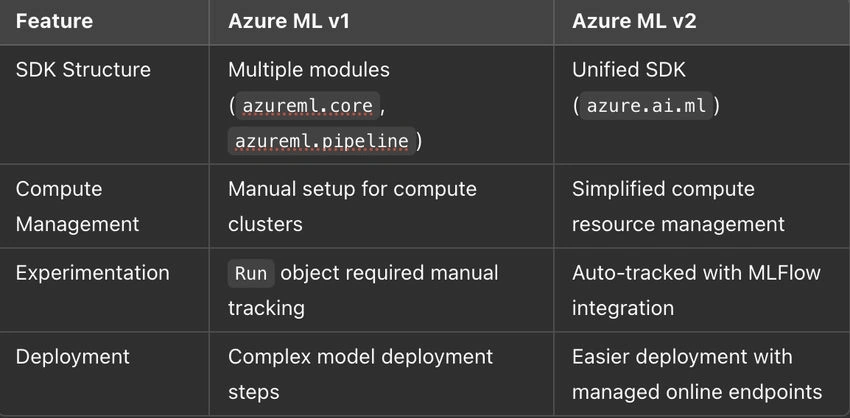
Azure ML v2 consolidates multiple APIs and services into a single, consistent SDK (azure.ai.ml). Unlike v1, where various functionalities were fragmented across different namespaces (azureml.core, azureml.pipeline, etc.), v2 simplifies the experience with a unified structure.
2. Enhanced Model Training & Pipelines
- v1 required manually defining individual steps in a pipeline, making the process cumbersome.
- v2 introduces a more intuitive way of building pipelines using YAML-based configuration or Python SDK.
- AutoML is now more integrated and requires fewer configurations.
3. Improved Model Deployment & Endpoints
- v2 allows deploying models as managed online endpoints, reducing infrastructure management.
- Supports batch inference, enabling cost-efficient model execution.
- Custom environments can now be directly attached to deployments.
4. Stronger MLOps and CI/CD Integration
- v2 natively integrates with Azure DevOps and GitHub Actions, enabling smoother automation of model lifecycle management.
- Improved versioning for datasets, models, and endpoints simplifies tracking of changes.
Why Upgrade to Azure ML v2?
- ✅ Simplified Development: Unified SDK eliminates unnecessary complexities.
- ✅ Faster Deployment: Easier model serving and endpoint management.
- ✅ Better Experiment Tracking: MLFlow-powered logging ensures robust tracking.
- ✅ Scalability & Cost Efficiency: Improved batch processing and compute management reduce costs.
- ✅ Better MLOps Support: Seamless integration with CI/CD pipelines.
Migrating from Azure ML v1 to v2
Step 1. Install the New SDK
Ensure you have the latest Azure ML v2 SDK installed:
pip install azure-ai-ml
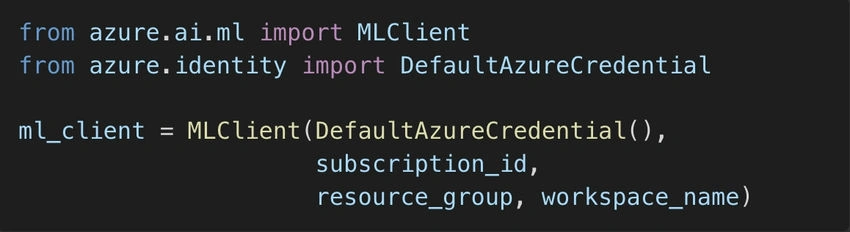
Step 2. Connect to Your Workspace
In v1, you would initialize the workspace using Workspace.from_config(). In v2, the approach is slightly different:
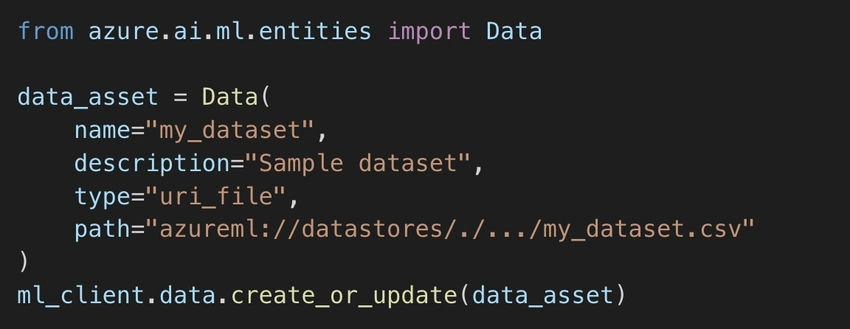
Step 3. Update Data and Model Registration
In v1, dataset registration was done using Dataset objects. In v2, we use Data entities:
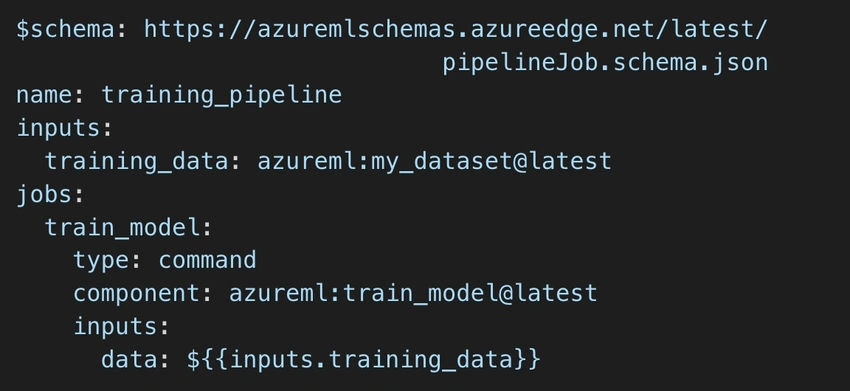
Step 4. Refactor Pipelines
In v1, pipelines were complex and required multiple steps to define dependencies. In v2, we define them using YAML:
Step 5. Deploy Models with Managed Endpoints
In v1, deployments were configured manually. v2 simplifies this with managed online endpoints:

Common Challenges & How to Overcome Them
- 🔹 Code Compatibility Issues: Since the SDK has changed significantly, some functions from v1 may not work in v2. Update scripts accordingly.
- 🔹 New Authentication Mechanisms: v2 uses DefaultAzureCredential, so ensure your credentials are set up correctly.
- 🔹 Data Asset Migration: Use the ml_client.data.create_or_update() method to re-register datasets.
- 🔹 Pipeline Updates: Rewrite YAML-based pipelines instead of using older Pipeline objects.
Conclusion
Migrating from Azure ML v1 to v2 may seem daunting, but the improvements in flexibility, scalability, and ease of use make it a worthwhile transition. By following this guide, you can modernize your workflows and take full advantage of Azure ML’s latest features.
Are you ready to make the move? Start with small experiments, refactor your pipelines, and embrace the future of cloud-native machine learning with Azure ML v2.
For further reading, check out the official:
Join the conversation! Your thoughts help the community grow.