

Introduction
In the dynamic realm of the Internet of Things (IoT), seamless communication between devices and the cloud stands as a cornerstone for innovative solutions. A pivotal player in this scenario is MQTT (Message Queuing Telemetry Transport), a lightweight messaging protocol. When coupled with Microsoft's Azure IoT platform, MQTT becomes a powerhouse architecture, nurturing the creation of connected and scalable IoT solutions.
MQTT Architecture
At its core, MQTT functions on a publish-subscribe model, orchestrating nimble and asynchronous communication between devices. This model revolves around three central entities: publishers, subscribers, and brokers.
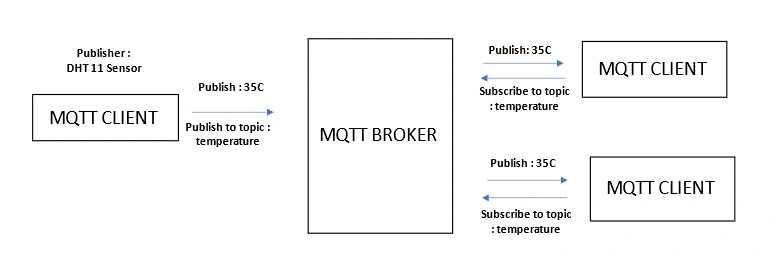
- Publishers: These are the devices generating data. Publishers send messages to specific topics, signaling the nature of the data they're transmitting.
- Subscribers: These could be devices or applications that seek specific data. They subscribe to relevant topics, enabling them to receive tailored messages based on predefined criteria.
- Brokers: The MQTT broker takes on the role of a mediator between publishers and subscribers. It receives messages from publishers and relays them to the right subscribers according to their subscriptions.
Advantages of MQTT Architecture
- Efficiency and Low Bandwidth Usage: MQTT's lean protocol curtails data exchange between devices and the cloud, streamlining network traffic and optimizing bandwidth utilization.
- Asynchronous Communication: Devices needn't be constantly tethered to the cloud. MQTT's design empowers them to send and receive messages at different times, ushering in flexible communication paradigms.
- Quality of Service (QoS) Levels: MQTT embraces varied QoS levels to ensure message delivery reliability. From level 0 (no acknowledgment) to level 2 (guaranteed delivery), it tailors communication in alignment with the application's needs.
- Scalability: The publish-subscribe model lays the foundation for scalability, enabling numerous devices to publish messages to a topic while multiple subscribers latch onto these messages.
Synergizing MQTT with Azure IoT
The amalgamation of MQTT with Microsoft's Azure IoT platform elevates the potential of IoT solutions in diverse ways:
- Azure IoT Hub: This stands as the MQTT broker within this architecture, orchestrating communication between devices and the cloud. It receives messages from publishers and dispatches them to subscribers.
- Device-to-Cloud Communication: MQTT empowers devices to publish data to Azure IoT Hub, which subsequently funnels this data to various Azure services for processing, storage, and analysis.
- Cloud-to-Device Communication: Azure IoT Hub can transmit commands and messages back to devices by issuing messages on specific topics. Devices tuned into these topics receive cloud-borne instructions.
- Device Twins and Direct Methods: By intertwining MQTT with Azure IoT Hub's device twin and direct methods functionalities, IoT systems gain depth. Device twins store device-specific metadata, while direct methods enable remote command execution.
- Edge Computing: MQTT serves as a conduit between IoT devices and Azure IoT Edge devices, unlocking the realm of edge computing. Here, data processing and decision-making occur closer to the data's source.
Navigating MQTT Ports in Azure IoT
Port numbers play a crucial role in communication protocols like MQTT, ensuring that data flows smoothly between devices and cloud services. In the context of Azure IoT, MQTT uses specific port numbers to establish connections and enable seamless device communication.
MQTT Standard Port: 1883
The default port number for MQTT communication is 1883. Devices and applications use this port to connect to the Azure IoT Hub and exchange messages. This is the primary port for non-secure MQTT communication.
MQTT Secure Port: 8883
Security is paramount in IoT communication. To ensure encrypted communication, Azure IoT supports the use of the secure MQTT port 8883. This port implements TLS/SSL encryption, adding a layer of protection to data exchanged between devices and the Azure IoT Hub.
MQTT Over WebSockets: 443
Some networks, like corporate networks or public Wi-Fi, might restrict the use of certain ports for security reasons. To overcome this limitation, Azure IoT also supports MQTT communication over WebSockets on port 443. WebSockets enable communication over the same port used for regular web traffic, allowing MQTT traffic to bypass potential restrictions.
Using these port numbers, devices and applications can securely connect to the Azure IoT Hub using MQTT. By choosing the appropriate port based on security requirements and network configurations, IoT solutions can ensure reliable and protected communication while seamlessly integrating with Azure services.
Conclusion
The fusion of MQTT with Azure IoT empowers organizations to fashion scalable, agile, and responsive IoT applications. This alliance fuels seamless device communication, economic data exchange, and real-time insights. As industries embrace the transformative force of IoT, the harmony between MQTT and Azure IoT emerges as a compelling blueprint, fueling the evolution of the next-generation connected universe. From industrial automation to smart cities and healthcare, MQTT and Azure IoT redefine the contours of innovation, beckoning a future steeped in interconnected possibilities.
Cr BhargaviPosted Aug 18, 2023, 3:05 PM
Nice Article
Janarthanan SPosted Aug 18, 2023, 2:20 PM
Very well curated article Saravanan and keep up the great work