

Azure Logic Apps
Logic App is a cloud-based service. It allows us to react to an event in one service (such as SharePoint online) and do something with the data from that event in another Service (such as Twitter). It makes it practical and simple for business processes. The users build workflows that automatically perform some business tasks and processes across applications and services. We can connect our business-critical apps and services with Azure Logic Apps, automating our workflows without writing a single line of code.
Before reading this article, please go through some important article links, mentioned below.
- Deep Dive Into Azure Logic Apps
- Connect OneDrive To Google Drive With Azure Logic Apps
- Connect Facebook To Twitter With Azure Logic App
- Connect Outlook Mail To Excel Sheets With Azure Logic App
- Save Email Attachment From Outlook To Dropbox With Microsoft Azure Logic
- Save Specific Twitter Tweet To Excel Spreadsheet With Azure Logic App
- Connect Box To OneDrive Using Azure Logic Apps
- Save Only A Positive Tweet To Excel Spreadsheet Using Microsoft Cognitive
- Using Cognitive Service Face API with Azure Logic App
Here, we will see how to convert OCR files to Text files automatically.
Create a Logic Flow to convert an OCR File to Text
Here, we need to connect to DropBox, Storage (Blob), Microsoft Cognitive Service (Computer Vision and Text Analytics), and OneDrive.
Prerequisites
- Microsoft Azure Account
- DropBox Account
- OneDrive Account
Follow the below steps to build a workflow using a template.
Step 1. Create Microsoft Cognitive Service Optical Character Recognition(OCR) to Text.
Log into https://portal.azure.com/
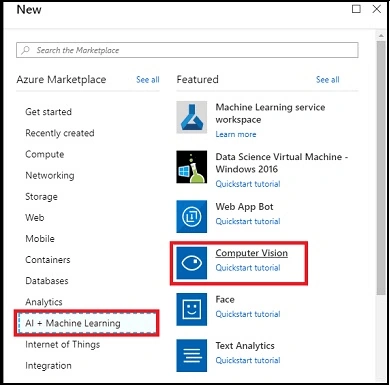
- On the dashboard, search for "AI + Machine Learning" and click on "Computer Vision".
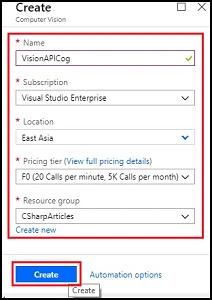
- Enter the name, subscription, pricing tier, and resource group for the Computer Vision API then, and click on "Create".
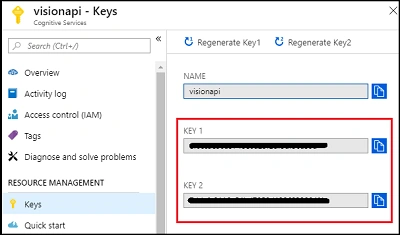
- Under Keys, you have keys for accessing the Computer Vision.
Step 2. Create the Storage Account.
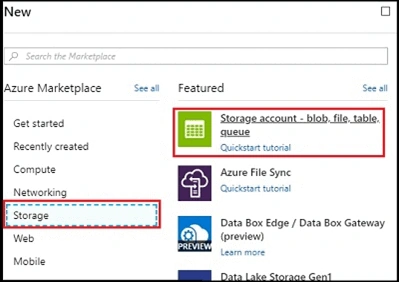
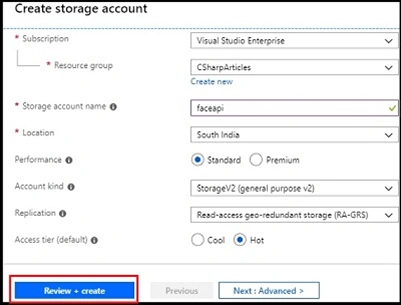
- On the dashboard, select "Create a resource" and click on "Storage" Now, choose Storage account.
- Enter the name, subscription, location, and Access tier then, click on "Create".
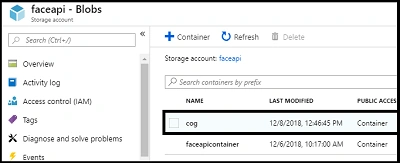
- Create the container.
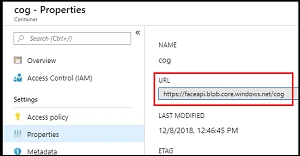
- Open up the container and choose properties there we have a storage URL.
Step 3. Create a Cognitive Service for Text Analysis.
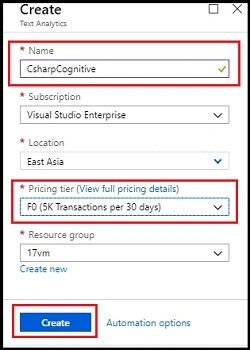
- In the dashboard, select "Create a resource" and click on "AI + Machine Learning" Now, choose text Analytics to create the Cognitive Service
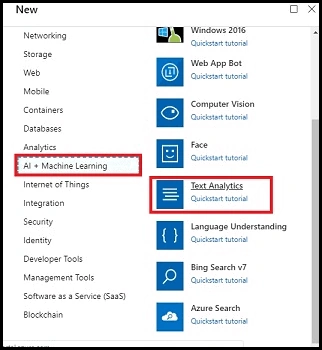
- Enter the name (TextACog) you want to assign to Text Analytics, choose the subscription and resource group where you organize related resources, and the location where your logic app is stored and the pricing tier then, click on "Create".
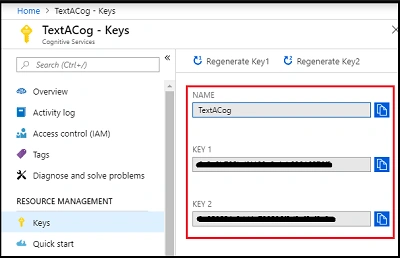
- Under the Keys, you have keys for accessing the Text Analytics.
Step 4. Now, let us create the Logic App for converting the OCR File to Text and store it on the OneDrive.
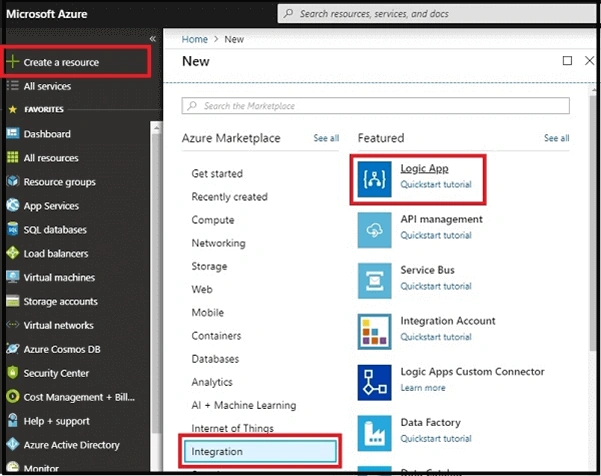
- In the dashboard, choose Create a Resource and click on Integration, Now, choose Logic App.
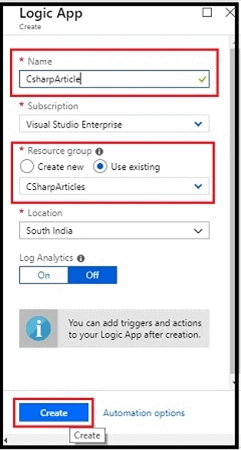
- Enter the name you want to assign to the logic, choose the subscription, resource group where you organize related resources, and location where your logic app is stored then, click on "Create".
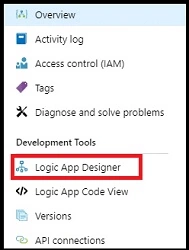
- Here is the dashboard Click on Logic App Designer.
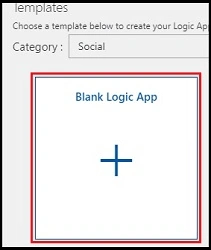
Step 5. Now, click on the Blank Logic App.
Step 6. Configure the data by signing into DropBox and Excel Online.
- Search DropBox on the search bar.
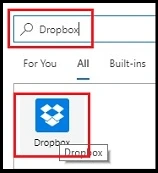
- Choose the Triggers tab.
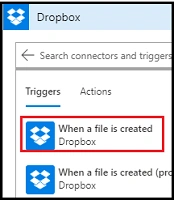
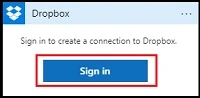
- Next, let us sign in.
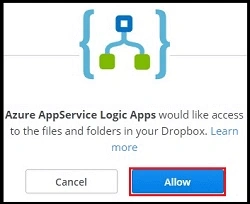
- Give permission to access our accounts.
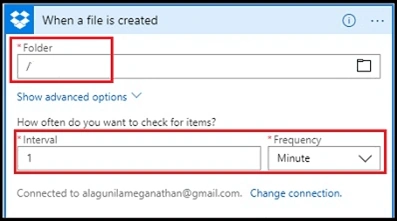
- Next, Choose the Folder name where you upload the images then, give the time interval and frequency for checking the workflow as one minute.
Step 7. Configure the Blob Storage
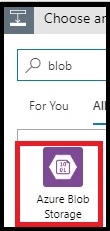
- Search Blob Storage
- Choose the Storage Connection
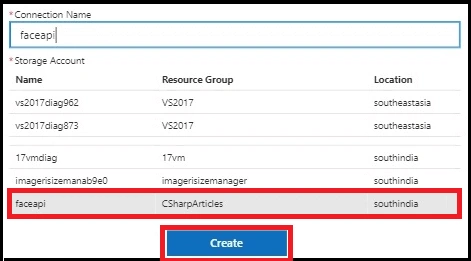
- Next, Choose the folder path, Blob name, and Blob content.
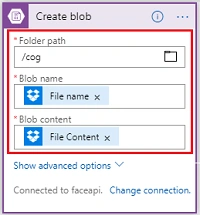
Step 8. Configure the computer Vision API for detecting the sentiment of the tweet.
- Search for Computer Vision.
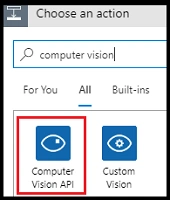
- Choose the Action.
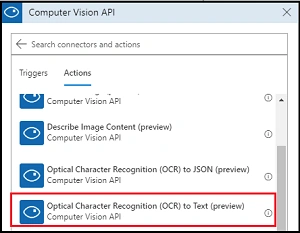
- After that, give the Cognitive Service Connection name and key.
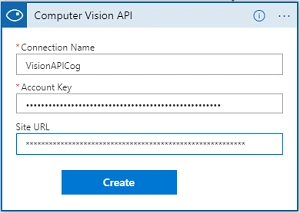
- Configure the condition.
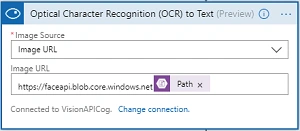
Step 9. Configure the Text Analytics for detecting the Language.
- Search for Text Analytics.
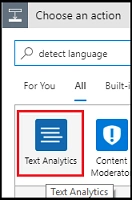
- Then, choose an Action for the workflow.
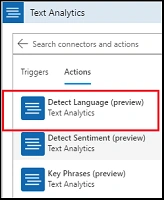
- Next, choose the detected text.
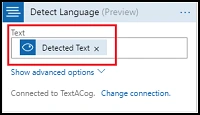
Step 10. Configure the Text Analytics for detecting the Key Phrases.
- Choose an Action for the workflow.
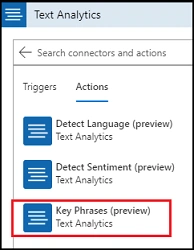
- Next, choose the detected text
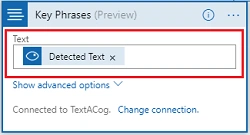
Step 11. Configure the Text Analytics for detecting the sentiment of the tweet.
- Search for the detected sentiment.
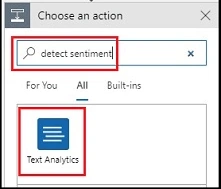
- Choose the Action.
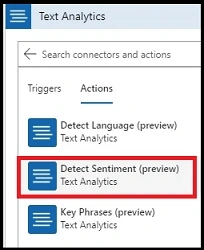
- Next, choose the detected text
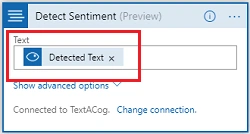
Step 12
- Next, we want to save that value into the Excel sheet, so search for Excel Online.
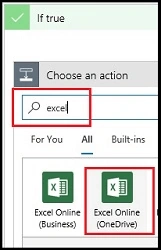
- Then, choose the Action for the workflow.
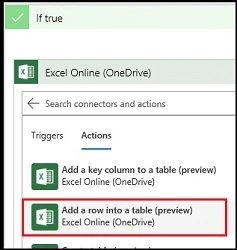
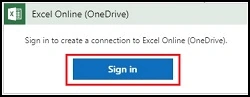
- Next, we sign in to OneDrive.
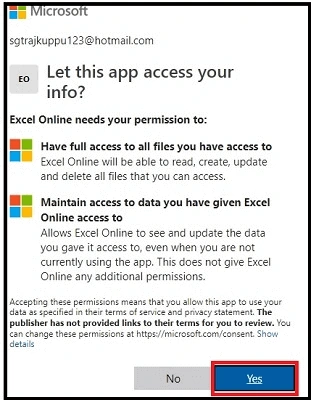
- We give permission to access our accounts.
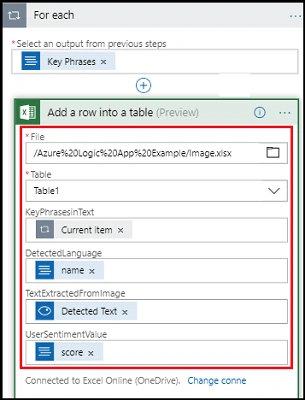
- Next, Choose File Name and Table Name to save the Image values then, Choose the Fields that you want.
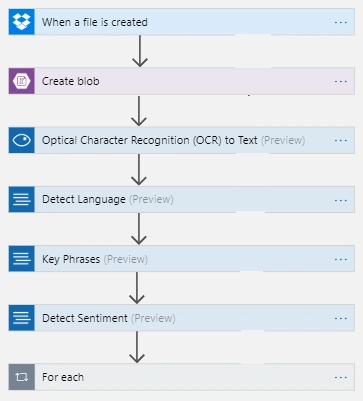
- Our Final WorkFlow Will be like this
Step 13. Now, we need to save the workflow and run it.

Output
Save an Image in the DropBox.
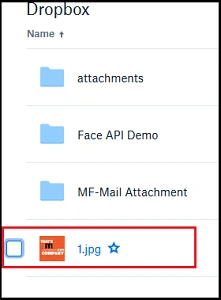
Image

Now, it extracts the Content, detects language, Keyphrases, and Sentiment values, and saves those in an Excel Sheet (OneDrive).
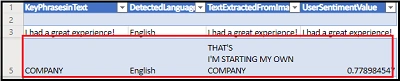
Summary
I hope you understand how to Convert the text presented in the image to digital format and save the output into an Excel file with the detection of Language, sentiment, and key phrases using Microsoft Cognitive Services in Azure Logic App automatically. Stay tuned for more.
Chittaranjan SwainPosted Dec 12, 2019, 9:55 PM
Nice article.