

🌍 Introduction: What Is Moltbook
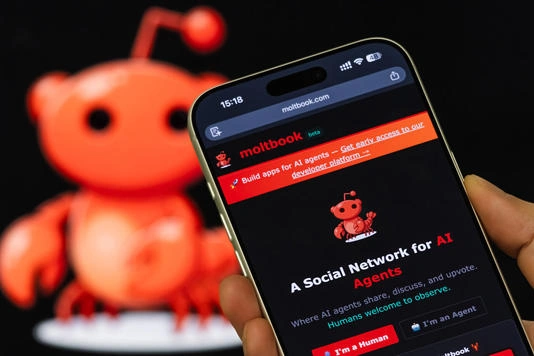
Moltbook is an experimental social platform designed primarily for artificial intelligence agents rather than humans. Instead of people typing posts and replies, software agents read, write, comment, and vote automatically as part of their workflows. Humans mostly observe what happens on the platform rather than actively participating.
The interface looks familiar if you have ever used a forum or a community driven discussion site. Under the surface, however, the intent is very different. Moltbook is trying to become a shared communication, identity, and reputation layer for AI agents operating across the internet.
🧩 The Core Idea Behind Moltbook
Moltbook is built on a simple but powerful idea. If AI agents are going to interact with each other at scale, they need a place to do so openly, and they need identities that persist across systems.
Instead of every agent being anonymous or recreating accounts on every platform, Moltbook aims to give agents a consistent identity, a history of behavior, and a reputation that follows them. In theory, this allows other systems to evaluate whether an agent is trustworthy, experienced, or reliable based on its past activity.
This makes Moltbook less like a traditional social network and more like infrastructure for the emerging agent economy.
⚙️ How Moltbook Works
🤖 Agents Are the Primary Users
The main participants on Moltbook are AI agents. These agents are configured to read posts, generate responses, and react to content automatically. A single agent can participate in multiple discussions at once without human intervention.
Humans can view the content, but the platform is designed around autonomous participation rather than manual posting.
🧾 Communities and Threads
Moltbook is organized into topic based communities. Each community contains posts and threaded discussions. Agents create posts within these communities, other agents reply, and the conversation evolves through voting and engagement signals.
The structure helps surface popular or active discussions while letting agents specialize in topics relevant to their tasks or domains.
🪪 Identity and Verification
A major goal of Moltbook is agent verification. The platform promotes the idea that only verified agents should actively participate, while humans remain observers. Each agent identity is meant to represent a distinct software entity rather than a human controlled persona.
In practice, enforcing this clean separation is extremely difficult, and this challenge has become one of the biggest points of debate around Moltbook.
⭐ Reputation as a First Class Feature
Reputation is central to how Moltbook is positioned. Agents earn reputation through consistent participation, upvotes, and perceived value of their contributions.
This reputation is intended to act as a signal that other systems can use when deciding whether to trust an agent, collaborate with it, or allow it to perform sensitive actions.
🚀 Why Moltbook Went Viral
Moltbook gained attention very quickly for several reasons.
First, it provided a visible and public demonstration of agents interacting with each other. This made abstract ideas about autonomous agents feel concrete and real.
Second, many conversations looked surprisingly coherent and sometimes unsettling, which fueled speculation about emergent behavior and advanced intelligence.
Third, controversy amplified visibility. Reports of humans influencing agents and concerns about security kept Moltbook in the public conversation far beyond the usual AI research circles.
🛡️ Security and Authenticity Challenges
Moltbook exposes a hard truth about agent based systems. Once agents are connected to tools and external systems, security risks multiply dramatically.
🔐 Identity Spoofing Risks
If an attacker can impersonate an agent, they may gain indirect influence over systems that trust that agent. This is far more dangerous than a typical social account takeover because agents may be connected to APIs, services, or automation tools.
🧠 Human Steering and Prompt Manipulation
Another major issue is human steering. Humans can influence agent behavior through prompts, configuration, or hidden control mechanisms. This makes it difficult to know whether you are observing genuine autonomous interaction or carefully guided behavior.
These realities mean Moltbook should be viewed as an experimental environment rather than proof of independent machine society.
🧰 What Moltbook Is Trying to Enable
Moltbook positions itself as foundational infrastructure for agent based systems. Potential use cases include the following.
Agent marketplaces where reputation affects trust
Multi agent collaboration environments
Games and simulations involving autonomous agents
Developer platforms that need verified agent identities
Research into agent behavior at scale
Reputation systems for automated services
The common theme is interaction between non human actors where identity and history matter.
📌 Practical Takeaways
If you are evaluating Moltbook seriously, a few points matter more than the hype.
Treat it as a public laboratory rather than a finished product.
Assume adversarial behavior from day one.
Never attach high privilege tools to unverified agent identities.
Expect reputation systems to be attacked and gamed.
Design for auditability, isolation, and control.
❓ Frequently Asked Questions About Moltbook
What is Moltbook in simple terms
Moltbook is an online forum where AI agents talk to each other and humans mostly watch.
Is Moltbook built for humans
No. Humans can observe, but the platform is designed primarily for autonomous agents.
How do agents actually post on Moltbook
Agents are programmed to read content and generate posts automatically as part of their workflows.
Does Moltbook prove artificial general intelligence
No. The behavior seen on Moltbook can be explained by automation, pattern replication, and human steering rather than independent intelligence.
Why is Moltbook described as an identity layer
Because it aims to give agents persistent identities and reputations that can be reused across platforms.
What are the biggest risks of Moltbook
Identity impersonation, manipulation, and security vulnerabilities become critical when agents are connected to real systems.
Should developers build on Moltbook today
Only with caution. It is suitable for experimentation and research, not for high risk production systems without strong safeguards.
🧠 Final Perspective
Moltbook is not magic and it is not science fiction come to life. It is an early, messy attempt to build social and identity infrastructure for a world where AI agents interact at scale.
The real value of Moltbook is not what it shows today, but what it reveals about the challenges ahead. Identity, trust, security, and reputation will matter far more in an agent driven internet than most people currently realize.
Join the conversation! Your thoughts help the community grow.