

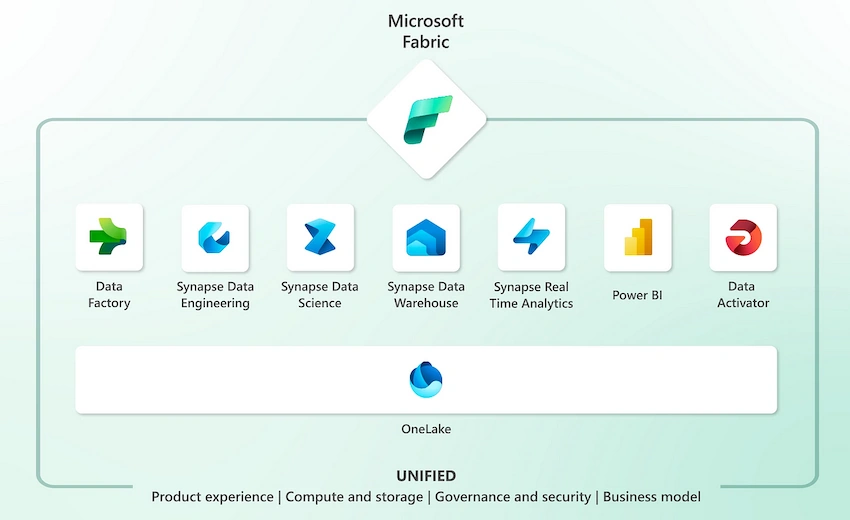
Microsoft Fabric is a cloud-based data platform that provides a range of services for data engineering, data science, and business intelligence. It is an extension of Azure Synapse Analytics that integrates all analytics workloads from the data engineer to the business knowledge worker. Fabric brings together Power BI, Data Factory, and the Data Lake, on a new generation of the Synapse data infrastructure. Delivered as a unified SaaS offering, it aims to reduce cost and time to value, while enabling new "citizen data science" capabilities.
While both Microsoft Fabric and Azure Synapse Analytics are cloud-based analytics platforms, Fabric is the natural successor to Azure Synapse Analytics. However, organizations that have made a significant commitment to Azure Synapse Analytics may be disappointed to find that there is no automatic upgrade path for their workloads. Depending on the workload, different degrees of effort will be required to adapt them to run on Microsoft Fabric. For some organizations, the costs associated with this migration effort (and the inherent risks in any migration) may act as a barrier.
That being said, there are several reasons why organizations should consider migrating to Microsoft Fabric from Azure Synapse Analytics.
Unified platform
Microsoft Fabric is a unified platform that brings together all the analytics workloads from the data engineer to the business knowledge worker. It integrates Power BI, Data Factory, and the Data Lake, on a new generation of the Synapse data infrastructure to bring all together under one umbrella. This integration enables organizations to reduce the complexity of their analytics workloads and improve collaboration between teams. Its goal is to enable business and data professionals to unlock the potential of their data and lay the foundation for a new era of AI.

Cost-effective
Microsoft Fabric is a more cost-effective platform than Azure Synapse Analytics. It offers a unified SaaS offering that aims to reduce cost and time to value. This makes it an attractive option for organizations that are looking to reduce their analytics costs. Microsoft Fabric adopts capacity-based approach rather than the ‘pay what you use’ model which synapse has. Lower tiers are available for organisations that use smaller workloads to maintain the same low-cost methodology they maintained in synapse.
New capabilities
Microsoft Fabric offers several new capabilities that are not available in Azure Synapse Analytics. These include enhanced data engineering capabilities, real-time analytics, and improved data science capabilities. These new capabilities enable organizations to gain deeper insights from their data and make better decisions.
Improved performance
Microsoft Fabric offers improved performance over Azure Synapse Analytics. It provides a new generation of the Synapse data infrastructure that is designed to handle the most demanding analytics workloads. Microsoft Fabric’s lightweight runtime and efficient communication protocols ensure high performance and low latency for applications. It leverages advanced technologies like in-memory caching, distributed caching, and reliable messaging to achieve optimal performance. This improved performance enables organizations to process their data faster and gain insights in real-time.
Better security
Microsoft Fabric provides advanced security features such as data encryption, identity and access management, and threat detection. These security features enable organizations to protect their data and comply with regulatory requirements. Apart from these, Microsoft Fabric provides several security features to ensure that your data is secure at rest and in transit.
These features include:
- Conditional access: Secure your apps by using Microsoft Entra ID.
- Resiliency: Reliability and regional resiliency with Azure availability zones.
- Lockbox: Control how Microsoft engineers access your data.
- Service tags: Enable an Azure SQL Managed Instance (MI) to allow incoming connections from Microsoft Fabric.
- OneLake security: Learn how to secure your data in OneLake.
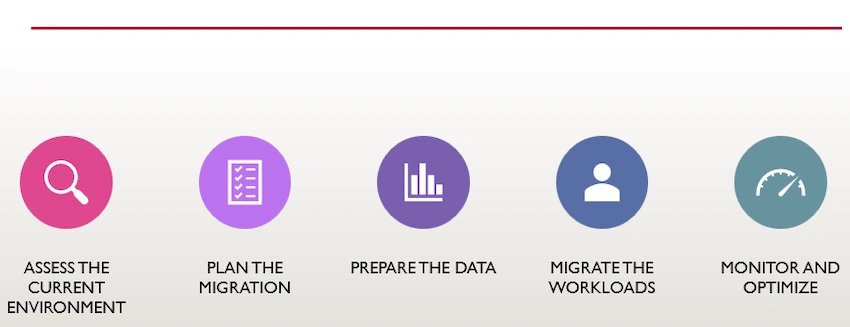
Migrating from Azure Synapse Analytics to Microsoft Fabric requires careful planning and execution. Here are some steps that organizations can follow to ensure a smooth migration:
- Assess the current environment: The first step in migrating to Microsoft Fabric is to assess the current environment. This involves identifying the workloads that need to be migrated, the data sources that are being used, and the dependencies between different workloads.
- Plan the migration: Once the current environment has been assessed, the next step is to plan the migration. This involves identifying the resources that will be required, the timeline for the migration, and the risks associated with the migration.
- Prepare the data: Before the migration can begin, the data needs to be prepared. This involves cleaning the data, transforming it into the required format, and ensuring that it is compatible with Microsoft Fabric.
- Migrate the workloads: Once the data has been prepared, the workloads can be migrated. This involves moving the data to Microsoft Fabric, configuring the workloads, and testing the workloads to ensure that they are functioning correctly.
- Monitor and optimize: After the migration is complete, it is important to monitor the workloads and optimize them for performance. This involves identifying any bottlenecks, optimizing the queries, and tuning the system to ensure that it is running at peak performance.
To conclude, Microsoft Fabric is a unified, cost-effective, and feature-rich analytics SAAS platform that offers several advantages over Azure Synapse Analytics. While migrating to Microsoft Fabric may require some effort, the benefits of doing so are very significant. Organizations that are looking to reduce their analytics costs, gain deeper insights from their data, and improve collaboration between teams should consider migrating to Microsoft Fabric.
Image References:
Join the conversation! Your thoughts help the community grow.