
Coinbase believes moving stocks, bonds, funds, real estate and other assets onto blockchain networks could transform how global financial markets operate. The company is now backing that prediction with regulated infrastructure, custody services and an international tokenization hub in Abu Dhabi.
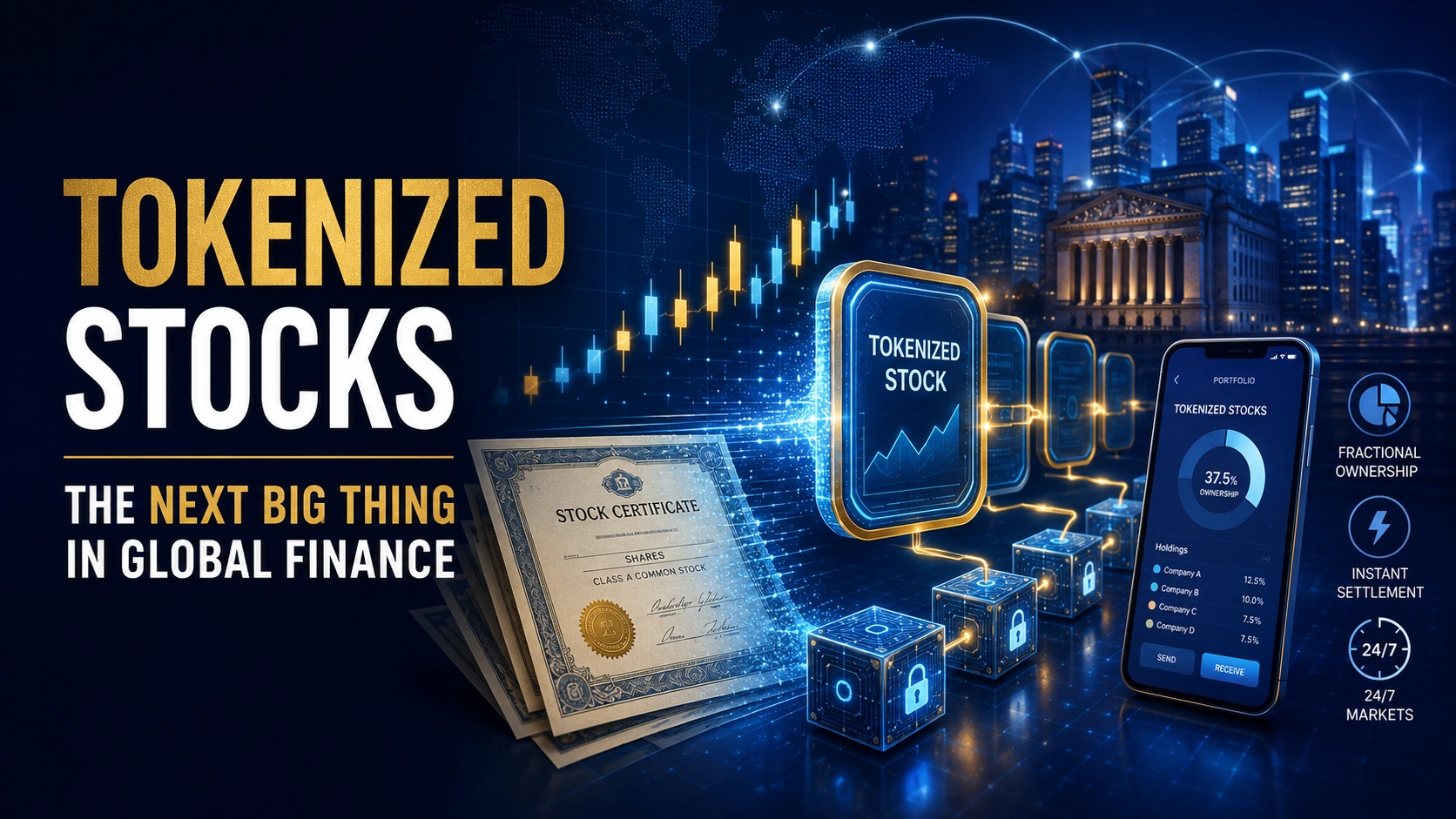
Coinbase is making one of its strongest predictions yet about the future of global finance. The cryptocurrency company believes tokenization will become one of the most important upgrades to the financial system, potentially changing how assets are issued, owned, traded and settled.
Tokenization converts ownership rights in a real-world or financial asset into digital tokens recorded on a blockchain. These tokens can represent stocks, bonds, investment funds, real estate, commodities, private credit or other assets.
Coinbase CEO Brian Armstrong has placed the tokenization of real-world assets at the top of his list of upgrades needed across the financial system. His broader vision includes round-the-clock global markets, instant settlement, stablecoin payments, self-custody, automated financial services and wider access to investment opportunities.
For Coinbase, this is not simply another cryptocurrency use case. It represents a potential restructuring of the infrastructure supporting global capital markets.
What Is Tokenization?
Traditional financial assets are generally issued, recorded and transferred through multiple intermediaries. These may include exchanges, brokers, custodians, transfer agents, clearinghouses, payment networks and banks.
Each organization maintains its own systems and records. Transactions must be verified and reconciled across those systems before final settlement occurs.
Tokenization places a digital representation of an asset on a blockchain. The blockchain can act as a shared ledger that records ownership and transfers between approved participants.
For example, an investment company could create one million blockchain-based tokens representing shares in a fund. Each token could carry the same economic and legal rights as a conventional fund share, depending on the structure and applicable regulations.
A tokenized asset does not automatically become a cryptocurrency. It remains a stock, bond, fund interest or another regulated financial instrument. Blockchain changes how ownership is represented and transferred. It does not eliminate the underlying legal rights, compliance requirements or issuer obligations.
Why Coinbase Believes Finance Needs an Upgrade
Many financial markets still operate according to systems developed decades ago.
Stock exchanges are generally closed during nights, weekends and holidays. Cross-border transactions can take several days. Investors in some countries cannot easily access international securities. Ownership records may be distributed across multiple custodians, brokers and transfer agents.
Coinbase argues that blockchain-based markets could address several of these limitations.
Potential benefits include:
Trading that operates 24 hours a day
Faster transaction settlement
Lower administrative and reconciliation costs
Fractional ownership of expensive assets
Programmable dividends and distributions
Direct wallet-based ownership
Transparent ownership records
Easier international distribution
Automated compliance through smart contracts
A tokenized security could theoretically be purchased by an eligible investor, transferred to an approved digital wallet and settled almost immediately using a stablecoin.
The current financial system often separates trading, clearing, settlement and payment into different processes. Tokenization could allow more of those processes to occur within a single coordinated transaction.
Coinbase Establishes a Tokenization Hub in Abu Dhabi
Coinbase is now building infrastructure to support its tokenization strategy.
On August 11, 2026, Coinbase announced that it had received Financial Services Permission from the Financial Services Regulatory Authority of Abu Dhabi Global Market. The authorization allows the company to establish an international tokenization hub in Abu Dhabi.
According to Coinbase, the authorization allows it to arrange investment transactions and provide custody services connected to tokenized securities.
The company described the development as its most significant step toward building a more open and globally accessible financial system.
Coinbase selected Abu Dhabi because ADGM has developed a regulatory framework covering digital assets, financial services and institutional custody. The region is also attempting to establish itself as a global center for digital finance and tokenized capital markets.
Coinbase says its platform will support fully backed tokenized securities with regulatory oversight and wallet-based access. The company’s goal is to connect traditional securities, blockchain infrastructure and decentralized financial applications.
The authorization does not mean Coinbase can offer every tokenized asset in every country. Securities laws, investor eligibility rules and distribution restrictions will continue to apply in each jurisdiction.
Read the Coinbase announcement
Coinbase Wants to Become an “Everything Exchange”
Tokenization also supports Coinbase’s larger effort to evolve beyond cryptocurrency trading.
Coinbase has been moving toward what it calls an “everything exchange,” where customers could eventually access cryptocurrencies, equities, derivatives, prediction markets and other financial products through one platform.
In July 2026, Coinbase announced that it had secured authorization in the United Kingdom to provide investment services. The company said the approval would eventually allow UK customers to trade traditional financial instruments alongside cryptocurrencies under one account.
Its planned offerings include equities and derivatives linked to cryptocurrencies, stocks and commodities.
Tokenization could provide the technical connection between these product categories. Instead of operating completely separate systems for crypto assets, stocks, funds and payments, Coinbase could use blockchain infrastructure to support several types of assets within a common environment.
Read about Coinbase’s UK authorization
The Role of Base
Coinbase’s Base blockchain could become an important part of this strategy.
Base is an Ethereum Layer 2 network created to offer faster and less expensive blockchain transactions. It supports applications, stablecoins, decentralized finance and blockchain-based payments.
Tokenized assets need networks that can process transactions quickly, operate reliably and connect with wallets and financial applications. Base gives Coinbase a blockchain environment closely connected to its exchange, custody, compliance and payment products.
However, Coinbase has not indicated that every tokenized asset offered through its platforms will exist exclusively on Base. Institutions may use Ethereum, Solana, permissioned blockchains or other approved networks depending on their regulatory and technical requirements.
The tokenization market is likely to remain multichain.
Stablecoins Become the Settlement Layer
Tokenized assets still require a method of payment.
Stablecoins such as USDC can provide the digital cash used to purchase and settle tokenized securities. Instead of sending money through conventional banking networks, an investor could exchange stablecoins for tokenized assets directly on a blockchain.
Coinbase has a particularly strong position in this area because of its commercial relationship with Circle, the issuer of USDC.
Coinbase Asset Management has also launched a tokenized share class for its Coinbase Stablecoin Credit Strategy. The product is designed to connect traditional credit markets with the growing stablecoin economy.
The company reported that stablecoin transaction volume exceeded $33 trillion during 2025. This figure represents total blockchain transaction activity and should not be interpreted as directly comparable to consumer payment volume without considering differences such as trading activity and automated transfers.
Read the Coinbase Asset Management announcement
Wall Street Is Moving in the Same Direction
Coinbase is not alone in predicting that tokenization will reshape financial markets.
Nasdaq, the New York Stock Exchange, major asset managers and several financial technology companies are developing tokenized securities infrastructure.
Nasdaq has partnered with Kraken’s parent company to develop tokenization technology. The New York Stock Exchange has partnered with Securitize to work on a regulated digital securities platform.
F/m Investments has also requested regulatory approval to tokenize shares of its US Treasury three-month bill ETF. The proposal would allow blockchain-based shares to carry the same identifying information, investor rights, fees and voting privileges as traditionally held ETF shares.
These initiatives show that tokenization is moving beyond experimental cryptocurrency projects. Regulated exchanges, asset managers and transfer agents are now examining how blockchain can be integrated into existing securities markets.
Reuters reported on the NYSE and Securitize partnership
How Large Could the Market Become?
Forecasts for tokenization vary significantly.
Bernstein analysts predicted that the value locked in tokenized real-world assets could increase from approximately $37 billion in 2025 to about $80 billion in 2026.
Longer-term forecasts from financial institutions range into several trillion dollars. These estimates depend on whether tokenization expands beyond Treasury products and private credit into equities, investment funds, real estate and other large asset classes.
The forecasts should not be treated as guaranteed outcomes. A tokenized asset must provide a meaningful improvement over existing infrastructure. Simply placing an asset on a blockchain does not automatically create liquidity, investor demand or regulatory acceptance.
The Technical Advantages
Tokenization could improve financial infrastructure in several important ways.
Faster settlement
Traditional securities settlement may take one or more business days. Blockchain transactions can potentially settle within minutes or seconds.
Atomic transactions
An atomic transaction exchanges the asset and payment at the same time. Either both sides of the transaction complete or neither completes.
This approach could reduce counterparty and settlement risk.
Programmable assets
Smart contracts can automate interest payments, dividends, ownership restrictions, redemption rules and compliance checks.
Fractional ownership
Tokenization can divide an expensive asset into smaller units. This could make certain investments accessible to a wider group of eligible investors.
Shared records
A blockchain can provide issuers, custodians, transfer agents and regulators with a synchronized ownership record. This could reduce reconciliation work across separate databases.
Composability
Tokenized assets can potentially interact with other approved blockchain applications. A tokenized Treasury fund, for example, might be used as collateral in a lending transaction.
The Challenges Coinbase Must Solve
Tokenization still faces substantial obstacles.
Regulation
Securities laws apply whether ownership is recorded in a conventional database or on a blockchain. Issuers and platforms must address investor protection, disclosure, custody, transfer restrictions and market surveillance.
Legal ownership
Holding a token must provide a legally enforceable claim on the underlying asset. If the connection between the token and the asset is unclear, blockchain technology does not protect the investor.
Identity and compliance
Financial institutions must perform know-your-customer and anti-money-laundering checks. Tokenized markets therefore require identity and permission systems that can operate with blockchain wallets.
Blockchain risk
Smart-contract vulnerabilities, network outages, compromised wallets and bridge failures can create new forms of financial risk.
Liquidity fragmentation
Issuing the same asset across several blockchains can divide liquidity and make pricing more complicated.
Privacy
Public blockchains can expose transaction history. Institutions may require privacy controls that protect sensitive financial information while still allowing regulatory oversight.
Governance
Someone must retain responsibility for correcting errors, replacing lost credentials, processing court orders and handling disputed transactions.
These challenges explain why tokenization is likely to develop through regulated, hybrid systems rather than immediately replacing the entire traditional financial system.
What Tokenization Means for Developers
Tokenization could create a major new software market.
Financial institutions will need developers and architects who understand:
Smart-contract development
Blockchain security
Digital identity
Wallet infrastructure
Asset custody
Stablecoin payments
Oracle networks
Compliance automation
Cross-chain interoperability
Traditional financial APIs
Data privacy and cybersecurity
Enterprise tokenization will not be built entirely on public blockchains. Many implementations will connect blockchain networks with conventional databases, identity providers, banking systems and regulatory reporting platforms.
This means developers with experience in cloud architecture, APIs, security, .NET, Java, Python and enterprise integration can participate without becoming cryptocurrency traders.
The biggest opportunities may come from connecting traditional systems with blockchain-based ownership and settlement.
A New Financial Infrastructure Layer
Coinbase’s tokenization strategy represents a broader change in how the crypto industry defines its purpose.
The original cryptocurrency narrative focused on creating digital money outside the traditional financial system. The tokenization narrative focuses on rebuilding traditional assets using blockchain infrastructure.
If Coinbase is correct, the future will not be divided between “crypto” and “traditional finance.” Stocks, bonds, funds, currencies and digital assets may operate through increasingly connected platforms.
Tokenization will not eliminate banks, exchanges, custodians or regulators. It could change the technology they use and reduce the number of disconnected systems required to complete a financial transaction.
The transition will take years, and some predictions will prove overly optimistic. Regulatory approval, legal enforceability, security and investor demand will determine how quickly tokenized markets grow.
However, Coinbase’s regulated expansion into tokenized securities shows that this is no longer only a theoretical vision.
The race to rebuild global finance on blockchain infrastructure has already started.
Disclaimer: This article is for informational purposes only and does not constitute financial, legal or investment advice.
Join the conversation! Your thoughts help the community grow.