

Introduction
Before moving into the cloud you need to make two specific decisions. The first is determining the service model on which you will host your application(s), for example, IaaS, PaaS, or SaaS. Each of these service models requires various levels of support and responsibilities once a system is deployed to the platform. To resolve the future challenges that you might encounter you need to understand the models carefully. Other than the service model, the second, you need to decide whether you want a Private or On-Premise cloud, or you want your application to be deployed on a Public Cloud.
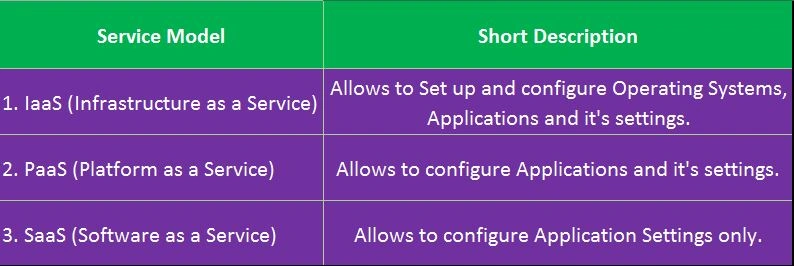
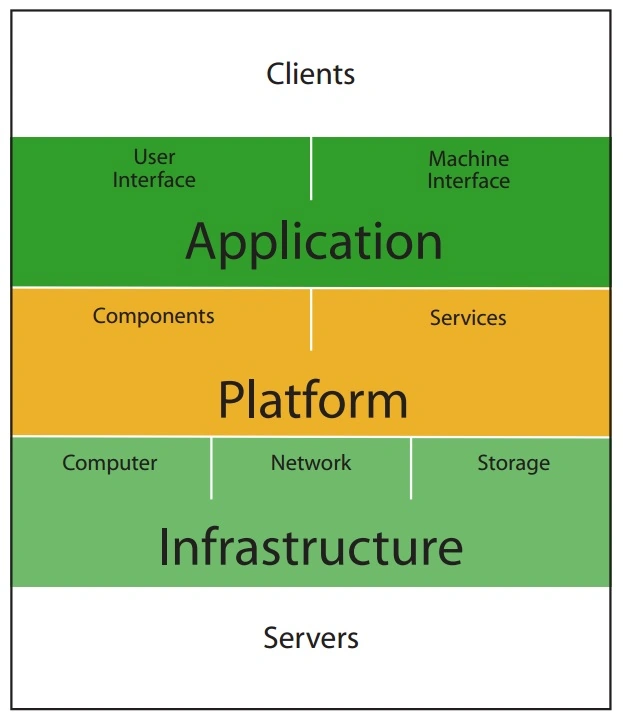
I would like you to refer to the following picture as well:
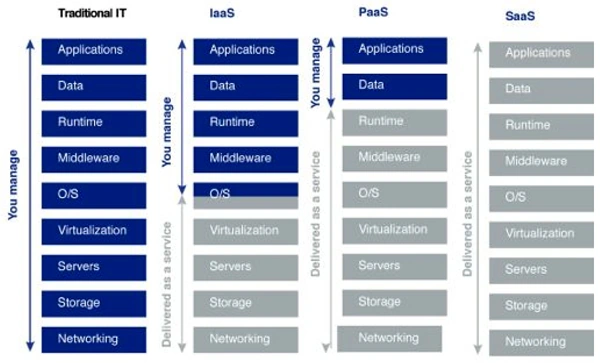
Well depicted, right?
In the traditional IT infrastructure you get to manage all the components from the top to the bottom on your own and also, most importantly, you pay the cost for each of them in full. Here, in a so-called cloud what they offer is their infrastructure and allow you to manage and configure only the necessary components that lie in a service model.
Infrastructure as a Service (IaaS)

The following are the key features of an IaaS:
- Resources are distributed as a service
- Allows for dynamic scaling
- Has a variable cost, utility pricing model
- Generally includes multiple users on a single piece of hardware
Examples include:
- Windows Azure
- Amazon EC2
- Rackspace
Platform as a Service (PaaS)
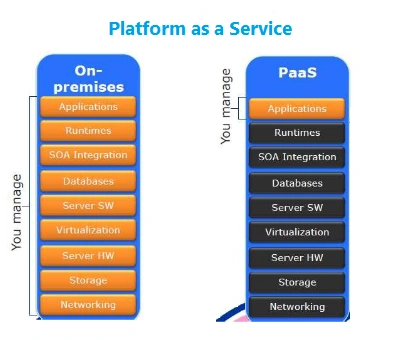
The following are the key features of PaaS:
- Services to develop, test, deploy, host, and maintain applications in the same integrated development environment. All the varying services are necessary to fulfill the application development process.
- Web-based user interface creation tools help to create, modify, test, and deploy various UI scenarios.
- Multi-tenant architecture where multiple concurrent users utilize the same development application.
- Built-in scalability of deployed software including load balancing and failover.
- Integration with web services and databases via common standards.
- Support for development team collaboration. Some PaaS solutions include project planning and communication tools.
- Tools to handle billing and subscription management.
The following are examples:
- Google App Engine.
- Force.com
- AWS Beanstalk
- Heroku
Software as a Service (SaaS)
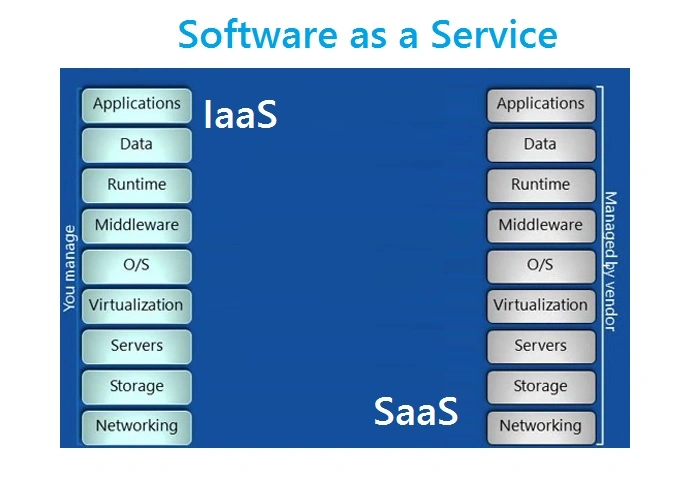
In the SaaS model you are provided with access to application software often referred to as on-demand software. You don't need to worry about the installation, setup, and running of the application. The service provider will do that for you. You just need to pay and use it using some client.
Many forms of SaaS can be seen these days like DBaaS (DataBase as a service), BaaS (Backend as a Service), and so on.
The following are the key features of a SaaS:
- Web access to commercial software
- Software is managed from a central location
- Software delivered in a “one-to-many” model
- Users are not required to handle software upgrades and patches
- Application Programming Interfaces (APIs) allow for integration among various pieces of software.
The following are examples:
- Google Apps
- Office 365
- Email Applications (Gmail / Hotmail / Yahoo and so on)
- Finance Management Applications
- CRM (Customer Relationship Management) applications
The two forms of Cloud Services: Public and Private
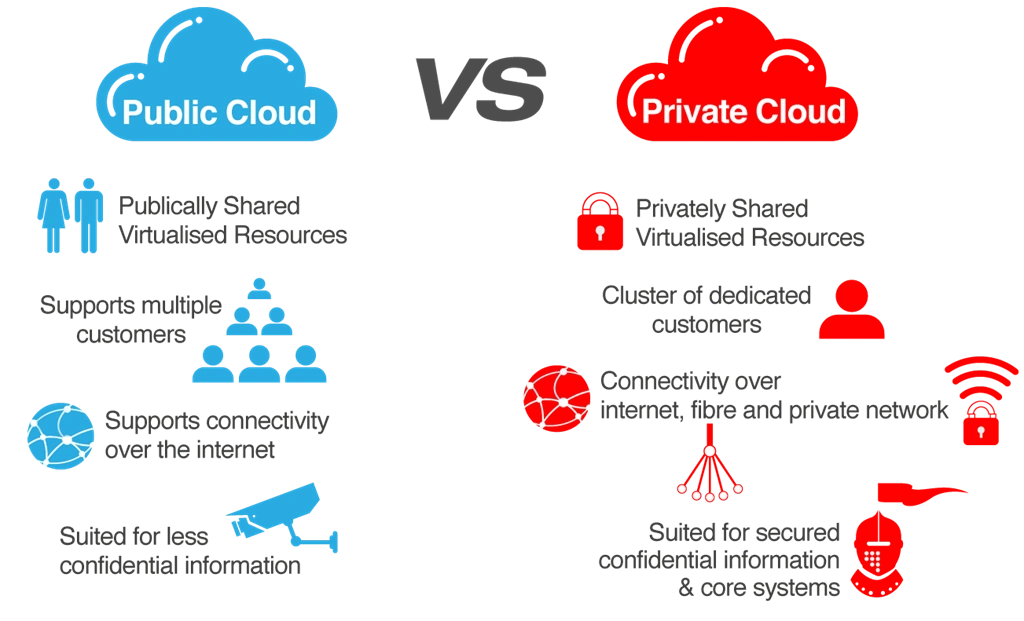
Infrastructure that consists of Shared Resources, deployed on a self-service basis over the internet is considered to be a public cloud. These clouds offer the greatest level of efficiency in shared resources, however, they are also more vulnerable than private clouds.
Private clouds are those that are built exclusively for an individual enterprise. They allow the firm to host applications in the cloud while addressing concerns regarding data security and control that is often lacking in a public cloud environment. It is also known as an internal or enterprise cloud and resides on the company's intranet or hosted data center where all of your data is protected behind a firewall.
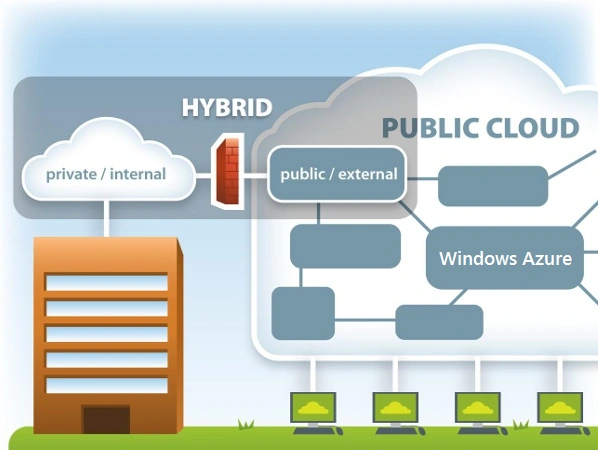
Another cloud type we have is Hybrid Cloud that has its own benefits. A hybrid cloud is a mixture of internal and external cloud services, a combination of a private cloud combined with the use of public cloud services. This type of cloud is most suitable when you want to keep the confidential data at your premises (private cloud) and consume the other services from a public cloud.
I hope you find this article useful.
(Image Courtesy: Various Internet Resources)
Gopi ChandPosted Jul 26, 2015, 2:41 AM
Excellent work done
Santhakumar MunuswamyPosted Jul 26, 2015, 2:11 AM
Thanks for nice article
RakeshPosted Jul 25, 2015, 2:23 PM
nice one
Rajeesh MenothPosted Jul 25, 2015, 1:59 PM
Good One