

This article has been excerpted from the book "A Programmer's Guide to ADO.NET in C#".
DataView and DataViewManager define the ListChanged event, which occurs when a row is added to or deleted from a DataView and DataViewManager object. The ListChangedEventHandler method handles the ListChanged event; it's as follows:
public delegate void ListChangedEventHandler(object sender, ListChangedEventArges e);
Where the sender is the source of the event and e is ListChangedEventArgs, which contains the event data. Table 9-8 defines ListChangedEventArgs members.
Table 9-8. The ListChangedEventArgs members
| MEMBER | DESCRIPTION |
|
ListChangedType
|
Returns the way that lists changed
|
|
NewIndex
|
Returns the new index of the item in the list
|
|
OldIndex
|
Returns the old index of the item in the list
|
Listing 9-15 shows the OnListChanged event handler.
Listing 9-15.The OnListChanged event handler
- protected static void OnListChanged(object sender, System.ComponentModel.ListChangedEventArgs args) {
- MessageBox.Show("ListChanged: Type = " + args.ListChangedType +
- ", OldIndex = " + args.OldIndex +
- ", NewIndex = " + args.NewIndex);
- }
To test this application, you can create a Windows application and write the code in Listing 9-16 on the form load or a button-click event handler. As you can see from Listing 9-16, the code creates a DataView object, adds a new row to DataView, and then removes the first row from DataView. The adding and removing of rows is responsible for firing the OnListChanged event handler.
Listing 9-16. Adding, updating, and deleting rows of a DataView
- private void Form1_load(object sender, System.EventArgs e) {
- OleDbConnection conn = new OleDbConnection();
- string strDSN = "provider=Microsoft.Jet.OLEDB.4.0;" + "Data Source= C:/Northwind.mdb";
- conn.ConnectionString = strDSN;
- string sql = "SELECT EmployeeID, LastName, FirstName FROM Employees";
- // Opening Connection
- conn.Open();
- // Create a data Adapter
- OleDbDataAdapter da = new OleDbDataAdapter(sql, conn);
- // Create and fill DataSet
- DataSet ds = new DataSet();
- da.Fill(ds, "Employees");
- DataView dv = ds.Tables["Employees"].DefaultView;
- // Add DataView Event Handlers
- dv.ListChanged += new System.ComponentModel.ListChangedEventHandler(OnListChanged);
- // Add a row to the DataView
- dv.AllowEdit = true;
- DataRowView rw = dv.AddNew();
- rw.BeginEdit();
- rw["FirstName"] = "FName";
- rw["LastName"] = "LName";
- rw.EndEdit();
- // Remove a row from the DataView
- if (dv.Count > 0) {
- dv.Delete(0);
- dv[0].Row.AcceptChanges();
- }
- // Close the connection
- conn.Close();
- }
CAUTION: As you can see from Listing 9-16, the AcceptChanges() method removes a row permanently from the database. If you don't want to remove the row, call the RejectChanges() method.
The output of Listing 9-16 looks like figure 9-11 and 9-12.
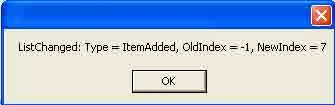
Figure 9-11. The ListChange events output after adding a new row
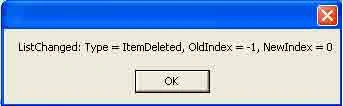
Figure 9-12. The ListChanged events output after deleting a row
Conclusion
Hope this article would have helped you in understanding working with DataView and DataViewManager Events in ADO.NET. See other articles on the website also for further reference.

|
This essential guide to Microsoft's ADO.NET overviews C# then leads you toward deeper understanding of ADO.NET. |
Join the conversation! Your thoughts help the community grow.