In this post, we will be discussing the difference between call(), apply(), and bind() methods of JavaScript functions with simple examples. As functions are also Objects in JavaScript, these 3 methods are used to control the invocation of the function. call() and apply() were introduced in ECMAScript 3 while bind() was added as part of ECMAScript 5.
Uses
We can use call()/apply() to invoke the function immediately. bind() returns a bound function that, when executed later, will have the correct context ("this") for calling the original function. So bind() can be used when the function needs to be called later in certain events when it's useful.
-
-
- var obj = {name:"Niladri"};
-
- var greeting = function(a,b,c){
- return "welcome "+this.name+" to "+a+" "+b+" in "+c;
- };
-
- console.log(greeting.call(obj,"Newtown","KOLKATA","WB"));
-
The first parameter in call() method sets the "this" value, which is the object, on which the function is invoked. In this case, it's the "obj" object above.
The rest of the parameters are the arguments to the actual function.
apply() or Function.prototype.apply()
Check the below code sample for apply()
-
-
- var obj = {name:"Niladri"};
-
- var greeting = function(a,b,c){
- return "welcome "+this.name+" to "+a+" "+b+" in "+c;
- };
-
-
- var args = ["Newtown","KOLKATA","WB"];
- console.log("Output using .apply() below ")
- console.log(greeting.apply(obj,args));
-
-
-
-
Similarly to call() method the first parameter in apply() method sets the "this" value which is the object upon which the function is invoked. In this case, it's the "obj" object above. The only difference of apply() with the call() method is that the second parameter of the apply() method accepts the arguments to the actual function as an array.
bind() or Function.prototype.bind()
Check the below code sample for bind()
-
-
- var obj = {name:"Niladri"};
-
- var greeting = function(a,b,c){
- return "welcome "+this.name+" to "+a+" "+b+" in "+c;
- };
-
-
- var bound = greeting.bind(obj);
- console.dir(bound);
-
- console.log("Output using .bind() below ");
-
- console.log(bound("Newtown","KOLKATA","WB"));
-
-
-
-
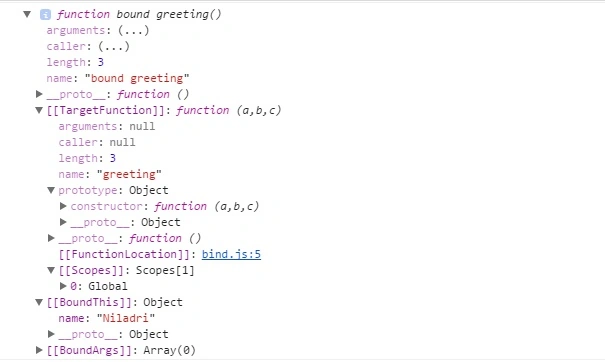
In the above code sample for bind(), we are returning a bound function with the context which will be invoked later. We can see the bound function in the console below.
The first parameter to the bind() method sets the value of "this" in the target function when the bound function is called. Please note that the value for the first parameter is ignored if the bound function is constructed using the "new" operator.
The rest of the parameters following the first parameter in bind() method are passed as arguments that are prepended to the arguments provided to the bound function when invoking the target function.
That's all for now. Thank you for reading and I hope this post will be helpful for beginners who are facing issues regarding the apply(), call(), and bind() methods of JavaScript.



Join the conversation! Your thoughts help the community grow.