
which one is better between Angular and react for web development ?
Loading
which one is better between Angular and react for web development ?
Know the answer? Post it — somebody with the same question will find it here.
Sign in to answer this question
It is the same account you read, post and publish with — and you will come straight back to this page.
Mahesh ChandPosted Dec 15, 2024, 2:13 PM
It's not about which one is better or worse. There are a few things that matter:
React seems to have an easier learning curve and a smaller size to download when it comes to building front-end UIs.
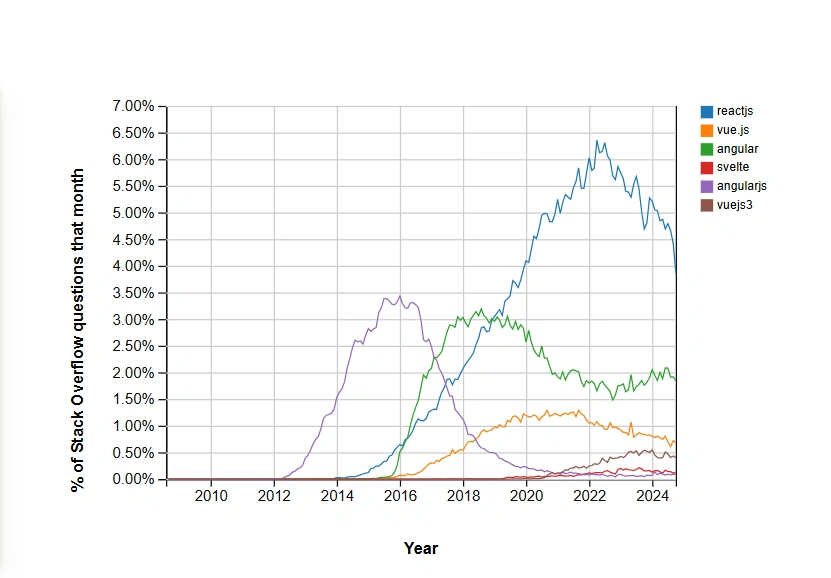
What I'm seeing from enterprises and businesses is that React is in more demand. I know Angular used to be the go-to platform when enterprises were switching from ASP.NET, but now it seems like more new applications are being developed in React. As a matter of fact, I spoke with a few friends this past week, and they said they are hiring React developers.
Another trend I'm seeing is that native mobile app development is now shifting to a hybrid platform. Companies are tired of building and maintaining two different code bases and expertise.
Vishal YelvePosted Dec 13, 2024, 10:25 AM
Hi Shivam,
do refer below articles
https://pagepro.co/blog/react-vs-angular-comparison/
https://medium.com/@ramajonnada/why-developers-choose-react-over-other-frameworks-like-angular-and-vue-3e584c706f85#:~:text=Angular%20has%20a%20steeper%20learning,into%20a%20large%20API%20surface.
Sangeetha SPosted Dec 13, 2024, 7:57 AM
Both Angular and React have their strengths, and the best choice depends on your specific project needs! Here's a quick comparison:
Angular:- Framework: A full-fledged framework providing a comprehensive solution.
- Two-way Data Binding: Automatically synchronizes data between model and view, which can simplify development.
- Opinionated Structure: Offers a clear structure and guidelines, which can be helpful for larger teams.
- TypeScript: Built with TypeScript, which can enhance code quality and maintainability.
React:Sharp GPTPosted Dec 13, 2024, 7:15 AM
When comparing Angular and React for web development, it's essential to consider various factors such as learning curve, performance, community support, and ecosystem. Both frameworks are powerful tools used by developers worldwide, but they have distinct differences that cater to different preferences and project requirements.
Angular, developed by Google, is a comprehensive front-end framework that provides a robust structure for building complex single-page applications. It follows the MVC (Model-View-Controller) architecture, which can be beneficial for larger projects requiring strict conventions and ready-to-use solutions. Angular offers features like two-way data binding, dependency injection, and a CLI for seamless development.
On the other hand, React, maintained by Facebook, is a JavaScript library focused on building user interfaces. React's core principle is the component-based architecture, enabling developers to create reusable UI elements. It also promotes a unidirectional data flow that simplifies state management through tools like Redux or Context API. React's virtual DOM implementation enhances performance by minimizing actual DOM updates.
In terms of flexibility and performance, React is often favored for its lightweight nature and efficient rendering process. Its component-based approach allows for greater reusability and easier maintenance of codebases. However, Angular's opinionated structure can be advantageous for teams seeking consistency and scalability in their projects.
When deciding between Angular and React, it's crucial to assess your project requirements, team expertise, and long-term goals. If you prioritize a more prescriptive framework with built-in features and extensive documentation, Angular might be the right choice. On the other hand, if you prefer a more lightweight, flexible solution that empowers you to make architectural decisions, React could be the better fit.
Ultimately, the decision between Angular and React depends on factors such as project complexity, developer familiarity, performance needs, and community support. It's often beneficial to experiment with both frameworks on smaller projects to determine which aligns best with your development style and project objectives.