

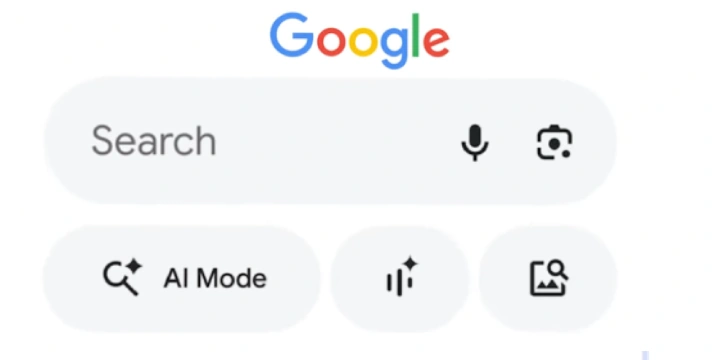
MOUNTAIN VIEW, Calif. — January 2026 — Google is introducing personal intelligence features to Google Search through a new AI Mode, designed to deliver more contextual, helpful answers by understanding what users are asking and why.
AI Mode reimagines search as an interactive experience rather than a list of links. Users can ask complex, multi-part questions and receive synthesized responses that combine web knowledge with reasoning, follow-ups, and clear explanations. Google says the goal is to help people move from searching to understanding more quickly.
The experience builds on Google’s Gemini models and allows users to refine questions naturally, ask follow-ups, and explore topics in depth without restarting a search. AI Mode is especially suited for tasks like planning, learning new topics, comparing options, or solving problems that previously required multiple searches.
Google emphasized that AI Mode is designed to remain grounded in the web. Responses surface information from multiple sources and encourage exploration, preserving the open nature of search while reducing friction for users who want direct answers.
Personalization plays a growing role as well. With user permission, AI Mode can adapt to context such as location or recent searches to provide more relevant results, while maintaining transparency and user control. Google said personal intelligence features are opt-in and built with privacy protections at the core.
AI Mode is rolling out gradually in Search as Google tests and refines the experience. The company positioned the update as part of a broader shift toward making Search a more intelligent assistant that helps users think through questions, not just find pages.
With personal intelligence in Search, Google is signaling that the future of search is conversational, contextual, and increasingly focused on helping people make sense of information rather than simply retrieve it.
Source: Google
Vozo AnimationPosted Jan 24, 2026, 10:25 AM
Google’s new AI Mode signals a fundamental shift from keyword-based retrieval to intent-based understanding. By combining conversational follow-ups with web-grounded sources, Search is clearly evolving into a decision-support system rather than just a discovery tool. For brands and studios working in digital experiences, this reinforces the need to focus on clarity, context, and user intent, not just rankings. Teams building modern web and product experiences; like VOZO Animation (https://vozoanimation.com/), are already adapting by designing content and interfaces that answer why and how, not just what. As search becomes more personal and contextual, experience-led design and structured knowledge will matter more than ever.