

In a world where artificial intelligence is reshaping how people work and live, questions about privacy and data control loom large. Addressing these concerns, Proton—renowned for its secure email and storage services—has released Lumo, an AI assistant designed from the ground up to put user privacy and data ownership first.
The Problem with Big Tech’s AI
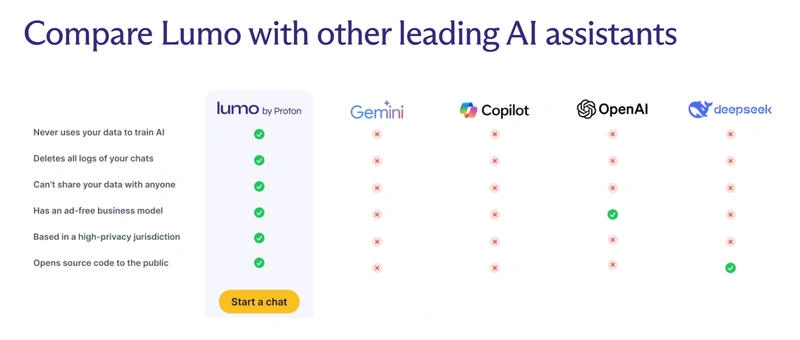
As AI continues to proliferate, major technology companies have often repeated past mistakes—treating users less like individuals and more like data sources. Many leading AI platforms rely on business models fueled by advertising, third-party tracking, and aggressive data collection, turning conversations and personal information into commodities.
Proton’s leadership believes the transformative power of AI should not come at the expense of user trust and security. The risks of compromising personal and sensitive information, whether for individuals or businesses, are too great to ignore.
Meet Lumo: An AI That Works For You—Not the Other Way Around
Lumo arrives as part of Proton’s privacy-focused ecosystem and stands apart from mainstream AI offerings. Its architecture ensures:
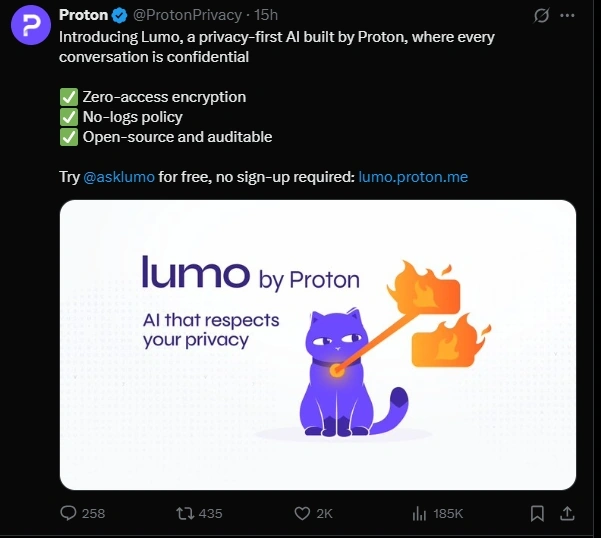
- No server-side chat logs: Unlike most providers, Proton’s Lumo never keeps records of your conversations.
- Zero-access encryption: Messages are protected using encryption methods trusted by over 100 million Proton users worldwide. Only you can decrypt your chat history.
- No data sharing with third parties: Lumo doesn’t share, sell, or expose your data to advertisers, vendors, or governmental agencies.
- No AI training on your data: Your questions and documents are never used to improve or train models that could power other users’ experiences.
Why the World Needs Privacy-Centric AI
The adoption of AI has led to new forms of data collection that can be far more intimate than mere browsing or search histories. Day-to-day users, as well as businesses handling confidential materials, face potential data exposure with each query they enter. With most generative AI tools owned and operated in the US or China, legal protections may also be limited.
Lumo seeks to disrupt this paradigm by keeping all processing and data storage under European jurisdiction, underpinned by Proton’s commitment to privacy and operated by the nonprofit Proton Foundation.

Join the conversation! Your thoughts help the community grow.