


Microsoft has expanded its GitHub Copilot ecosystem with the launch of a dedicated Awesome GitHub Copilot website, a learning hub, and a growing plugin ecosystem, aimed at helping developers get more value from AI-powered coding tools.
The update builds on the community-driven Awesome Copilot repository, which has rapidly evolved into one of the largest collections of reusable AI coding resources for developers.
From Repository to Full Ecosystem
What started as a simple GitHub repository for sharing prompts and customizations has grown into a full-fledged platform.
According to Microsoft, the project now includes:
175+ AI agents
208+ skills
176+ instructions
48+ plugins
Agentic workflows and hooks
This rapid growth prompted Microsoft to launch a dedicated website and structured learning experience to make these resources easier to discover and use.
A Central Website for Discovering Copilot Enhancements
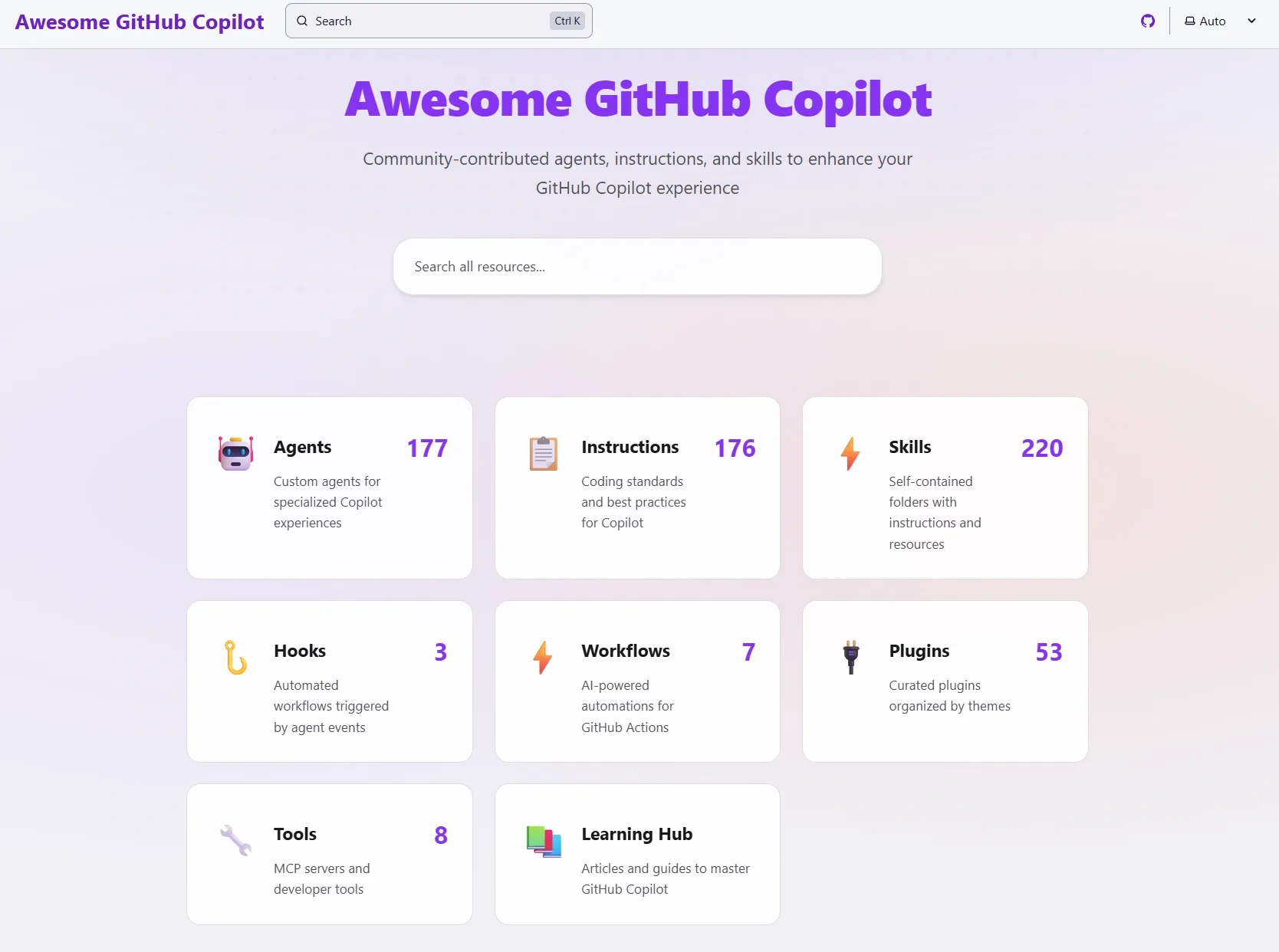
The new Awesome GitHub Copilot website acts as a centralized hub where developers can browse and search for:
Prebuilt AI agents
Coding instructions and best practices
Skills for specific programming tasks
Plugins organized by workflows
The platform makes it easier to find reusable components that can extend Copilot’s capabilities beyond basic code completion.
A Learning Hub for Developers
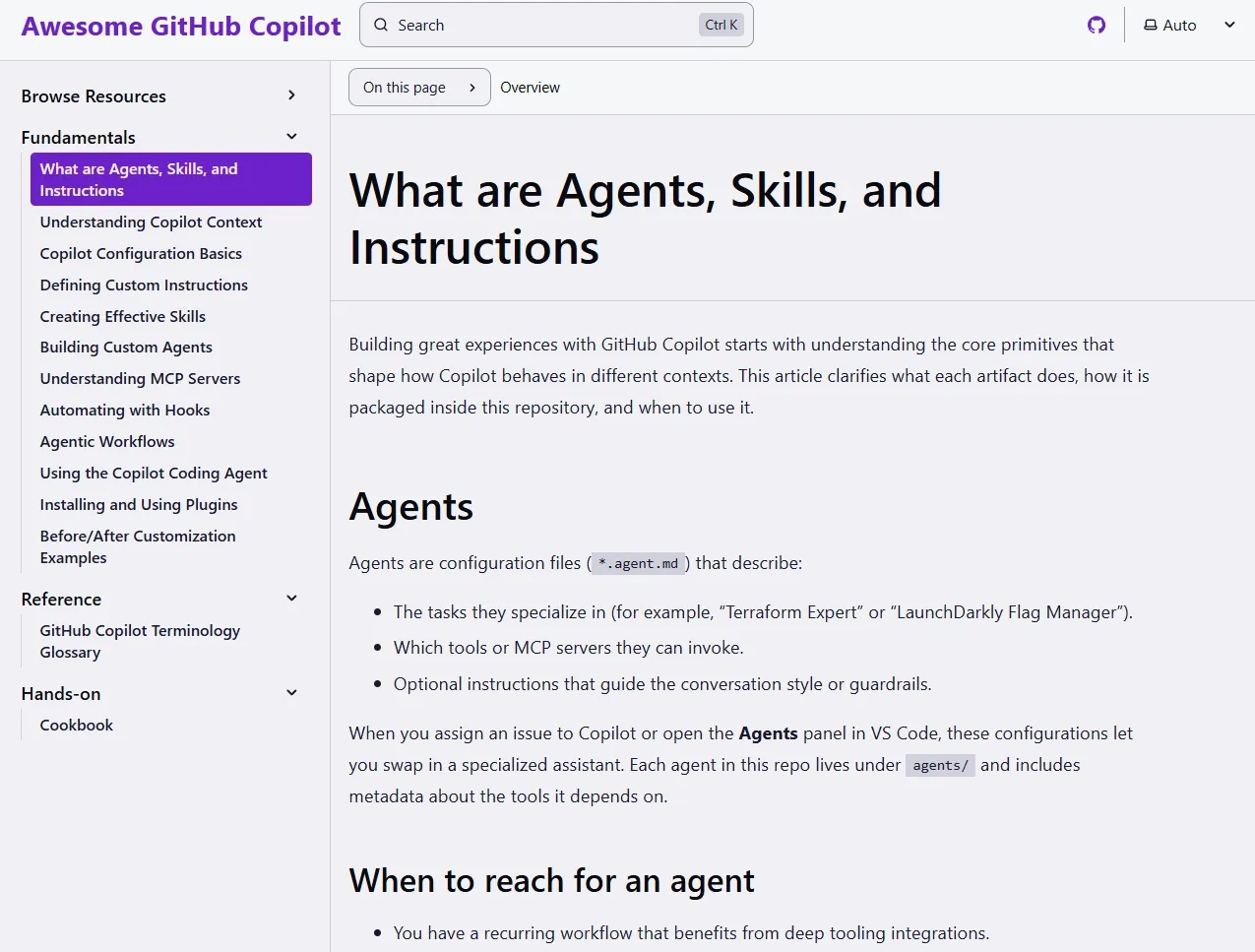
Alongside the website, Microsoft has introduced a learning hub designed to help developers understand how to use and build with Copilot customizations.
The hub includes:
Guided tutorials
Real-world examples
Hands-on exercises
Best practices for building AI agents and workflows
This reflects a broader shift in AI tooling — moving from simple usage to developer education around agent-based workflows and customization.
Plugins Bring Modular AI Capabilities
One of the most important additions is the introduction of plugins, which bundle together agents, skills, and instructions into reusable packages.
Plugins allow developers to:
Extend Copilot for specific domains (DevOps, security, cloud, etc.)
Reuse curated workflows across projects
Build modular AI-powered development environments
For example, plugins can include collections for SDK development, cloud deployment, or testing workflows — making Copilot more adaptable to real-world engineering needs.
The Rise of Agent-Driven Development
The expansion of Awesome Copilot reflects a broader trend in software development: the rise of AI agents that can plan, execute, and automate coding tasks.
Modern tools like GitHub Copilot are evolving from autocomplete assistants into systems that can:
Break down tasks into steps
Modify entire codebases
Run workflows and automation
Integrate with external tools and APIs
Microsoft’s move to formalize this ecosystem suggests that customization and extensibility will be key to the next phase of AI-assisted development.
What This Means for Developers
For developers, the new platform offers a way to move beyond basic Copilot usage and start building tailored AI workflows.
Instead of writing everything from scratch, developers can now:
Use prebuilt agents and skills
Combine plugins for complex workflows
Share and reuse AI configurations across teams
This could significantly reduce development time while improving consistency across projects.
Source: Microsoft
Join the conversation! Your thoughts help the community grow.