

This article is a part of a series of articles related to one of the Azure Compute options, “Cloud Services”.
- Azure Cloud Service Introduction
- Azure Cloud Services - Create Hello World Cloud Service Using Visual Studio
- Azure Cloud Service Examine Files
- Azure Cloud Service – Add existing Web Application to Cloud Service
- Azure Cloud Service – Compute Emulator
- Azure Cloud Service - Create Package using Visual Studio
- Azure Cloud Service – Create a new Cloud Service using Azure Management Portal
- Azure Cloud Service – Deploy Cloud Service using Azure Management Portal
- Azure Cloud Service – Create Staging Slot using Azure Management Portal
- Azure Cloud Service – VIP Swap using Azure Management Portal
- Azure Cloud Service – Delete Slot using Azure Management Portal.
- Azure Cloud Service – Scale up Instance Size
- Azure Cloud Service – Scale Out Instances using Visual Studio
- Azure Cloud Service – Enable Remote Desktop using Visual Studio
Given below is the screenshot that provides details of the Virtual Machines which are created when we deployed the application to the Cloud Service.
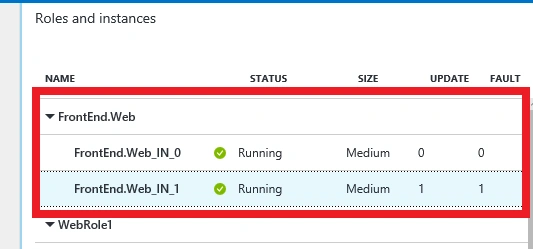
Let’s say, you would like to log into these Virtual Machines to perform some additional configuration. You can install third party components as well, in these Virtual Machines. By default, you cannot do that because the Remote Desktop is disabled for these VMs.
In our previous article, Azure Cloud Service – Deploy Application using Visual Studio, we have learnt how to deploy the Cloud service using Visual Studio. In one of the steps, “Settings” of the “Publish Azure Application”, you need to check the “Enable Remote Desktop for all Roles” checkbox to enable the Remote Desktop option for your roles.
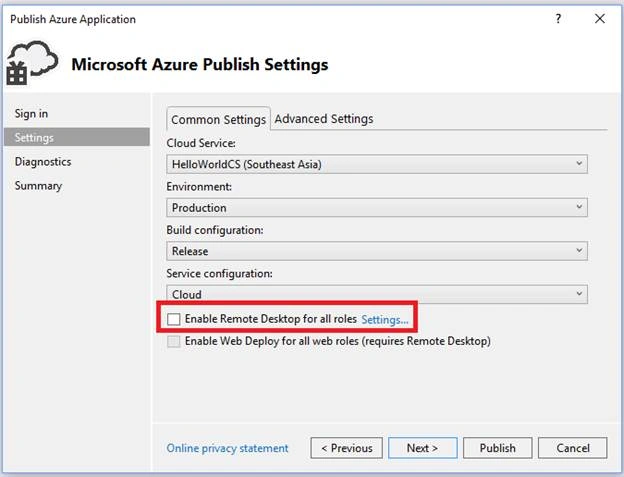
As soon as you check the above checkbox, the following popup will be prompted where you enter the account details which will be used for remote login purposes. Please make a note of these credentials which you will use while signing into the Virtual Machines.
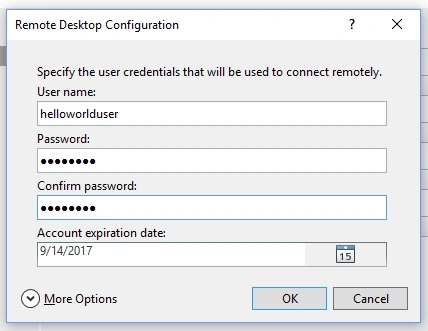
Click on OK button after providing all the required details. After a few seconds, the above popup will vanish. Follow the rest of the steps explained in the Azure Cloud Service – Deploy Application using Visual Studio article.
Once the application is deployed successfully and all the VMs are provisioned, navigate to the Cloud Service’s “Roles and Instances” section in the Azure Management Portal, as shown below.
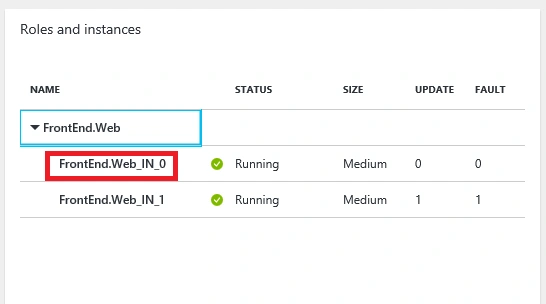
Click on any of the instances shown above. For this example, I clicked on “FrontEnd.Web_IN_0” Virtual Machine to navigate to the Instance blade, as shown below.
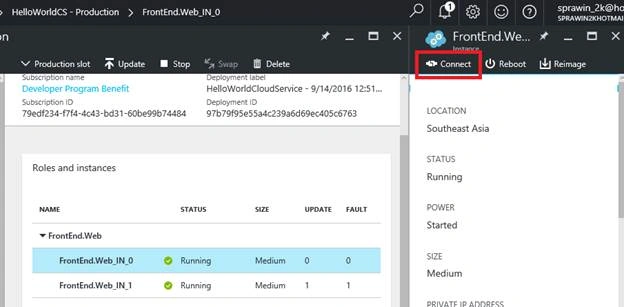
Now, click on the “Connect” button to download the RDP file and provide the credentials.
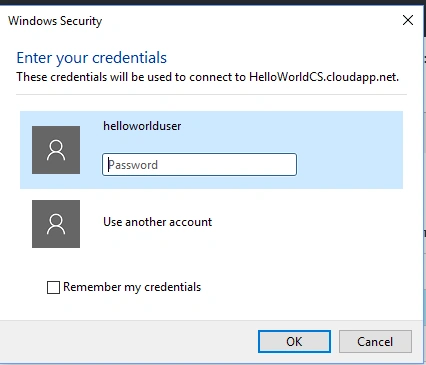
Clicking on the “OK” button will let you log into the VM of the selected Role.
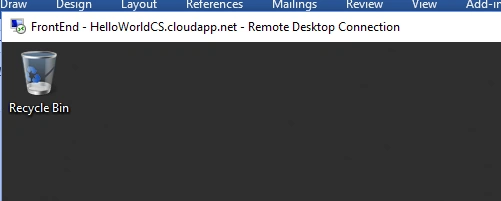
That’s it. You have learned how to enable Remote Desktop for your Virtual Machine. Hope you enjoyed reading the article. Your feedback is appreciated.
Praveen SreeramPosted Sep 16, 2016, 8:55 AM
Thanks
Vignesh ManiPosted Sep 16, 2016, 8:30 AM
Nice
Praveen SreeramPosted Sep 16, 2016, 12:49 AM
Glad that it was helpful
Nikhil SanganiPosted Sep 16, 2016, 12:05 AM
Useful for me