

Introduction
A breathalyzer is a device for estimating blood alcohol content (BAC) from a breath sample. Breath analyzers do not directly measure blood alcohol content or concentration, which requires the analysis of a blood sample. Instead, they estimate BAC indirectly by measuring the amount of alcohol in one's breath.
- Pointing the Spotlight on LinkIt ONE
- Getting Started with LinkItOne
- Getting Familiar with Arduino IDE: LinkItOne
- Hello World With LinkIt One
- Grove Starter Kit With LinkIt One
- Speed Detection With LinkIt One
Requirements
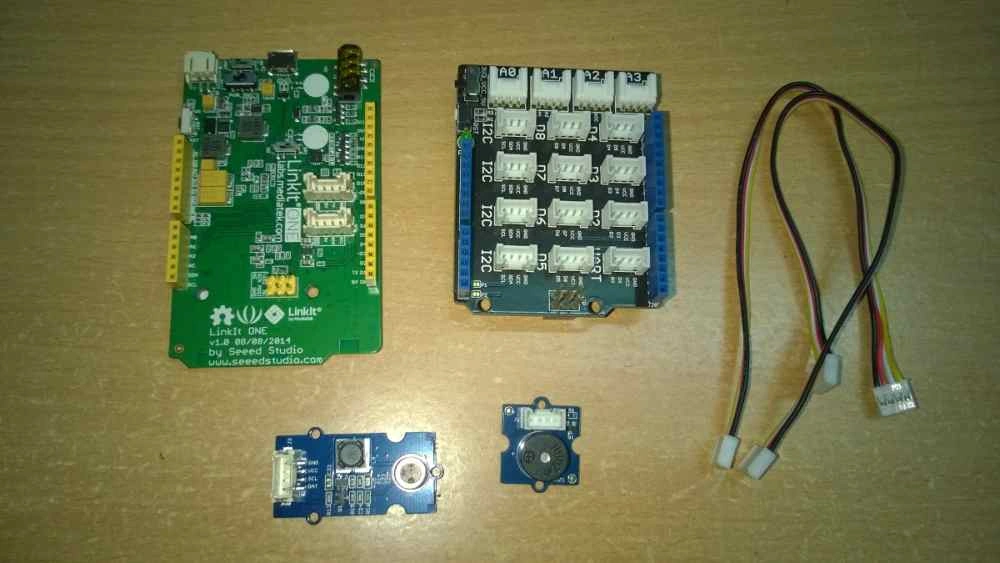
Figure 1: Requirements
- LinkItOne microcontroller board.
- Grove Alcohol Sensor
- Buzzer
- USB Cable
Grove Alcohol Sensor

Figure 2: Alcohol Sensor Board
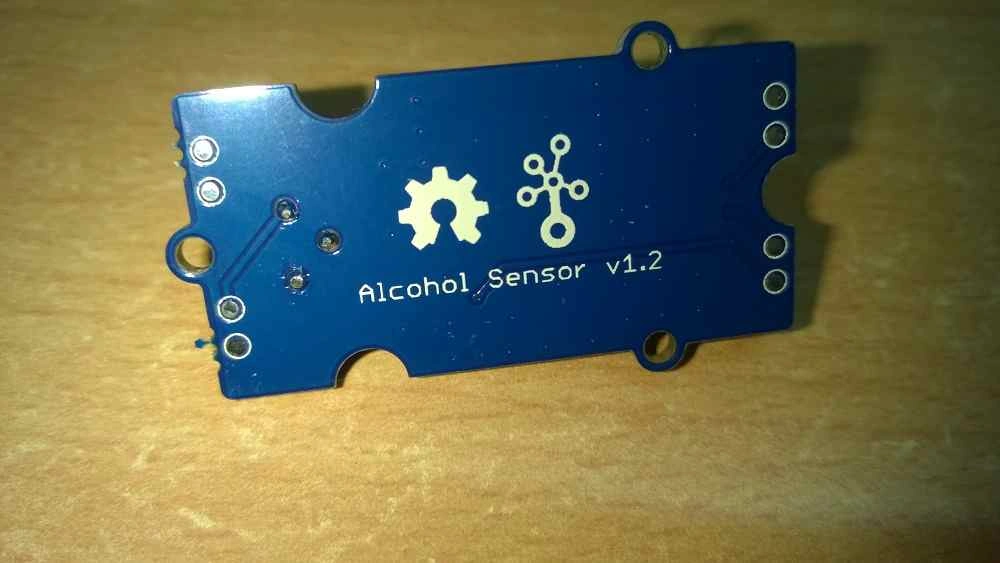
Figure 3: Alcohol Sensor
- Power requirements: 5 VDC @ ~120 mA (heater on)
- Detection Gas: Alcohol
- Concentration: 20-1000ppm Alcohol
- Interface: 1 TTL compatible input (SEL), 1 TTL compatible output (DAT)
- Dimension: 40×20×12mm
Features
- Input Voltage: 5V Working
- Current: 120mA
- Detectable Concentration: 20-1000ppm
- Grove Compatible connector
- Highly sensitive to alcohol.
- Fast response and resumes quickly after alcohol exposure.
- Long life.
- Compact form factor.
Connections

Figure 4: See Connections
- Connect LinkIt One to your computer using a USB A to micro B cable.
- Connect the Alcohol sensor into the A0 port of Grove Base Shield.
- In the Arduino IDE, go to the Tools pull-down menu at the top, select Board, and make sure “LinkIt One” is checked.
- Then pull down the Tools menu again, and select appropriate Serial Port.
- Connect the Buzzer to the D2 port of Grove Base Shield.
If you have multiple serial ports to choose from and aren’t sure which to choose, try unplugging the board from your computer and plugging the board back again to see which port gets added.
- int buzzer = 2;
- int sensor = A0;
- // The setup routine runs once when you press reset
- void setup()
- {
- pinMode(buzzer, OUTPUT); // Initialize the digital pin2 as buzzer output
- Serial.begin(9600); // Initialize serial communication at 9600 bits per second
- }
- // The loop routine runs over and over again forever
- void loop()
- {
- var sensorValue = analogRead(sensor); // Read the input on analog pin 0 ('sensor')
- Serial.println(sensorValue); // Print out the value on serial monitor
- if (sensorValue > 650)
- {
- // If sensorValue is greater than 200
- digitalWrite(buzzer, HIGH);
- }
- else
- {
- digitalWrite(buzzer, LOW);
- }
- }
The Grove Alcohol sensor is very sensitive in detecting alcohol. I tested this breathalyzer by bringing an empty alcohol bottle near to this and instantly the Buzzer started playing. You can also make the same using the MQ3 sensor with the Pololu carrier board but you have to do little soldering and breadboarding with that.
Important
- An alcohol sensor is a very sensitive semiconductor device, you should take proper care while handling this.
- The value varies between 500 - 905. Hence any value above 650 indicates alcohol vapor in the vicinity.
- Once exposed to alcohol vapor, it takes some time for the sensor value to decrease completely.
- Do not expose to organic silicon steam, alkali or corrosive gases.
- Do not use freeze or spill water. Maintain proper working voltage.
Amatya AgyeyPosted Mar 4, 2016, 5:48 AM
Its fantastic . Can you give the specification of TTL which you used?
Sr KarthigaPosted Jan 23, 2016, 5:31 AM
Very nice article
Prakash TripathiPosted Dec 31, 2015, 11:44 AM
Good one. Agree with Mahesh sir for need of easy air sensor.
Ankur MistryPosted Dec 31, 2015, 3:22 AM
Great job, thanks for sharing this nice Article.
Santhakumar MunuswamyPosted Dec 30, 2015, 3:14 PM
Thanks for nice article
Upendra Pratap ShahiPosted Dec 30, 2015, 12:17 PM
very informative
Pooja BaraskarPosted Dec 30, 2015, 9:24 AM
Afzaal Ahmad Zeeshan yes it can be used anywhere in public as it is very accurate in Alcohol detection but for dope testing may be first you need to prove its authenticity.
Humayun Kabir MamunPosted Dec 30, 2015, 3:41 AM
Nice...
Sibeesh VenuPosted Dec 30, 2015, 3:27 AM
Great Article.
Afzaal Ahmad ZeeshanPosted Dec 30, 2015, 2:42 AM
Great job, I wonder if that can be used anywhere in public environments or dope testing environments! :-) By the way, where do you keep all of this hardware? :D
Kiranteja JallepalliPosted Dec 30, 2015, 1:39 AM
great article pooja Baraskar
Shridhar SharmaPosted Dec 30, 2015, 1:34 AM
nice post.
Yashwant VishwakarmaPosted Dec 30, 2015, 12:32 AM
Thanks for sharing, nice article!!
Mahesh ChandPosted Dec 30, 2015, 12:31 AM
Impressive Pooja.