

Introduction
Nowadays, in the field of data, the term "data pipeline" has become quite popular.
If you are one of those people who doesn't understand it at first, you’ve come to the right place.
This article will discuss its foundations and explain some of its fundamental concepts, such as what a data pipeline is, its inner workings, components, and required tools.
OK, let's get started then.
Background
Hold your horses! Before we answer what a data pipeline is, I think it is better to visualize it first and then answer the question.
OK, I know most of us are familiar with water. That’s right - water that comes out of your faucet inside your kitchen.
And you might be wondering, what's the relationship between water and a data pipeline?
Not exactly the water, but we can compare a water supply distribution system to a data pipeline.
See the diagram below.
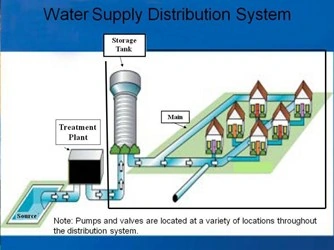
Both a water supply distribution system and a data pipeline, have a source, repositories, and consumers.
Moreover, as you can see, water comes from a particular source.
It goes to a warehouse where it is stored, and this warehouse has a pipeline where the process of cleansing occurs and then goes to everyone's house, ready to be consumed as potable water.
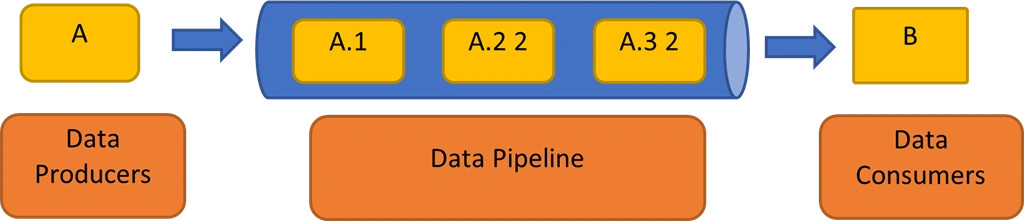
In the world of data, a data pipeline is a form of transfer from point A to point B, and somewhere in the middle, processing occurs.
This processing can be any or all of these, such as data staging, cleansing, and conforming.
Now that we have an idea of how data pipelines work, let's get into more detail in the next section.
What is a Data Pipeline?
The most fundamental thing to know about data pipeline is the following,
- Data Producers: these are the data sources. These could be like a database, mainframe, real-time data like logs, sensors (like IoT devices).
- Data Pipeline: this is where the control of the data happens. More about this later in the article.
- Data Consumers: data will be consumed by specific applications, so users will eventually use the quality data produced from the pipeline.
We have seen that a data pipeline is a tool that demonstrates data flow between two endpoints.
Somewhere in the middle, it has these intermediary steps, also known as data-pipeline components.
Moreover, these components are composed of staging, cleaning, conforming, and deliver data.
Lastly, every organization has different sets of requirements; therefore, these components can change depending on your organization's needs.
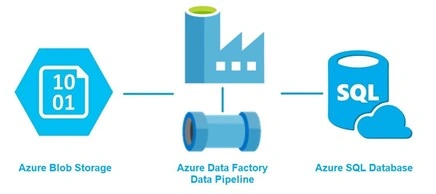
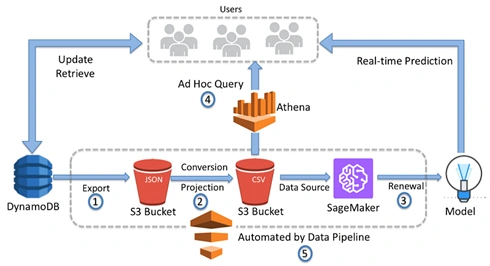
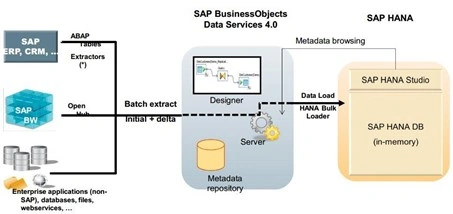
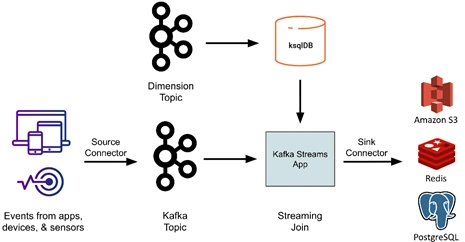
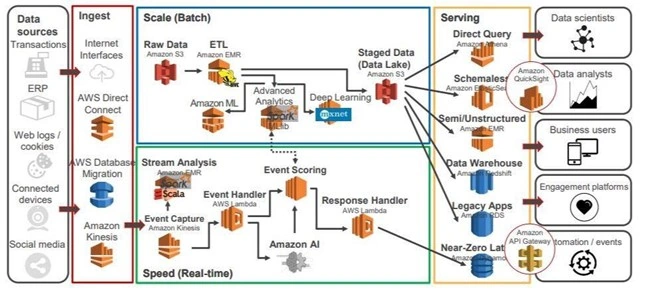
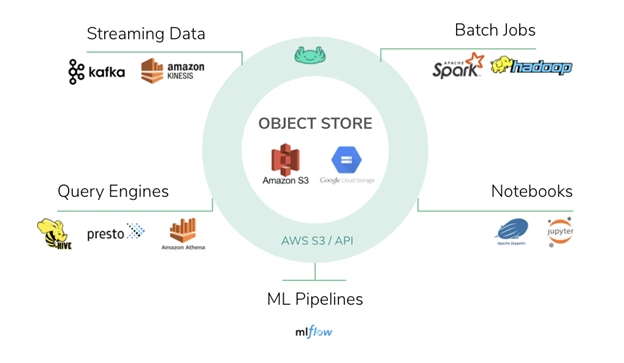
Let us see different diagrams of the data pipeline samples for other cloud vendors.
Azure Data Pipeline
AWS Data Pipeline
Bassam AlugiliPosted Jan 15, 2021, 10:14 AM
Thank you!